My On The Bench Today Thread

  • BushMoot: Come along to the amazing Summer Moot 31st July - 5th August (extended Moot : 27th July - 8th August), a festival of bushcrafting and camping in a beautiful woodland PLEASE CLICK HERE for more information.

Ah, OK, I know where they will have been done then.

Smithing is a bit of a dark art, and ideally, you would need a carbide-tipped hammer, but I am guessing you don't have one of those?

Your warped blade will have a concave side and a convex side, if that makes sense, the inside and outside of a curve?

You'd think that to straighten it, you take it to your anvil and work on the outside curve/convex side, hammering that flat. Don't do that.

Just the opposite is the case; you work on the inside curve/concave side, in effect, you are attempting to relieve tension in that face, allowing it to give, almost allowing it to stretch as it were and return to straight.

With regards to the hammer, I have seen it done using the ball of a ball pein, so maybe start there?

Does that make sense?
I remember you speaking about this on British Blades many moons ago. Didnt you call it pecking, or a pecking hammer or similar?

Where would you strike the blade? Centre of the curve working out?
 
Last edited:
That bend is impressive! I'm increasingly a fan of thinner blades. I use a semi flexible Victorinox boning knife that's crazy thin compared to most knives but, being thin & full flat, cuts like a demon (easy to sharpen too)
Thinner is always better. Thicker only works better if the steel/heat treatment is poor or you like to baton a lot.

These days, there's no excuse for thick blades other than the Batoning side of it. I'm guilty of that, to an extent, but only for finer kindling. So never need more than 3mm at most.
 
Ah, OK, I know where they will have been done then.

Smithing is a bit of a dark art, and ideally, you would need a carbide-tipped hammer, but I am guessing you don't have one of those?

Your warped blade will have a concave side and a convex side, if that makes sense, the inside and outside of a curve?

You'd think that to straighten it, you take it to your anvil and work on the outside curve/convex side, hammering that flat. Don't do that.

Just the opposite is the case; you work on the inside curve/concave side, in effect, you are attempting to relieve tension in that face, allowing it to give, almost allowing it to stretch as it were and return to straight.

With regards to the hammer, I have seen it done using the ball of a ball pein, so maybe start there?

Does that make sense?

Makes perfect sense. Relieving the stress on the side that is stressed.

We've got some carbide tipped hammers at a place I work. Where the forge used to be, along with some huge anvils. I’ll take it in on a quiet day and have a go.
 
I remember you speaking about this on British Blades many moons ago. Didnt you call it pecking, or a pecking hammer or similar?

Where would you strike the blade? Centre of the curve working out?
Yes, same thing really. And yes, start there and keep an eye on it.
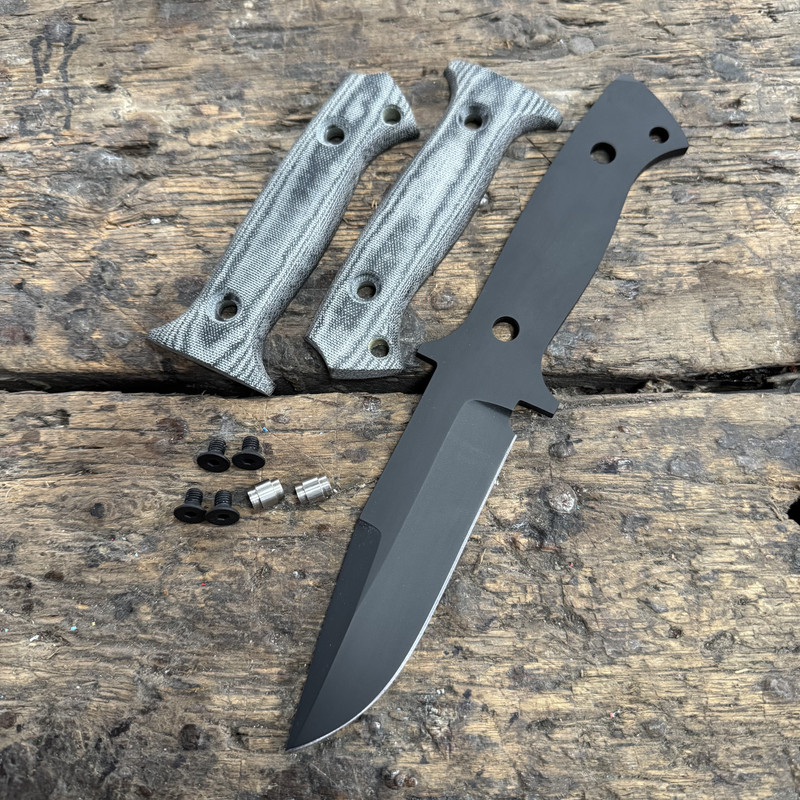
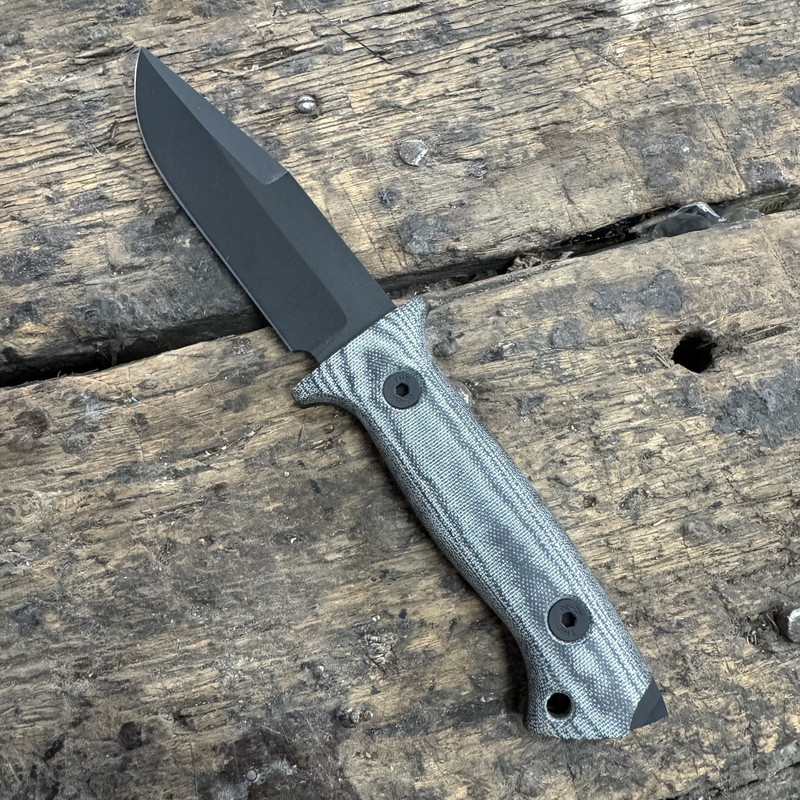
How will you put your mark on that one with the Cerakote?
That one isn't getting a blade mark; we have decided that sterile suits it.

The lasering still works with the Cerakote though, it just burns through it.
Makes perfect sense. Relieving the stress on the side that is stressed.

We've got some carbide tipped hammers at a place I work. Where the forge used to be, along with some huge anvils. I’ll take it in on a quiet day and have a go.
Good luck, and please keep us posted.
 
Thinner is always better. Thicker only works better if the steel/heat treatment is poor or you like to baton a lot.

These days, there's no excuse for thick blades other than the Batoning side of it. I'm guilty of that, to an extent, but only for finer kindling. So never need more than 3mm at most.
Aye I would love something like that P90 in 2mm!
 
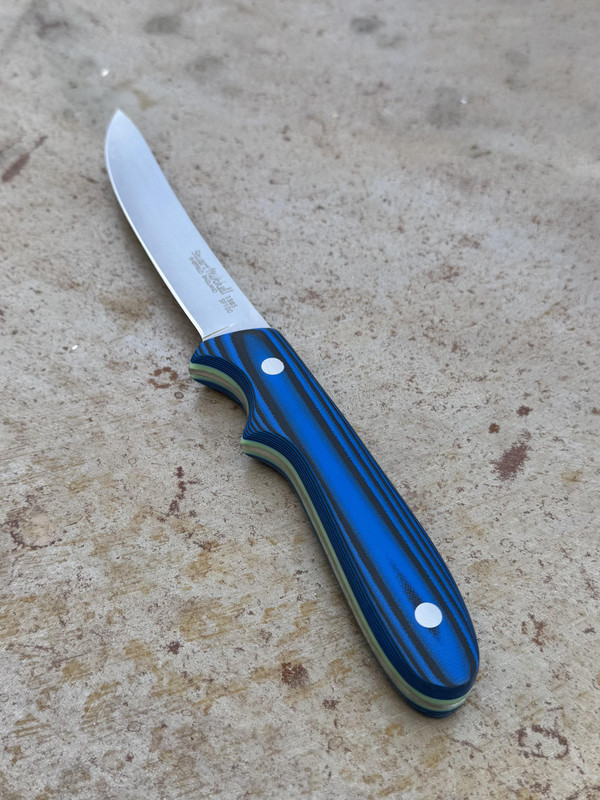
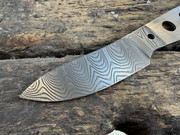
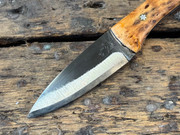
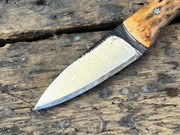
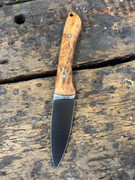
Not a P90 but this is from a couple of weeks ago, 2mm stock SF100 steel.

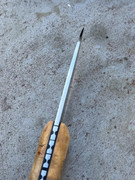
Blue/black Suretouch (G10 and rubber layers) and Starlight GITD liners.

I like the sound of the Suretouch. Sounds like it removes one of G10's main drawbacks. Does it affect the weight at all? That being the other drawback. With it being rubber, how does it cut/grind? is it more susceptible to overheating/damage?

Lovely knife too.
 
Last edited:
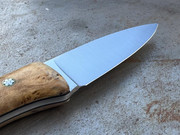
I like the sound of the Suretouch. Sounds like it removes one of G10's main drawbacks. Does it affect the weight at all? That being the other drawback. With it being rubber, how does it cut/grind? is it more susceptible to overheating/damage?

Lovely knife too.
It is a nice material.

Probably a little lighter in weight than normal G10, but I have never checked it like-for-like. Cuts and shapes nicely, no problems. I finish it down to around 400g, and I find that fine enough.

Kydex moulds well around it, too, so there are no overheating issues.
 
  • Like
Reactions: HillBill
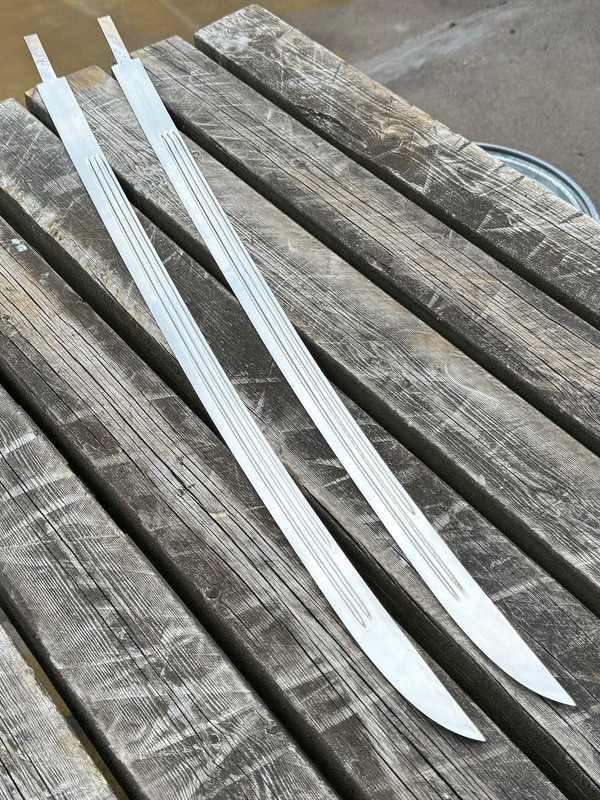
How do you do your fullers Stu? Ball nose end mill?
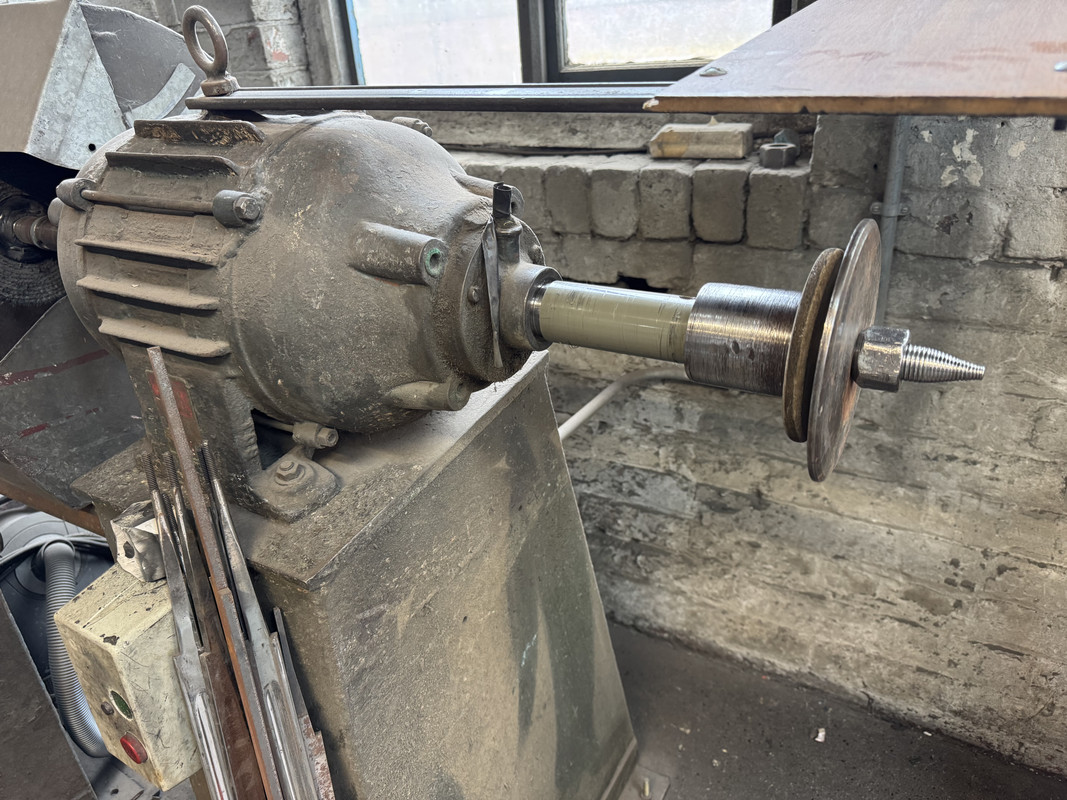
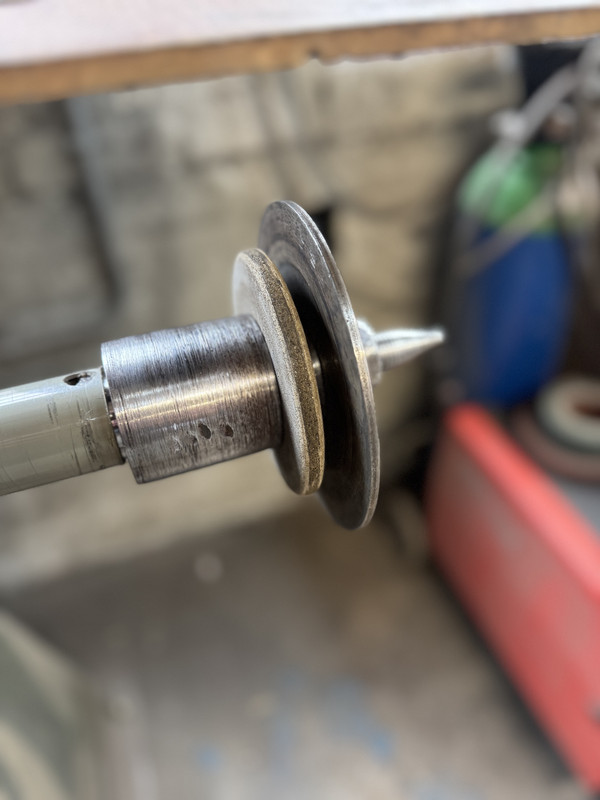
I set this up...


Like this...


The smaller 'wheel' you see there is the cutting wheel, the larger is a steel disc that the spine of the blade can rest against.

I fit spacers between the steel wheel and cutting wheel to govern the distance from the spine of the blade to where the groove is cut.

Once I have a to gro ove cut where I need it I remove the steel wheel and use different grinding and finishing wheels to adjust groove width and finish etc.

A but Heath Robinson but it works and what I really like about the set up is that I can grind curved grooves.

 
I set this up...


Like this...


The smaller 'wheel' you see there is the cutting wheel, the larger is a steel disc that the spine of the blade can rest against.

I fit spacers between the steel wheel and cutting wheel to govern the distance from the spine of the blade to where the groove is cut.

Once I have a to gro ove cut where I need it I remove the steel wheel and use different grinding and finishing wheels to adjust groove width and finish etc.

A but Heath Robinson but it works and what I really like about the set up is that I can grind curved grooves.

Quite an elegant solution really. I can see the benefits of it for grinding curves. I like it.
 
I love the Hunter blade shape, bit of me that is. Reminds me of a butchers steak knife Dad gave me. (Dad was a butcher his entire working life, 14 to 70) Which he says he's had since the 60's or 70s (he couldn't remember exactly)

I just went and found it. Its still in the original sleeve. 'The Smithfield Professional Range' Made by S. Staniforth, Sheffield.

He dropped it once upon a time and dinged the edge. Not long after he got it. He saved it all these years (because he throws nothing away unless my Mum makes him lol) and gave it to me to re grind almost a decade ago.. Told him i loved the shape and he said i could keep it. I never did end up fixing the edge...

Untitled by Mark Hill, on Flickr

by Mark Hill, on Flickr

Original price tag still on it too, £4.45

by Mark Hill, on Flickr
I used to work for Lakeland in the 1980s. We sold so many of those knives! Really good tools.
 
  • Like
Reactions: HillBill
Maybe not the correct forum for this one? ;)

A gent on another forum has a knife in his possession, a knife he has a long history with and one with great sentimental value to him. However, it is Scandi ground, and he cannot get along with that aspect of it. So I told him to send it to me.

It is a nice knife, nicely made and finished, etc, and you will all know the maker (is Lance still making?). The grind just doesn't suit the fella and what he wants to do with it.

Well, it didn't.


BCUK Shop

We have a a number of knives, T-Shirts and other items for sale.

SHOP HERE