
some more spears

  • BushMoot: Come along to the amazing Summer Moot 31st July - 5th August (extended Moot : 27th July - 8th August), a festival of bushcrafting and camping in a beautiful woodland PLEASE CLICK HERE for more information.

Dave Budd

Gold Trader
Staff member
Jan 8, 2006
2,964
454
46
Dartmoor (Devon)
www.davebudd.com
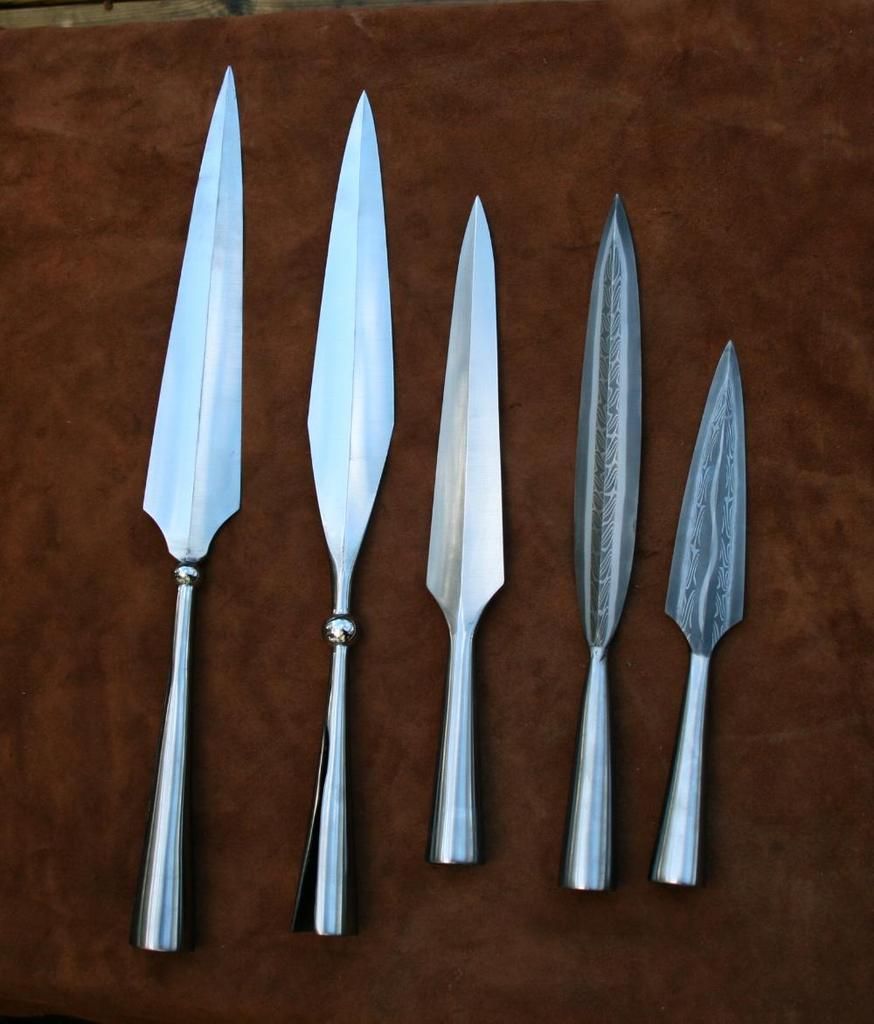
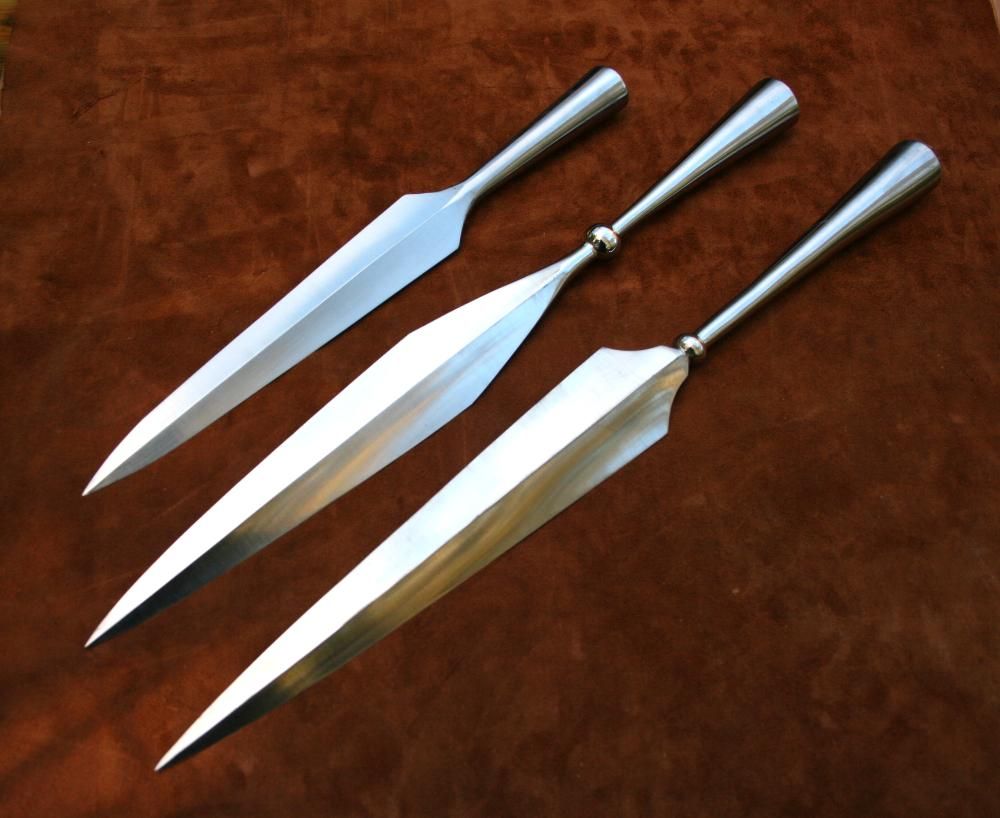
With the re-enactors market (TORM) coming up next week, I've been working on a bunch of tools. Lots of adzes and axes, some spades and some carving tools; but just to show I can do posh when I feel like it, I made some spear heads too :)


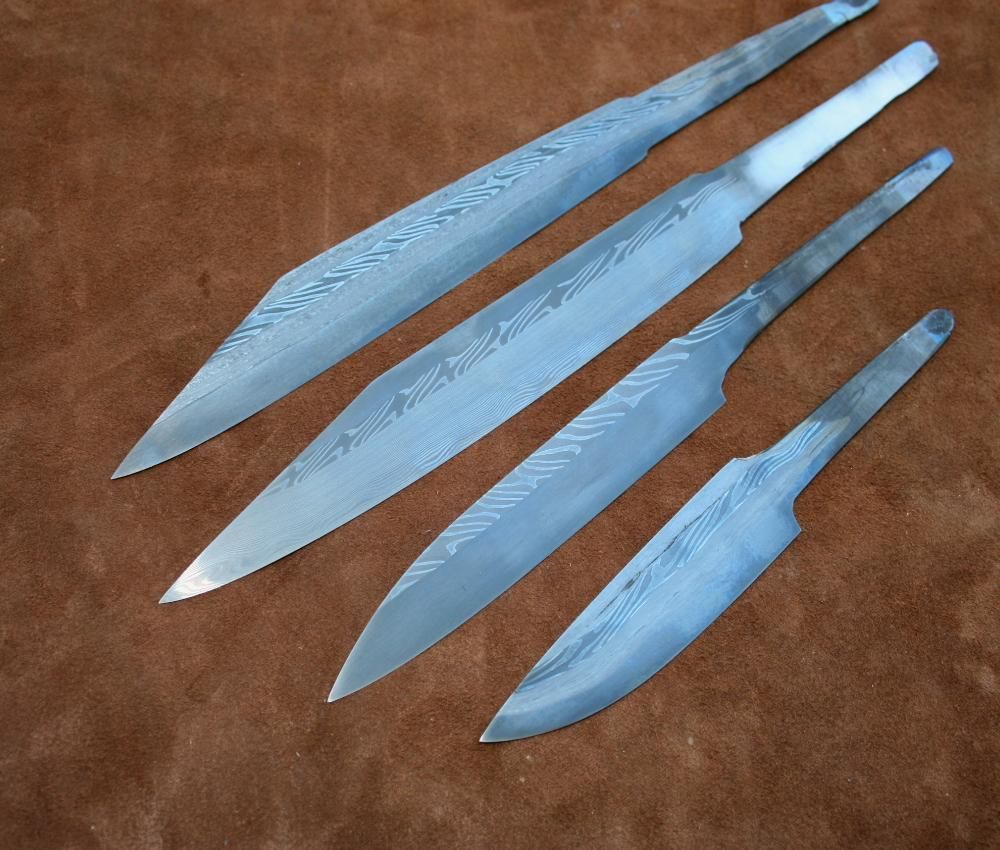
The Longest one has a blade of 13" and is made from a single piece of EN9, hollow ground. I had some issues with the wrought iron splitting during the final assembly, so rather than wasting it I cut the billets apart and made blades instead.


Shiny! :D
Very nice work, especially like the small one with the wavy spine. Nice knives too, the seax style one really caught my eye.
Think you should sell out fast with that that bunch of pretties.

Sent via smoke-signal from a woodland in Scotland.
 
Wow, those are stunning!

One of my hobbies is the study of pre-industrial Japan's military arts. The spear is something I've only briefly covered.

A fascinating fact I learned about organised spear units was that ribbons, horse hair etc not only identified a specific unit, it also helped stop the blood from running down the lance/spear and making your grip slip. That posture you see in film where the spearman aggressively stops/stamps with spear pointed at your eyes? that's to shake the blood from the horse hair.

Tsuba/sword guards? To stop your blood wet hands slipping from the sharkskin wrapping onto your own blade. Not to protect your hand from the other sword.

Love it lol

Liam
 
They're all very different. How did you come up with the designs? The shapes? Are some for piercing armour, and some for throwing?
Are they historically accurate representations then? Are they what the Roman legionary would have used? Thats what a couple remind me of. Some old Roman film I must have seen...
 
Beautiful shiny tools. Amazing craftsmanship Dave. The Seax are stunning. Have you buyers for the these?
 
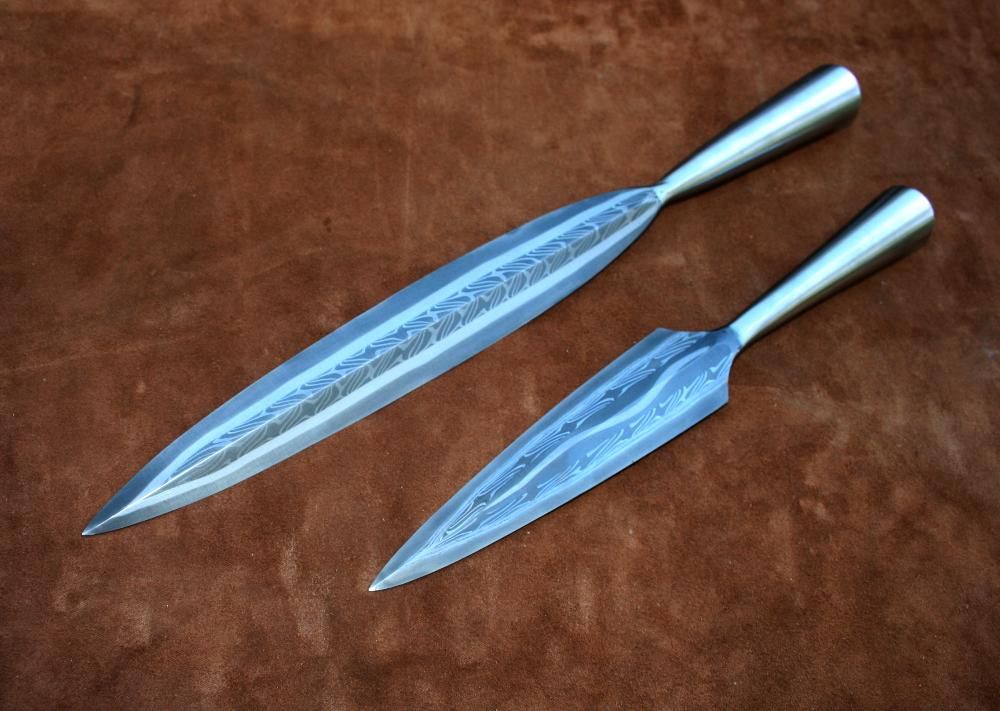
I've never seen pattern welded spearheads before - they're gorgeous though.
Cracking work on all shown. I reckon there will be several very happy dressy-uppers enthusiastically whittling handles and shafts for that lot!
 
Wow, those are stunning!

One of my hobbies is the study of pre-industrial Japan's military arts. The spear is something I've only briefly covered.

A fascinating fact I learned about organised spear units was that ribbons, horse hair etc not only identified a specific unit, it also helped stop the blood from running down the lance/spear and making your grip slip. That posture you see in film where the spearman aggressively stops/stamps with spear pointed at your eyes? that's to shake the blood from the horse hair.

Tsuba/sword guards? To stop your blood wet hands slipping from the sharkskin wrapping onto your own blade. Not to protect your hand from the other sword.

Love it lol

Liam

those spearheads are simply stunning... :You_Rock_

sorry if i sidestep from the original thread.... question for miyagi: do you know which timbers were used for the shafts? as spears have come a bit out of fashion these days nobody around here can help me out answering that question....
 
those spearheads are simply stunning... :You_Rock_

sorry if i sidestep from the original thread.... question for miyagi: do you know which timbers were used for the shafts? as spears have come a bit out of fashion these days nobody around here can help me out answering that question....

As far as I've been told; larch, oak and camphor depending upon availability and cost etc. These were sometimes also covered in strips of laquered bamboo.


Liam
 
Myagi: In Europe, the UK included, most spear shafts archaeologically appear to be ash or willow, though hazel, chestnut and elm have been found. Most woods are better cleft and shaved to round rather than used 'in the round', but straightish hazel and willow shafts are so quick and easy from a well managed stool :)

I like that info about the tassels and ribbons on spears, makes sense. I expect it also helps to distract the opponent from the dangerous part too?


Dave: These are mostly historically correct. The two lances with the beads on the sockets are 11-13th century, the plain steel one is spot on for 10th-13 but would happily sit several hundred years either side, the pattern welded lance with the herringbone core is right for 8th-11th but would work a bit earlier too and the wiggly one is more 7th-11th in shape but the wiggly snake is potentially anachronistic (but still possible think).

A lot of generic spear shapes (such as the plain steel without the bead and the pattern welded ones) would be right for most periods from the late iron age through to the 16th century, but the patterns in the welding and to some extent the form of the socket would suggest more specific dates. That said, if it's vaguely right and it's pointy then most folk wouldn't mind :8
 
Dave: These are mostly historically correct. The two lances with the beads on the sockets are 11-13th century, the plain steel one is spot on for 10th-13 but would happily sit several hundred years either side, the pattern welded lance with the herringbone core is right for 8th-11th but would work a bit earlier too and the wiggly one is more 7th-11th in shape but the wiggly snake is potentially anachronistic (but still possible think).

A lot of generic spear shapes (such as the plain steel without the bead and the pattern welded ones) would be right for most periods from the late iron age through to the 16th century, but the patterns in the welding and to some extent the form of the socket would suggest more specific dates. That said, if it's vaguely right and it's pointy then most folk wouldn't mind :8

Very interesting. Thanks Dave. I'd have thought at something like TORM you'd have very picky customers?
Interesting that they didnt change from the late iron age through to the 16thC. Must have just worked I guess!
 
Myagi: In Europe, the UK included, most spear shafts archaeologically appear to be ash or willow, though hazel, chestnut and elm have been found. Most woods are better cleft and shaved to round rather than used 'in the round', but straightish hazel and willow shafts are so quick and easy from a well managed stool :)

I like that info about the tassels and ribbons on spears, makes sense. I expect it also helps to distract the opponent from the dangerous part too?

i m surprised about the use of willow and hazel for spears- i presume we talk about lances here and not javelins? : i would not have expected them to be strong enough to withstand the force of an incomming opponent, especially on horse....

reg. tassels/ribbons: i remember reading that maori taiaha were decorated with kiwi feathers behind the arero/tongue to distract the opponent during combat....
 

BCUK Shop

We have a a number of knives, T-Shirts and other items for sale.

SHOP HERE