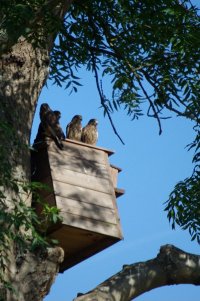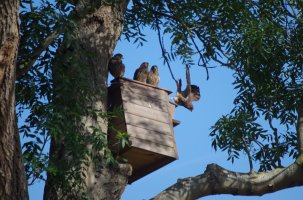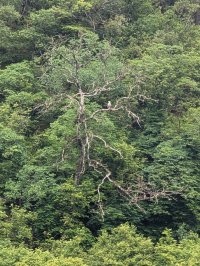
What wildlife did you spot today?

  • BushMoot: Come along to the amazing Summer Moot 31st July - 5th August (extended Moot : 27th July - 8th August), a festival of bushcrafting and camping in a beautiful woodland PLEASE CLICK HERE for more information.
Watching the last of my bee's buggering off. I captured the swarm 3 times and unsuccessfully rehoused them in different hives. I've kept bee for over 12 years now and never had this problem. I've had to watch them go and wished them luck.

I'm pretty sure its a sad environmental fact - There is no food source for them. June/July is always tough, but they have brought back almost nothing, despite my feeding them. Both colonies stripped their stores, stopped laying and left, no queen cells or bees left behind to nurse young.
I have moved back to an urban housing estate environment, surrounded by empty fields and very little tree varieties or number, despite the river and flood plain (where not built on). Plain grass council "parks" and recreation grounds are another form of environmental disaster. Gardens tend to be sterile desultory patches of lawn for the kids to play on and minimal plant life. The birds only survive on householder handouts, even the kites.
The only wildlife left seem to be the mice and rats eating my kitchen waste compost heap. I've seen two butterflies and no caterpillars.
 
  • Sad
Reactions: GreyCat
Watching the last of my bee's buggering off. I captured the swarm 3 times and unsuccessfully rehoused them in different hives. I've kept bee for over 12 years now and never had this problem. I've had to watch them go and wished them luck.

I'm pretty sure its a sad environmental fact - There is no food source for them. June/July is always tough, but they have brought back almost nothing, despite my feeding them. Both colonies stripped their stores, stopped laying and left, no queen cells or bees left behind to nurse young.
I have moved back to an urban housing estate environment, surrounded by empty fields and very little tree varieties or number, despite the river and flood plain (where not built on). Plain grass council "parks" and recreation grounds are another form of environmental disaster. Gardens tend to be sterile desultory patches of lawn for the kids to play on and minimal plant life. The birds only survive on householder handouts, even the kites.
The only wildlife left seem to be the mice and rats eating my kitchen waste compost heap. I've seen two butterflies and no caterpillars.

I walked past a house the other day and they had replaced their entire large front garden (we're talking probably 100sqm) with plastic astroturf. There should be planning regs against things like that, if there aren't already.
 
  • Angry
Reactions: GreyCat
Yup, The use of astroturf to save mowing and year round kiddie football is burgeoning, despite it's cost. My brother has done it too, no gardening whatsoever. No building regs provided required provided it drains into the ground not down the drains.
 
  • Sad
Reactions: GreyCat
Thats sad.

Stopped on the lane for a female pheasant, THEN she decided to fly straight up...

(Something ate all our Partridge chicks; still, they can at least raise a family, unlike the pheasants...)
 
I walked past a house the other day and they had replaced their entire large front garden (we're talking probably 100sqm) with plastic astroturf. There should be planning regs against things like that, if there aren't already.

There was a proposal by the Senedd a couple of years ago to ban sale of fake grass/Astroturf for gardens in Wales. There was a right to-do about it and they dropped the idea. I was so annoyed when they dropped the plan. Yes, OK there would have been some logistical issues, but it's so environmentally bad.

But then again, they should also have put restrictions on turning lawn/garden into driveways many years ago. The amount of extra run-off if you pave over all the gardens in an area (e.g. a new estate) which is not unusual.....

... our old place, we were the only house on the whole estate to not have had the old drive and adjacent garden bit removed and a big paved drive which replaced both put in. Instead, I added raised bed planters all along the side of the driveway to increase the amount of greenery, planted a yew hedge and put lots of shrubs in. Also planted a birch tree at the very front. (There's still room for a car on the original drive).

There's a special place in hell for people who put fake grass down......

GC
 
  • Like
Reactions: Falstaff and Chris
I'm pretty sure its a sad environmental fact - There is no food source for them. June/July is always tough, but they have brought back almost nothing, despite my feeding them.
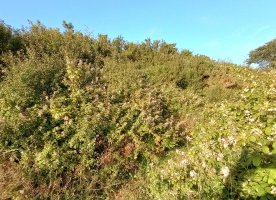
Thankfully there's a decent amount of forage around here for my bees, but even in the deep countryside it's getting a bit barron. Fields stripped for silage and they are slow to grow back due to the dry weather and an ever increasing amount of pasture ploughed and grain grown.

At least I'm doing my bit, this is a pic of one of our hedges. Most farmers will flail theirs half to death but ours are left to grow out - it's about 5m deep and is full of honey bees, bumbles, hover flies and other strange winged beasties. Plenty of birds and other wildlife in it too.

IMG_20250709_192618103_HDR~2.jpg
 
  • Like
Reactions: William_Montgomery
UK building/planning regs now require driveways and paved areas over X m2 to drain into the ground they are on. New builds with over Ym2 floor area (includes flats) now have to install stormwater storage chambers on the site.
Stove client this morning commented that he'd noticed the big drop off in insect and wildlife in his garden since he had removed his wildlife pond (for fear of his young grandkid falling into it - I hear this so often - fix a net over it if you cannot be bothered to watch a young child._)
 
  • Like
Reactions: Chris
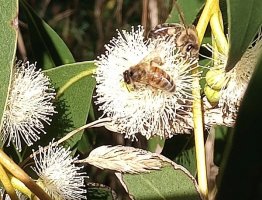
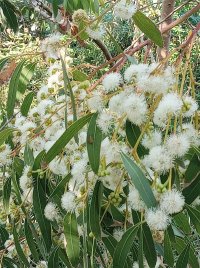
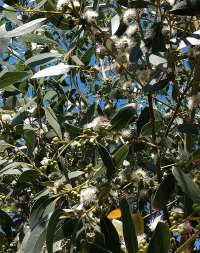
Not sure if this counts as wildlife or livestock, anyway a couple of our honey bees foraging on one of our eucalyptus we grew from seed. I've added a few pics of the euc because the flowers attract a wide range of bees, hoverflies and other insects and it flowers at a useful time of year. It must produce a decent amount of nectar and pollen judging by the bees, also flowers at a young age and produces viable seed.

Euc2.jpg
Euc1.jpgEuc3.jpg
 
  • Like
Reactions: Pupers

BCUK Shop

We have a a number of knives, T-Shirts and other items for sale.

SHOP HERE