Anyone know what this old tool is?

  • The awesome MakerMoot is coming up (13-15th Nov 2026), Visit the TORM & ARM markets,and have space back at camp to work on projects and enjoy great company. PLEASE CLICK HERE for more information.

Mesquite

It is what it is.
Mar 5, 2008
28,938
3,892
65
~Hemel Hempstead~
Recovered this item from a pile of rubbish on an old plant nursery site.

Can't say I've ever seen anything like it before. :dunno:

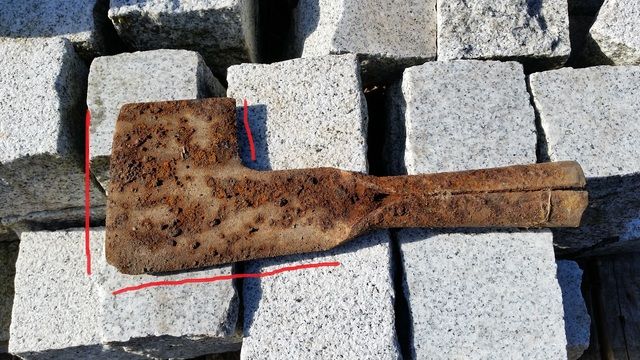
It's got sharp edges on the sides lined with red, obviously had a handle mounted on it but no sign of that now. The longest sharp edge is about 6" and it's about 6mm thick.

I may well clean it up because it's unusual but I'd like to know what it is and was for and what sort of length handle it would have been mounted on.

So any ideas?
 
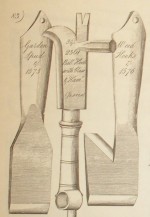
A becket: Fenland term for a peat cutter.

All the peat cutter I've seen have a wing that comes forward from the main blade (see picture) which this doesn't. It also doesn't explain why the extra edges are sharpened

Spade%20%20AI.jpg
 
Given it was found at a nursery...a root cutter?

Modern ones look like spade sized chisels.
 
There are two tools that can be used for peat cutting. A flachter and a tuska. Not sure of the spellings or which one is used for which now but it could be one of those. One is as in the pic above for cutting the peat one is for removing the top layer to get at the peat.
 
Last edited:
I would guess that's an old long handled pruning tool, the sharp edge pointing towards the user suggests that together with the socketed handle fitting.
 
I'd also say a turf/peat cutter...... it could be used for brush cutting too possibly. Is it a whole piece? Or has their been something snapped off somewhere? It makes no sense for the area not marked red to be blunt... as for cutting turf and peat, that would be the bit that first cut into the soil......It would cut to a certain depth, and then be pulled to cut through turf and root.
 
Last edited:

BCUK Shop

We have a a number of knives, T-Shirts and other items for sale.

SHOP HERE