Limited Canned Goods.

  • The awesome MakerMoot is coming up (13-15th Nov 2026), Visit the TORM & ARM markets,and have space back at camp to work on projects and enjoy great company. PLEASE CLICK HERE for more information.
We only store staples in terms of commercial cans, and we rotate them regularly so nothing ever expires. We keep ca. 6-12 months worth, and the oldest we'll ever end up with is ca. 1yo cans, so they have many years left in them at all times.
Also, given that we have unlimited access to meat and can ramp up vegetable production, most of our commercial cans are convenience stuff or things we can't easily get, like chopped / peeled tomatoes or mackerel in oil, plus some 'luxury' stuff like sauerkraut, good pickled gherkins and so on.
We have a pressure canner with lots of jars and a massive supply of spare lids, and pressure-can copious amounts of goulash every year, which gets routinely rotated. My land is around 4-5h from our home and I usually stay there for many days or weeks at a time; it usually doesn't make any sense to rush back home if I shoot something early on and it's not cold enough to hang for days, so canning the meat saves me having to drive back to stick venison in the fridge when it's not as cool as I'd like it outside.

So, our 5 items of most stashed cans are:

-tomatoes
-mackerel / tuna in olive oil
-pickled stuff
-goulash (home-canned)
-butter beans
 
  • Like
Reactions: 66jj99
I agree that the tins are definitely becoming thinner and more minimal - not surprising really when you think about it - I wonder if its possible to even imagine the amount of metal in worldwide circulation that is essentially a disposable ( albeit recyclable in most countries ) container.
There could be something in that given the energy required to acquire the materials be that raw or recovered and the need to keep costs down and profits up but I would think it's more to do with weight and with that, transportation weight as a few grammes lost per can multiplied by a lot of cans makes for less fuel required to shift that weight in what is a situation where prices for everything except wages are rising.

That said there is another more cynical part of my mind that begs for attention and yeah i'll hear it, the part that reminds me of my experience of metal cans failing well before the best before date telling me of a cynical business ploy inherent in the weak packaging.

Would commerce be that cunning, dunno, maybe, whatever, then mitigate, don't give them what they may want - of which of course goes on to steel oneself to do better: select the best cans, store them the best conditions and keep an eyeball on them so the contents going awol are caught before they stink the place out/contaminate or just aren't there when you have need of them.

Hard to think of canned food still being found edible from the 1907 Shackleton Expedition to the Antarctic, but for sure the conditions of storage will have a lot to do with that, and doubtless potentially better packaging.

 
There could be something in that given the energy required to acquire the materials be that raw or recovered and the need to keep costs down and profits up but I would think it's more to do with weight and with that, transportation weight as a few grammes lost per can multiplied by a lot of cans makes for less fuel required to shift that weight in what is a situation where prices for everything except wages are rising.

That said there is another more cynical part of my mind that begs for attention and yeah i'll hear it, the part that reminds me of my experience of metal cans failing well before the best before date telling me of a cynical business ploy inherent in the weak packaging.

Would commerce be that cunning, dunno, maybe, whatever, then mitigate, don't give them what they may want - of which of course goes on to steel oneself to do better: select the best cans, store them the best conditions and keep an eyeball on them so the contents going awol are caught before they stink the place out/contaminate or just aren't there when you have need of them.

Hard to think of canned food still being found edible from the 1907 Shackleton Expedition to the Antarctic, but for sure the conditions of storage will have a lot to do with that, and doubtless potentially better packaging.
Planned obsolescence. You are not just onto something; you nailed it.
 
Beeb article today:

Straight forward,
No drama,
Nothing fancy of difficult to obtain,
Makes sense.

See post #141 :)

No, I think it comes over as faddy, I'm really not that bothered about the level of processing, sugar content, and thing like that if we are talking about a few weeks or even a few months (unless, of course, one has a medical condition that requires one to be careful). These people have clearly never tried to get kids to eat or they would realise taste is everything :)
 
See post #141 :)

No, I think it comes over as faddy, I'm really not that bothered about the level of processing, sugar content, and thing like that if we are talking about a few weeks or even a few months (unless, of course, one has a medical condition that requires one to be careful). These people have clearly never tried to get kids to eat or they would realise taste is everything :)
Likewise , I have no interest in what's considered *healthier* in **** scenarios, if it's on sale as food to have passed food standards requirements it's food simple as that. And if I have any say in what I eat it will be the best bang for the buck in terms of nutrition as I am one does not have a good relationship with food to be pining for the space age fantasy meal in a pill format. The good thing about the poor relationship with food is that I have well trained myself to eat less and less often.
 
  • Like
Reactions: Athos
Sauerkraut is said to be full of nutrients; you can make it yourself too.

The BBC have not seen the amount of bottling I'm doing this month.
 
Having ingredients to store grown/harvested food is essential as a canned supply will only last a short time in reality but is good for a few weeks (unless you have a serious preppers urge).

Bring able to pickle, bottle, can, salt, dehydrate, make alcohol, then vinegar, 25kg of rock salt is cheap to store and lasts ages, will over the long term be more useful.

But for sake of the thread...

  1. Corned beef
  2. Pilchards in Tomato Sauce
  3. Steak
  4. Chilli - Extra Hot
  5. Tuna in Brine
 
  • Like
Reactions: Athos
Beeb article today:

Straight forward,
No drama,
Nothing fancy of difficult to obtain,
Makes sense.


Unsalted nuts? Why unsalted?

Not much salt in the rest of the menu, obsessively reducing salt in the name of ‘health’ sounds rather counterproductive if we are talking food for survival. Unless there’s a good reason salted nuts wouldn’t last as long? Would’ve thought the opposite to be honest.
 
Unsalted nuts? Why unsalted?

Not much salt in the rest of the menu, obsessively reducing salt in the name of ‘health’ sounds rather counterproductive if we are talking food for survival. Unless there’s a good reason salted nuts wouldn’t last as long? Would’ve thought the opposite to be honest.
You can salt nuts, you can't remove salt from salted nuts. It's a more flexible option, if you have a connected preservation plan.
 
Unsalted redskin peanuts are easy to store, a good and relatively cheap protein that can be used in so many different recipes. For a family or when short of food, they can be made to go a long way if made into a sauce. It enables a more even distribution for a group than meat (unless minced meat) and avoids fights. Peanut butter ditto, without the additional calorific energy required to prepare or cook it.
I agree the healthier diet concept is irrelevant in those scenarios, it will happen any way from general weight loss and having less to eat.

For the thread I would add a large 5ltr tin of olive oil, and a drum of flour. (preferably wholemeal).
 
Unsalted redskin peanuts are easy to store, a good and relatively cheap protein that can be used in so many different recipes. For a family or when short of food, they can be made to go a long way if made into a sauce. It enables a more even distribution for a group than meat (unless minced meat) and avoids fights. Peanut butter ditto, without the additional calorific energy required to prepare or cook it.
I agree the healthier diet concept is irrelevant in those scenarios, it will happen any way from general weight loss and having less to eat.

For the thread I would add a large 5ltr tin of olive oil, and a drum of flour. (preferably wholemeal).
+1 from me for the olive oil! We are blessed with 200 olive trees in Greece, which make the oil for the whole extended family, and we always have a couple of cans sent over every year.

Extra virgin olive oil is probably the best you can get in terms of oils, but even sunflower oil is decent for storing for 'those' days and a good source of calories. These oils have ca. 9k kcal per kg, so a 20lt can (17kg) has ca. 150k kcal in it. Even the most expensive olive oil at £15-20/kg comes at around £1.50-2.00 / 900kcal, so it's not actually that expensive, and sunflower oil is 1/10th that price. Oils are great in that sense, and they do keep well for a couple of years as long as they are not opened.

Speaking of fats, we always keep several blocks of lard and butter in our freezer. Along with the olive oil, they get used heavily for everything we cook, especially when we make goulash, since venison is very lean on its own.

For a flat dweller with little other options for cooking if the power went out, cans are a good option and there are plenty of decent options that everyone above has already described. But, given any other options where you can actually cook, I think cans are mostly useless and there are far better options, other than a very small quantity kept for times when you absolutely cannot cook.
 
  • Like
Reactions: Falstaff
Even if you are able to cook, you will probably be fuel poor, e.g. intermittent power supply or rationing, limited bottled gas etc.
Tins of ready-cooked foods that normally need a lot of cooking, e.g. legumes, then come into their own and can be eaten cold or warmed up. Olive oil can be used cold, and also to make low fuel demand food, e.g. unleavened flatbreads, sauces.
 
Even if you are able to cook, you will probably be fuel poor, e.g. intermittent power supply or rationing, limited bottled gas etc.
Tins of ready-cooked foods that normally need a lot of cooking, e.g. legumes, then come into their own and can be eaten cold or warmed up. Olive oil can be used cold, and also to make low fuel demand food, e.g. unleavened flatbreads, sauces.
Lentils... they cook in ca. 20-30' max, and they are great for you. They also keep for years vac-packed.

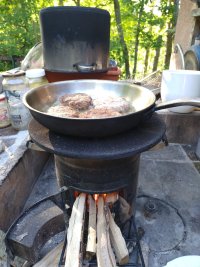
Fuel-wise, I get you. But, if one is a bit more rural or if they have access to a garden, then you want to have one of these babies: a rocket stove.

1790086101333.jpeg


Just a few sticks will give you lots of power for a very long time. Contrary to popular belief, the power can be regulated to some extent, once you know how to measure the fuel you add. I have several Primus stoves, gas stoves, a couple of kelly kettles, but this one is hands-down the most versatile and powerful stove we have. So much so that we have one at each of our places.

Actually, a rocket stove would be one of my top-of-the-list items for 'those days'.
 

BCUK Shop

We have a a number of knives, T-Shirts and other items for sale.

SHOP HERE