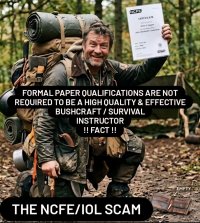
The NCFE & IOL Bushcraft "Qualifications" are simply BS.
Just being a member of BCUK and attending meets with local bushcraft clubs you can learn, for free, everything that is taught on these courses.
The Case for Competence Over Credentials in Bushcraft and Survival
For centuries, the skills required to thrive in the Great Outdoors were passed down through mentorship, observation, and rigorous trial and error.
Recently, however, there has been a significant push towards the formalisation of the industry through NCFE or Institute for Outdoor Learning (IOL) qualifications. While these certificates offer a convenient shorthand for insurance providers and local authorities, they do not necessarily define the quality of an instructor or the depth of their woodsman craft and survival expertise.
The argument against mandatory formal qualifications rests on three primary pillars: the preservation of diverse traditions, the difference between academic testing and practical mastery, and the unnecessary financial barriers to entry for both survival specialists and bushcraft practitioners.
Experience is Not an Exam
A qualification is often a snapshot of a person’s ability to perform specific tasks under supervised conditions over a few days. In contrast, true survival and bushcraft are evolving relationships with the natural world that take years to cultivate.
Fixed Syllabuses vs. Deep Knowledge:
Formal courses often follow a rigid "tick-box" curriculum. A survival instructor who has spent decades navigating extreme environments or a bushcraft expert specialising in primitive fire lighting may have a depth of knowledge that far exceeds the requirements of a Level 3 NCFE, yet their expertise remains technically "unrecognised" by these bodies.
Safety Through Experience: Safety in a survival situation is about judgement, which is forged through time spent in the elements, not just by memorising a risk assessment template provided by an awarding body.
An instructor who has managed real-world emergencies possesses a level of competence that a classroom-based qualification cannot replicate.
Financial and Bureaucratic Barriers
The requirement for specific IOL or NCFE badges creates a "pay-to-play" environment. For many highly skilled survivalists, particularly those with military backgrounds or those who have learnt through non-traditional paths, the cost of these courses is prohibitive.
Monopolising Knowledge:
When bushcract & survival is made into an industry, and that industry decides that only a handful of organisations can "authorise" instructors, it risks creating a monopoly.
This can stifle innovation and lead to a homogenised version of survival training that ignores regional variations and ancient techniques.
Exclusion of Experts:
Many of the most respected figures in the survival and bushcraft world do not hold these modern certificates. Requiring them implies that their decades of field experience and specialised skills are worth less against a week-long assessment.
The Value of Reputation and Lineage
In the outdoor community, an instructor’s reputation used to be built on the quality of their students and the testimony of their peers now its more about social media influence.
Peer Review:
The community is small enough that word of mouth acts as a powerful quality control mechanism. A survival instructor who cannot teach effectively or who operates unsafely will not last long, regardless of the certificates on their wall.
The Apprenticeship Model:
Mentorship allows for a more nuanced transfer of skills than a classroom setting. By prioritising NCFE qualifications, we risk devaluing the traditional apprenticeship model that has served the survival and bushcraft community for generations.
Summary
While formal qualifications may provide a comfortable safety net for large organisations, they should never be viewed as the sole benchmark for excellence. We must ensure that the outdoor industry remains an inclusive space where practical skill, survival instinct, and lived experience are valued more than a printed certificate. The true test of an instructor is found in the field, not in a portfolio of "evidence".



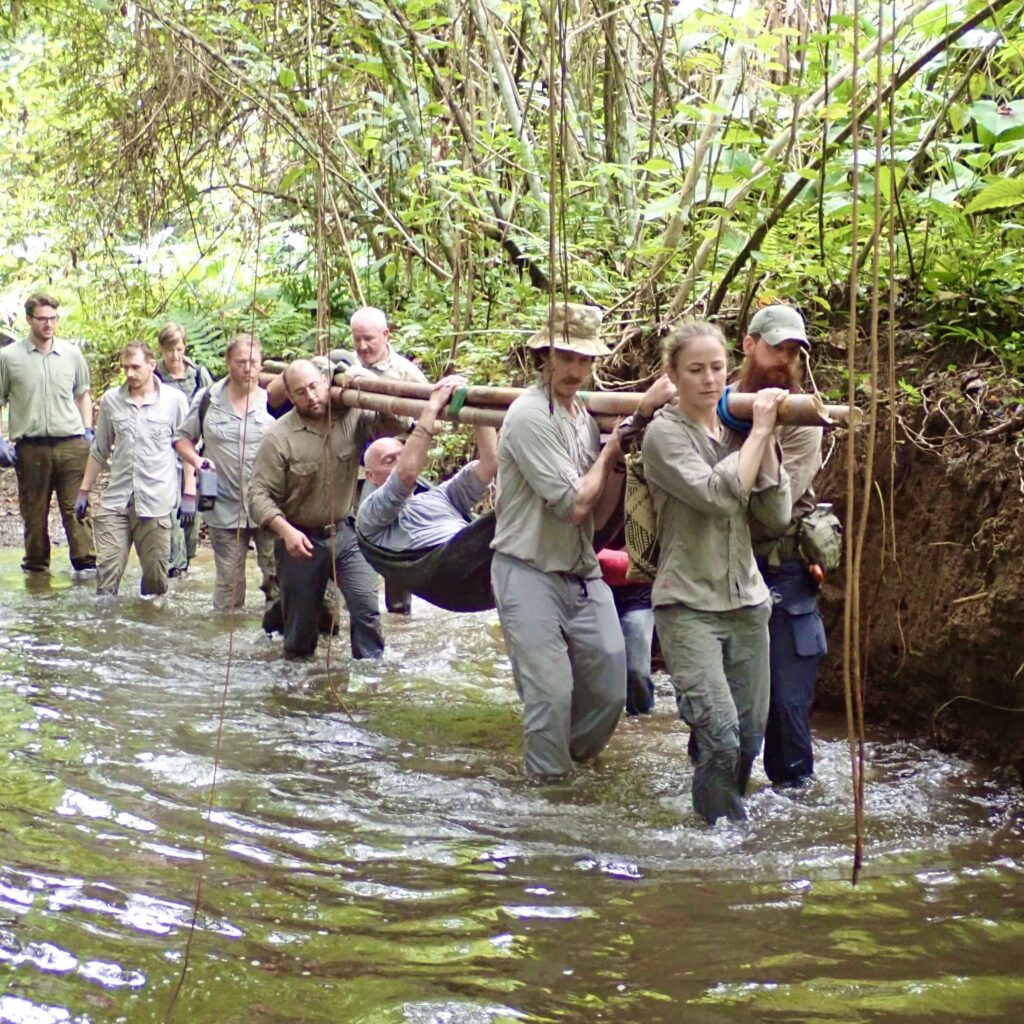


 ....now his school is one I would like to attend, if he started it.


