A.I Created images and video

  • BushMoot: Come along to the amazing Summer Moot 31st July - 5th August (extended Moot : 27th July - 8th August), a festival of bushcrafting and camping in a beautiful woodland PLEASE CLICK HERE for more information.
In 2005... There was one test, which you took twice with different questions, but the same thing was measured on both. Thats personal experience... not google.

BOOOM!!
Yes Mark as I've previously explained in the private message to you the examination test is based around the Stanford-Binet' and 'Cattell IQ test , but I was speaking about how Mensa have a working model of 8 differing intelligence types.

Also personal experience - not that it matters to me , but seems to matter to yourself.
 
Read my reply. Just shows that you're talking theory, while i'm talking facts. Mensa do not use the 8 models of intelligence. As i just pointed out above

Facts matter more than personal stuff mate. When you're wrong, you're wrong. And if you believe Mensa use the 8 types... (at all, in anything) you have no personal experience of just 1 type, never mind 8.
 
Last edited:
Read my reply. Just shows that you're talking theory, while i'm talking facts. Mensa do not use the 8 models of intelligence. As i just pointed out above

Facts matter more than personal stuff mate. When you're wrong, you're wrong. And if you believe Mensa use the 8 types... (at all, in anything) you have no personal experience of just 1 type, never mind 8.

Mark I always like the way you double down when you are aware you are incorrect to save face in the public realm, its positively charming.

I'm going to leave it there as frankly you are not adding anything new or interesting.
 
  • Like
Reactions: Chris
If i'm so charming, you wouldn't be using bullsh1t to talk your way out of it. Facts will do just fine to prove you're correct... The forum is old and wise... we can wait.

You refer to Howard Gardner's 8 types of intelligence theory, Which while known of, has not been adopted anywhere as fact... thats the thing with theories... They are theories, not facts. Same with Gravity, Same with Evolution... Same with the JFK assassination. Just because something looks good on paper, doesn't make it true. And i guess that's the point isn't it... Just because something sounds like a good idea... doesn't mean that it is.

Same for this post/ thread... I'm sure you think you are intelligent... But it doesn't mean that you are. Same for me... I may come across as having knowledge about things... but where does that 'assumed' knowledge come from... it comes from what i was taught, and the info available to all of us.... But.... what if we were deliberately taught wrong, and the info is manipulated.. so that while we think we know... in reality... if we wrote an auto biography, or memoirs.... down the line... it becomes a children's tale.... Hansel and Gretel, HB and TD... follow the crumbs little children... follow the crumbs we leave for you... follow them to where we want you to be...

A man of Mensa would enjoy that thought trail... and i'd be interested to hear about where that trail leads....
 
If i had any more hair to pull out, I would do so every time I see a Google AI summary used as confident proof of something.

It is notoriously inaccurate. Please, please have a rethink if you are using this to influence your own conclusions on things.
 
@HillBill, regardless of anything else, you are perpetuating the confusion that exists about facts vs theory.

This is just one of many sources that explain it.
“A fact is a basic observation that is repeatedly confirmed and considered true in science, while a law is an empirical description that relates facts and/or other laws. Theories do not become facts; they interpret and link facts, which are objective, irrefutable pieces of evidence that never change. In contrast, theories can be modified or disproven over time. Many scientists, including Stephen Hawking, emphasize that theories remain distinct from facts, serving as frameworks that organize and connect observations.”

Harking back to an earlier post…search engine Altavista in 1995 did not use AI as it is understood today, despite being revolutionary compared to previously available interfaces.

Also, the US military has been using Claude, it’s been in the news a fair bit. There is strong evidence that the view that the military and government use tech 10 years ahead of what is publicly available is far less valid than it was during the Cold War.

 
  • Like
Reactions: Chris
I can assure you that the technology being used by the military in the cold war was not years ahead of civilian technology. We were struggling to get worthwhile processing using the Ferranti F100 processor long after the public were using the Intel 8086. We switched all our application research to civilian technologies in the belief that military would catch up by the time the research was applied.

It wasn't just processing either - we had smaller and better gyros, the latest laser ranging technologies, and other such tools - all because, at that time, it was believed that the components had to be nuclear hardened for military use.
 
Mmm... measures of intelligence rarely use 'creativity' as far as I'm aware. I think 'intelligence' takes many forms. Some of the most 'clever' people I have known (so, people that know a lot, remember facts, or can do complex maths etc.) didn't have a grain of creativity. Us lesser plebs were responsible for having ideas and proposing solutions in the research establishment that I worked in - the clever people then 'calculated' whether it could be made to work.
Intelligence in animals and birds is often measured in their creativity at problem solving, tool use, and so forth, is it not? We're only animals with illusions of grandeur. Personally I would consider your 'clever' people were demonstrating education and memory as much as intelligence.
 
  • Like
Reactions: TeeDee
I think of it like Ugg, the caveboy.

When he has a technical question he goes to the Clevermen who give answers.

The answers are not always useful to him, but hey, answers.
 
I can assure you that the technology being used by the military in the cold war was not years ahead of civilian technology. We were struggling to get worthwhile processing using the Ferranti F100 processor long after the public were using the Intel 8086. We switched all our application research to civilian technologies in the belief that military would catch up by the time the research was applied.

It wasn't just processing either - we had smaller and better gyros, the latest laser ranging technologies, and other such tools - all because, at that time, it was believed that the components had to be nuclear hardened for military use.
How can you assure us Broch?

History states we landed on the moon in 1969 ( during the cold war). Yet NASA themselves have stated that we cant put men on the moon today, because the technology to do so was lost... How was it lost? 1969 vs 2026... 57 years difference. Yet we cant land on the moon today. But 57 years before the moon landing, was basically when we developed basic aircraft for military use.... Sopwith Camel.... moon landing.... F35... Can build F35's with impunity, wont ever build the camel again... cant go back to the moon. Literally makes no sense at all. What tech did we lose after '69, that we cant reproduce today?
 
  • Eh?
Reactions: Pattree
Of course we can still put people on the moon if we wanted to. The point is we don’t need to because we have both advanced robotics, and no need to do so as it isn’t a current priority for anyone. Main effort is towards Mars and beyond now.
 
How can you assure us Broch?

I can assure you because I was personally involved in military application research trying to use inadequate military technology at the time. Civilian microprocessor technology development was moving at a very fast pace due to competition, but military technology was mired in unnecessary restrictions and process.
 
How can you assure us Broch?

History states we landed on the moon in 1969 ( during the cold war). Yet NASA themselves have stated that we cant put men on the moon today, because the technology to do so was lost... How was it lost? 1969 vs 2026... 57 years difference. Yet we cant land on the moon today. But 57 years before the moon landing, was basically when we developed basic aircraft for military use.... Sopwith Camel.... moon landing.... F35... Can build F35's with impunity, wont ever build the camel again... cant go back to the moon. Literally makes no sense at all. What tech did we lose after '69, that we cant reproduce today?

This made me chuckle...

When I was living and working in the US I was often confronted with technical and HR limitations, and often asked my American colleagues (tongue in cheek) "how did you people manage to put as many on the moon?"

The response was generally along the lines of "different times, different people".

It reminded me of something I heard or read about the space programs of the '60s and the arms race, especially test pilots: "if we're not losing people, we're not trying hard enough".

Society has become much more risk averse. Dying because you crashed your experimental fighter jet is nobody's dream.
 
Last edited:
  • Like
Reactions: GreyCat
cant go back to the moon. Literally makes no sense at all. What tech did we lose after '69, that we cant reproduce today?
Alien technology! :D

No I jest. We probably do still have the technological capability to send a human to the moon if we wanted but there are likely two things currently missing preventing us from doing so:

1. The motivation to sent a human there (it's much easier and cheaper to send a robot).
2. A financial or strategic military incentive to make us want to send a human there.
 
Last edited:
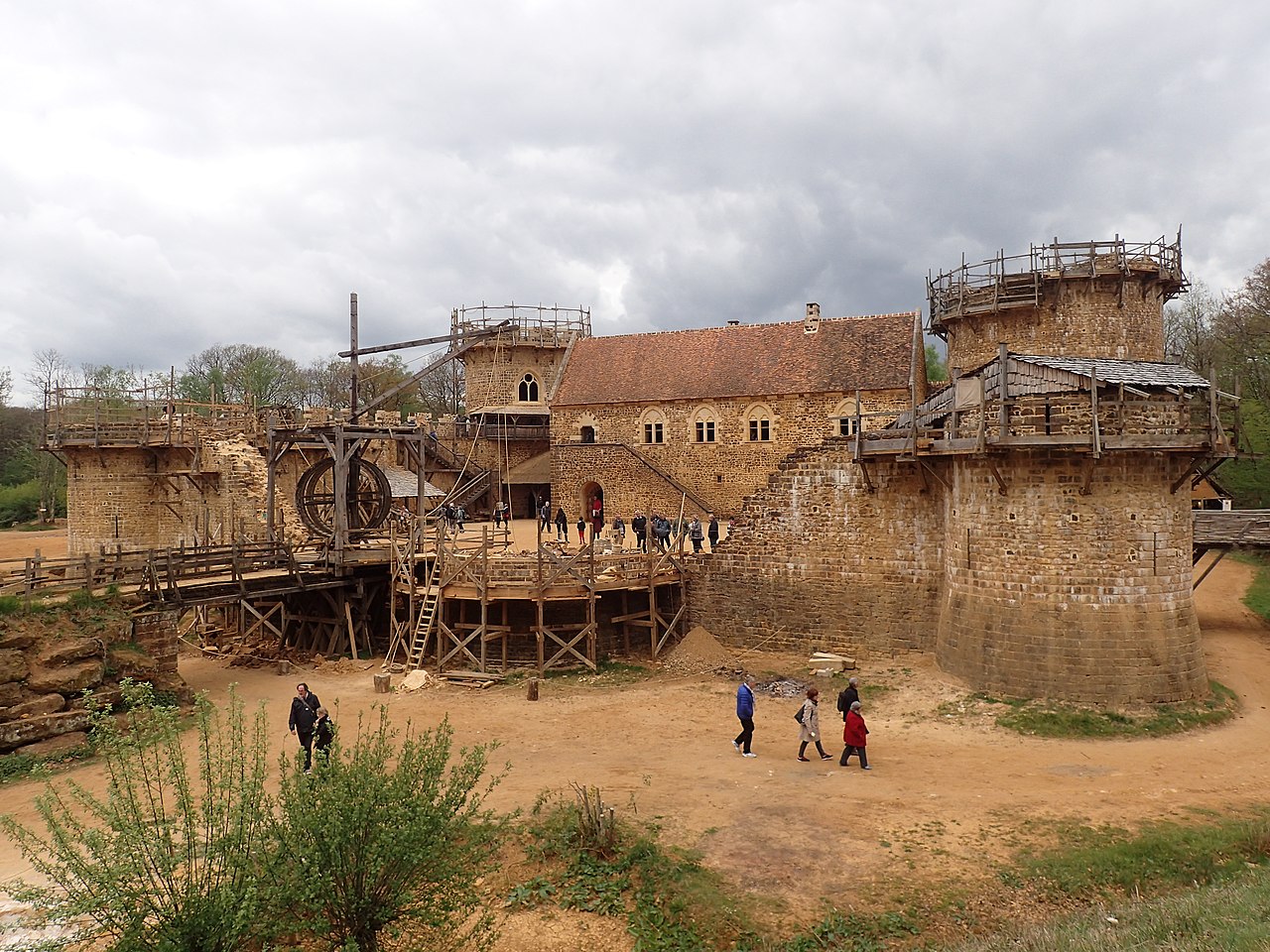
Same as we cannot build a pyramid or a gothic cathedral.
I expect we still could do if there was enough of a financial incentive to do so. But the skills required and man hours involved would be enormous so no one is willing to pay for it anymore now that much more economical options using modern building techniques are available which can create something different for fraction of the cost.

This does get me thinking though. Yesterday I walked around an old church admiring the intricate architecture. One thing which struck me in some of the fine details involved was the amount of time and love which must have gone into making every little part of it. People really cared about what they were making back then. I think that this 'love' aspect has been somewhat lost and is impossible to replicate using modern building technology and techniques making modern buildings feel 'soulless' in comparison (for want of a better word).
 

BCUK Shop

We have a a number of knives, T-Shirts and other items for sale.

SHOP HERE