Cinder block rocket stove

  • BushMoot: Come along to the amazing Summer Moot 31st July - 5th August (extended Moot : 27th July - 8th August), a festival of bushcrafting and camping in a beautiful woodland PLEASE CLICK HERE for more information.

HorseGuy

Settler
May 27, 2025
676
494
115
UK
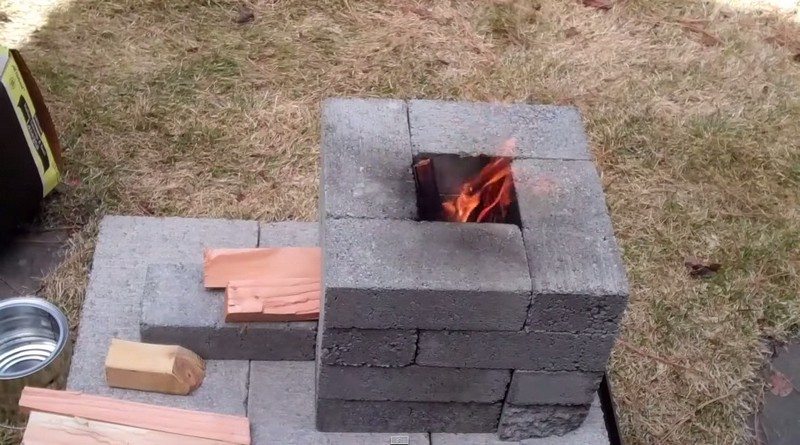
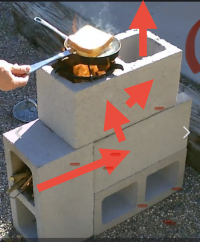
Has anyone here ever used a cinder block rocket stove?

I am considering building a quick rough and ready rocket stove to keep near to one of our horse shelters in a field. So long as it is good enough to get the job done and reasonably efficient with wood fuel that is all that is needed. It doesn’t need to be anything fancy or permanent. In fact preferably something which can be quickly built in a couple of minutes when needed then dismantled again afterwards with the building blocks kept on site near to where the stove will be.

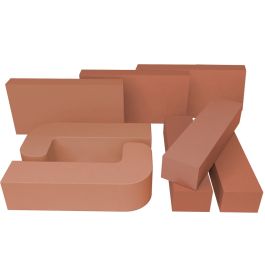
The two options that I have considered for building a rocket stove is either the 4 cinder block method or the more common house brick method. The cinder block rocket stove looks like the quickest and easiest method but I wonder if there are advantages to building a 28/32 house brick stove such as it being more efficient with fire wood?

Any thoughts, experiences or advice from your good selves will be welcome before I purchase any cinder blocks/house bricks.


Cinder block rocket stove
maxresdefault.jpg


House brick rocket stove
Brick-Rocket-Stove-12.jpg
 
Last edited:
  • Like
  • Thank you
Reactions: Pattree and TeeDee
Haven't built one with Cinder blocks ( Thought I was the only one whom called them that from the funny looks I got. ) - I wonder if that would be very efficient?? I know it looks like a rocket stove , but I think it would just be more a fire in a pre made block.

Rocket stoves tend to have a smaller chimney aspect ( in my mind - maybe wrong ) that directs and localises the thermal output into a smaller chamber.
I just have a ( unsupported by evidence ) that using cinder blocks may give a poor output - Yes you will be able to cook/boil off of it but the point of a rocket stove is efficiency - I guess like a glass enclosed wood fire versus an Open fire with chimney.

One IS efficient , the other is just pretty to look at unless lots of wood are used.

I think I would go the House brick routes.

Just my thoughts. :)
 
  • Like
Reactions: HorseGuy
I’d go for the cinder blocks as they are exactly what you want in five simple units. Gotta be worth a try. If you don’t get a decent chimney effect then knock through the lower half of the divider in your hob block and make a short chimney over the unused cavity. You could get a faster flow with a couple of extra square (single cavity 110mm) and control the flow with a slate.

1759240096610.png

Edited to add:
I note the slight constriction at the hob block overlap. This must be worth playing with.
 
Last edited:
  • Like
Reactions: HorseGuy
I wonder if that would be very efficient?? I know it looks like a rocket stove , but I think it would just be more a fire in a pre made block.
That was my first thought too but I wasn't really sure how efficient it actually would be?
 
Your cinder block pic had me confused. I was guessing that they must have chopped the end of one of the blocks off to allow the flor through.

I searched up and ended up with the youtube video that the pic is from - I've never seen an open ended block before.


I do suspect that the brick version would last longr but it would still be fun playing around. The house brick gives more option to adjust it and see what works. The other option is a combo and not over thinking it.

I've made a couple of metal versions and there's a bit more to the design than I first thought.
 
  • Like
Reactions: HorseGuy
Cinder blocks won't last long, any cement based products will eventually spall and crack from the temperatures in the riser.

Bricks will last better, firebricks even better. Insulating firebrick for the heat riser mean a very fast warm up time before getting into a clean smokeless burn.

For an L-tube rocket stove to burn cleanly and efficiently, the combustion temperature needs to be high. This only happens once the riser is up to temperature. This happens quickly with a steel or insulated riser, and takes ages with a masonry riser.

It all depends if you want something which works although non-ideal, but quick to make from things you have lying about- or spend more time and money making something efficient and long lasting. Both equally valid approaches.

Tons of youtube and internet articles regurgitating the same not-very good designs, and attempting to reinvent the wheel. Rocket stoves have been used in the hundreds of thousands in the third world and disaster relief since 1982. Long ago the dimensions and ratios were discovered which are the ideal combination, according to the laws of thermodynamics, deviating will reduce efficiency.
 
  • Like
Reactions: HorseGuy and Toddy
There's a small factory across the river from the village we live in. They service and restore kilns...and they usually have broken firebricks available. Lot of uses for those, jewellers, folks who make their own metal moulds, small forges, wood fired ovens, etc.,

Thing is that firebrick is very good, but it's fragile enough that the company always have broken firebricks available.

I don't think that's really what's needed in this case. Firebrick once set in place isn't really moved about a lot.

The firebricks meant for building though; that's a different thing.
Like these

Those get used to build ovens, fireplaces and the like.

My best advice would be to see if you could source an old storage heater. One of those enormous clunky things that folks get rid of when they renovate. Those are filled with bricks meant to take the heat, flex and not shatter....and if they're free :D well, that's a win :cool:
 
  • Like
Reactions: HorseGuy
Some good thought provoking information here. Thanks. :)

I think I'll stick to the usual tried and tested brick built rock stove style rather than using breeze blocks.
 
  • Like
Reactions: Toddy
Tons of youtube and internet articles regurgitating the same not-very good designs, and attempting to reinvent the wheel. Rocket stoves have been used in the hundreds of thousands in the third world and disaster relief since 1982. Long ago the dimensions and ratios were discovered which are the ideal combination, according to the laws of thermodynamics, deviating will reduce efficiency.
Do you know where I can find a basic rocket stove design which gives good efficiency according to the laws of thermodynamics rather than something that a random Youtuber has designed themselves?
 
On the other hand, while I have no use for such a stove: this article has intrigued me. I can start with an even simpler two block stove (fire place) that can be developed into a four, five and maybe six block rocket stove as I play with these very simple units. Also they will be vastly cheaper than bricks as I muck about and vastly easier to dismantle and rebuild.

If they fall apart after a year or so :dunno:

It shall be fun, thank you for providing the brain cells with an exercise.
 
  • Like
Reactions: Toddy
Do you know where I can find a basic rocket stove design which gives good efficiency according to the laws of thermodynamics rather than something that a random Youtuber has designed themselves?
There's all sorts of stuff on the Aprovecho website- a lot of which is more faff than you need but you can copy the principles- these are designs which are used daily in real life in other parts of the world. In this list of stuff take a look at 'Capturing Heat', there is the original cinder block stove design, along with other bits and bobs, the whole 'rocket stove' section outlines principles nicely.

'Institutional rocket stove' is worth a look, there is an efficient brick stove, ignore the fact it's built inside a barrel. It's a good brick pattern to use, insulated bricks obviously better but not needed. It shows two important principles- pot supported at an optimum height above the riser, and a piece of metal or mesh to support the fuel to allow airflow underneath.
 
  • Like
Reactions: HorseGuy

BCUK Shop

We have a a number of knives, T-Shirts and other items for sale.

SHOP HERE