

In the News today
- Thread starter Toddy
- Start date
-
The awesome MakerMoot is coming up (13-15th Nov 2026), Visit the TORM & ARM markets,and have space back at camp to work on projects and enjoy great company. PLEASE CLICK HERE for more information.
You are using an out of date browser. It may not display this or other websites correctly.
You should upgrade or use an alternative browser.
You should upgrade or use an alternative browser.

CO2 in large enough quantities will kill you, that is why miners carried a Davy lamp, if the flame goes out there is not enough oxygen.
But so will any non oxygen environment.
In coal mines they got fire damp (methane) and choke damp (carbon dioxide). The former made the safety lamp flare, the latter made it die.
Whereas the sewer workers who died on Fabian Way Swansea 30 years or so ago were IIRC asphyxiated due to a halon gas illegally disposed of in the sewer.
Carbon monoxide (and hydrogen sulphide) are directly toxic. Other gases (carbon dioxide, nitrogen, argon etc)can kill because they replace oxygen and so cause asphyxiation. Other environments are explosive. The Confined Space Regulations have a good overview of the ways different environments in enclosed spaces can kill someone.
GC
"A real page turner for the horror enthusiast. 4 stars." - Claustrophobic's MonthlyThe Confined Space Regulations have a good overview of the ways different environments in enclosed spaces can kill someone.

All combustion produces nasties, some fuels more than others. I think the level of danger depends upon the volume of the enclosed space and rate of air change in and out. As others have stated, the size and material of a tent and how well sealed it is/sewn-in ground sheet etc vary tremendously.CO kills by attaching to hemoglobin and preventing its oxygen transport. CO2 kills by replacing air (and O with it), if I remember correctly several mountain climbers died in their GT tents as the membrane froze solid and they used up all the O.
Very different concentrations required though. I am still wondering if normal (new, butane, propane or alcohol) burners actually produce enough CO to be dangerous, old kerosene ones apparently did at times.
Hmmm ... and what might they be for hydrogen? The shorter the carbon chain the less possibilities. Methane, ethane, ethanol ... and the question is for practical level. A short search did not find any real nasties at practical level for ethanol when burned in normal air. Many boat stoves use it and while every now and then people manage to fumble with them I guess deaths are quite rare. In many case alcohol fire extinguishes before humans choke for too little O.All combustion produces nasties, some fuels more than others. I think the level of danger depends upon the volume of the enclosed space and rate of air change in and out. As others have stated, the size and material of a tent and how well sealed it is/sewn-in ground sheet etc vary tremendously.
Looks like more hard data needed.

Hmmm ... and what might they be for hydrogen? The shorter the carbon chain the less possibilities. Methane, ethane, ethanol ... and the question is for practical level. A short search did not find any real nasties at practical level for ethanol when burned in normal air. Many boat stoves use it and while every now and then people manage to fumble with them I guess deaths are quite rare. In many case alcohol fire extinguishes before humans choke for too little O.
Looks like more hard data needed.
Surely part of the equation is the oxygen burned as well? So whilst all fuels might not be equal in terms of byproducts, the fact they’re burning up O2 must also be worth considering.
Basically, why bother risking it? No need to light a stove of any kind in a tent (purpose built hot tents being a caveat to this) as there are much safer, simpler methods. Heck, with a Jetboil style thing or even a normal gas stove with a small pot, you can even run it outside in the rain as the cooking vessel is sheltering the flame from the rain.
In most domestic and boats/caravans at a practical level there probably aren't any. In tents I wouldn't do any of them, potential risks outweigh any possible benefit. The most I would go for would be a tea light lantern or warmer, still a spill and fire risk, but don't flare up or produce enough nasties to be harmful, but even then I'd ventilate and not use in anything ultra small like a bivvy tent.

 newatlas.com
There's a similar article on ammonia instead of hydrogen, which is not a practical domestic solution, I don't know if there is one on hydrogen itself. This did at least explain a bit why Milliband has nixed a US plan for an ammomnia cracking plant in Humberside.
newatlas.com
There's a similar article on ammonia instead of hydrogen, which is not a practical domestic solution, I don't know if there is one on hydrogen itself. This did at least explain a bit why Milliband has nixed a US plan for an ammomnia cracking plant in Humberside.
Methanol as fuel: An accessible early step toward clean shipping
The global shipping industry drastically needs to clean up its game, but dragging these massive machines through the ocean requires extraordinary amounts of energy. Cheap, plentiful, filthy marine diesel will be extremely hard to replace. Last year we examined a promising high-density clean fuel…
newatlas.com
Yes O2 is consumed when something burns. Otherwise what exactly do you mean?Surely part of the equation is the oxygen burned as well? So whilst all fuels might not be equal in terms of byproducts, the fact they’re burning up O2 must also be worth considering.
A free burning alcohol stove does not really know where it is. Did use wood stoves in tents while in service and they use about 10 times the O2 any trekking stove does. Yes I guess a few tents have burned and some sleeping bags, maybe boots too, enough times several Trangias have been in use. OK that is different from a bivvy, using some sense is not forbidden in deciding where to use one. I have since used small stoves in tent vestibules tens of times. Still slightly alive. I think have never used one in a tent with flooring. So care in their use is certainly recommended but is that any different from the activity of trekking in pathless areas with no mobile coverage. One does not take any extra risks.In most domestic and boats/caravans at a practical level there probably aren't any. In tents I wouldn't do any of them, potential risks outweigh any possible benefit. The most I would go for would be a tea light lantern or warmer, still a spill and fire risk, but don't flare up or produce enough nasties to be harmful, but even then I'd ventilate and not use in anything ultra small like a bivvy tent.
Yes O2 is consumed when something burns. Otherwise what exactly do you mean?
Well, you need O2 to breath so it’s best not to burn it all up inside a sealed area.
No argument there. Though many sources give the extinguishing O2 % at about 15 which as far as I understand still allows one to survive (I have been 2 h at much lower oxygen content and still seem to be slightly functional). To problem seems to be CO2 that seems to be lethal at 40* (higher than normal) concentration. Of course in a tight space both cause the problem.Well, you need O2 to breath so it’s best not to burn it all up inside a sealed area.
I think we may be at cross understanding. I'm referring to use inside a closed tent, not in a fly sheet vestibule with probably a big air gap. As you say, commonsense needs to apply.
Unfortunately when cold, wet, very tired , and/or inexperienced, thinking skills can become impaired and folk take daft risks/do daft things. I've a vague recollection of some soldiers dying like not that long ago.
Unfortunately when cold, wet, very tired , and/or inexperienced, thinking skills can become impaired and folk take daft risks/do daft things. I've a vague recollection of some soldiers dying like not that long ago.
That is the exact reason why some things in the army are hammered to one's head with a sledge hammer repeatedly.Unfortunately when cold, wet, very tired , and/or inexperienced, thinking skills can become impaired and folk take daft risks/do daft things

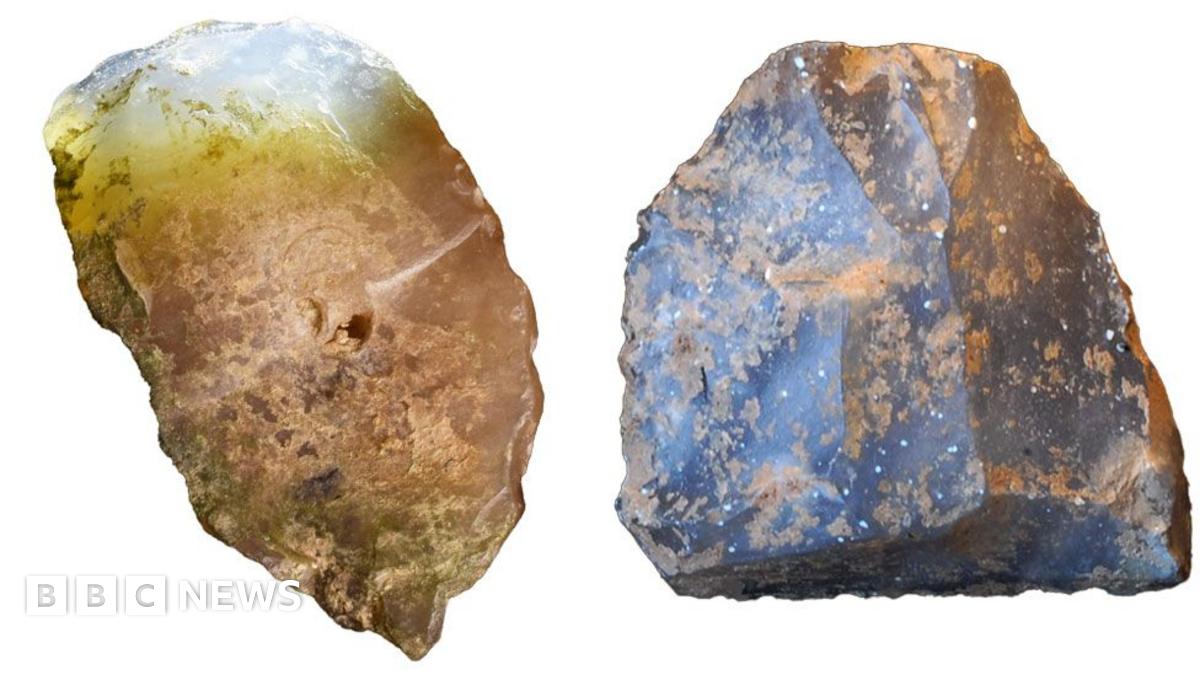
Stone tool making has an even longer provenance than was believed 
 www.bbc.co.uk
Stone tool discovery suggests very first humans were inventors
The find shows that the technology was passed down through thousands of generations.
www.bbc.co.uk
Similar threads


- Replies
- 27
- Views
- 7K


- Replies
- 37
- Views
- 8K

- Replies
- 22
- Views
- 6K