Bushcraft and homesteading skills in WW3

  • BushMoot: Come along to the amazing Summer Moot 31st July - 5th August (extended Moot : 27th July - 8th August), a festival of bushcrafting and camping in a beautiful woodland PLEASE CLICK HERE for more information.
I'd be curious to know what you mean by a 'good war'. I've been the unfortunate participant in 3 'good wars' ( i assume by good you mean lots of people die, lots of families are bereaved, bombed, made homeless, starved, murdered or executed, civilians and children die daily...) Tell me... what is a good war? Because from my experience, there isn't one, there has never has been one, and there never will be one.. Is it a good war when you only see it on the TV? Or do your family have to die first before its considered good? Do the Irish hate the English for fighting a 'good war'?
Dont get me wrong, I was being cynical.
I am a pacifist if truth be told. I don't even like arguing.
It's more a comment on the attitude of those in power worldwide who seem to want to take the human race into oblivion by various means.
Maybe I should have said "a good old war"
I lost a pal in the faulklands and lived through the aldershot bombing, I was on a bus very close by, and the Guildford pub bombing..I had left the pub about 10 or so mins before as friends I was supposed to meet hadn't turned up.
Both absolutely terrifying.
War is not a good thing.
It should be banned!
I spent a lot of my teens and twenties protesting against nuclear weapons, some of it at the women's camp at greenham common, where women were treated like animals for wanting peace and a future for their kids, instead of nuclear oblivion.
Hill bill and others here who have served have my respect, and I sincerely hope that you are never needed in that capacity again.
 
Last edited:
I'd be curious to know what you mean by a 'good war'. I've been the unfortunate participant in 3 'good wars' ( i assume by good you mean lots of people die, lots of families are bereaved, bombed, made homeless, starved, murdered or executed, civilians and children die daily...) Tell me... what is a good war? Because from my experience, there isn't one, there has never has been one, and there never will be one.. Is it a good war when you only see it on the TV? Or do your family have to die first before its considered good? Do the Irish hate the English for fighting a 'good war'?

"Unfortunate" ?

Seems an odd way to phrase it - if one chose to voluntarily join an organisation that's Raison d'être is literally that.

If you choose to regret it now , that's quite different to being unfortunate.
 
My feeling is a financial collapse is on the way. Along with an Alan's snackbar attempt to take over .
We should be preparing for that.
Most Bushcraft skills won't be of much use in either of those scenarios, tho might come in handy if you are made homeless somehow.
It's a tricky subject here.

Horse Guy, I'd be interested in what bushcraft skills you think would actualy come in handy?
Looking at my ww2 book, it was more about frugality, how to eat well on rationed food and grow your own veg, making clothes from scraps etc.
It was the woman's skills in economy and homemaking that held things together when the chaps were away, rather than bushcraft skills.
 
The impact of any European war will depend upon where and how it is being fought, and the weapons used. The UK is unlikely to be directly attacked, at least at first, unless done for political/media leverage.
The actual theatre of war is quite likely to be restricted to one area/country, as it is in Ukraine, and the weapons used restricted under the political "gentlemens agreement". The other "partner/ally" countries then piling resources into that location, to a greater or lesser extent. How much will depend upon each countries political appetite and pressures put upon them.
If the gentlemens agreement breaks down, then more widespread and unpleasant weapons with wider impact will get used - gases, nerve agents, radiation leaks from power stations etc, poisoned water and land (happening now in Ukraine apparently). Attacks on supporting shipping/supply routes outside of the theatre in other countries. Any use of nuclear would probably be localised limited area weapons.
At the same time all countries are likely to face infrastructure attacks to disrupt and deter support of allies, and media propaganda to influence support and cause internal strife.

The UK is very vulnerable to supply and infrastructure attacks in all forms. Just about everything now is reliant, in one way or another upon electricity, IT, and digital communication lines. If an attacker can get among the offshore power and comms/fuel lines then it will significantly impact the UK. As in the 3-day week, electricity might become periodic and rationed. Water and gas/fuel also. Transport for most will be bicycles and walking.
Most modern houses do not have a chimney or alternative heating/cooking options. Fuel for garden fires will quickly become in short supply as will food and water. This, and fear of city/tower block attacks, will probably lead to large scale un-controlled population movement.
Local government will be unlikely to be able manage, support or control this. It could easily lead to desperate social breakdown and lawlessness. Unless you live in a fort, your bushcraft skills might help you to weather some impacts, but a mass influx of desperate people means you might lose your resources/land and possibly home.
Besides caching hidden resources, the best possibilities are local social groupings, for protection, skills and sharing resources. Although bushcraft knowledge will give you some social currency value, the old WW2 types of knowledge and skills will have possibly have more value. Villages and local folk with skills like Woody Girl have the best chances.

We bushcrafters tend towards more isolationist mindsets, but isolated individuals are very vulnerable, so we might need to work on getting to know our neighbours, local groups and our social skills!
 
Horse Guy, I'd be interested in what bushcraft skills you think would actualy come in handy?
Looking at my ww2 book, it was more about frugality, how to eat well on rationed food and grow your own veg, making clothes from scraps etc.
It was the woman's skills in economy and homemaking that held things together when the chaps were away, rather than bushcraft skills.
I think that homesteading skills would be more useful than bushcraft skills in a war although there is some degree of overlap between these two areas in terms of some of the knowledge involved.

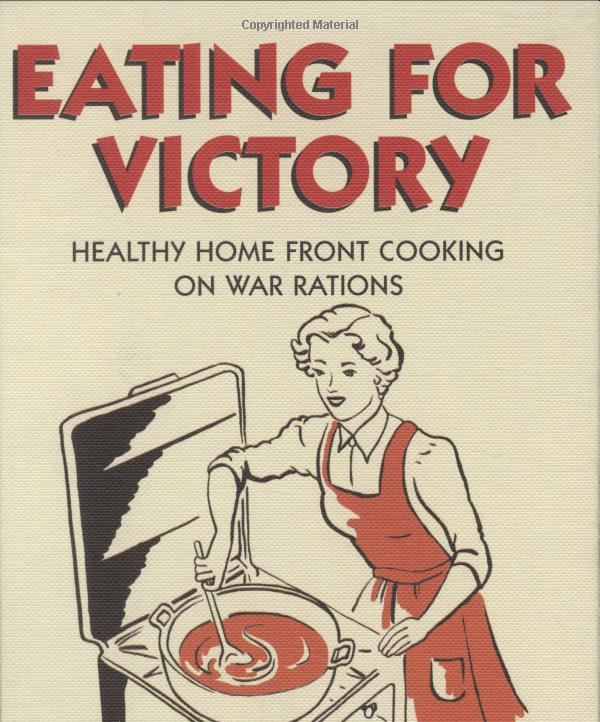
You may be interested in these two books 'Make Do and Mend' and 'Eating for Victory' which were compiled by Jill Norman. They contain reprints of all the original official WW2 instruction leaflets that were given out by the British government during the war. Not all of the information is still relevant for today's world but there's still plenty of good knowledge to be found in those old instruction leaflets.

Edit - I've just noticed you already said you have 'Eating for Victory'. Did you know there was the accompanying book 'Make Do an Mend' that goes with it? :)

make-do-and-mend.jpg


eating-for-victory.jpg
 
Last edited:
  • Like
Reactions: Woody girl and TLM
I think that homesteading skills would be more useful than bushcraft skills in a war although there is some degree of overlap between these two areas in terms of some of the knowledge involved.

You may be interested in these two books 'Make Do and Mend' and 'Eating for Victory' which were compiled by Jill Norman. They contain reprints of all the original official WW2 instruction leaflets that were given out by the British government during the war. Not all of the information is still relevant for today's world but there's still plenty of good knowledge to be found in those old instruction leaflets.

Edit - I've just noticed you already said you have 'Eating for Victory'. Did you know there was the accompanying book 'Make Do an Mend' that goes with it? :)

make-do-and-mend.jpg


eating-for-victory.jpg
No I didn't know about the other book. One to search out and add to my library. Thanks.
 
  • Like
Reactions: HorseGuy
I kind of agree with DD in principle but some acronyms are fairly well established: example, has anybody ever heard "British Broadcasting Corporation" instead of "BBC".
 
"Unfortunate" ?

Seems an odd way to phrase it - if one chose to voluntarily join an organisation that's Raison d'être is literally that.

If you choose to regret it now , that's quite different to being unfortunate.
Where did i use the word regret? All i said is there are no good wars, and i was the unfortunate participant in several.

Circumstances were the reason i can sing Le Boudin, Westervald and La Legion Marche like a champion... Remove the circumstances, you remove the songs. The circumstances were not of my choosing. Choosing life is not a regret i have. Choosing being able to eat, is not a regret i have. All 3... we were there for peacekeeping. Unfortunately, the fact that your job is to keep the peace, means that you end up in the middle of 2 sides, not being peaceful. They do horrible things to each other. I do not regret being part of what put a stop to it. But i do consider it unfortunate, that someone had to step in and do so.

Do i make myself clear? Or would you require further elaboration?
 
  • Like
Reactions: Keith_Beef
"Good war" is being used cynically, and quite rightly, as Hillbill says.
The Raison d'être for most armies is actually to prevent wars by being a deterrent. Some folk join the military on the altruistic grounds/belief of protecting their country/population, not to go and attack someone else, or get in the middle of another countries troubles.

Others join for sheer economic reasons for income, and to get into a better position/life than they were in before.
So for both these folk, they did not expect or hope to actually get involved in fighting, so for them it is unfortunate.

There are of course the others, who join looking for action, rightly or wrongly.

I was listening to a programme yesterday about the Bosnia conflict, where all three types got sent there by the UK. That was unfortunate for them, because they were shoved into a no-win situation with almost total lack of support. (Especially from the French PM)
It showed up how useless NATO is, with dithering, lack of support, national partisanship, failure to make timely decisions and a general reluctance to do what it says on their tin. - Just like Ukraine then.
 
  • Like
Reactions: HillBill
"Good war" is being used cynically, and quite rightly, as Hillbill says.
The Raison d'être for most armies is actually to prevent wars by being a deterrent. Some folk join the military on the altruistic grounds/belief of protecting their country/population, not to go and attack someone else, or get in the middle of another countries troubles.

Others join for sheer economic reasons for income, and to get into a better position/life than they were in before.
So for both these folk, they did not expect or hope to actually get involved in fighting, so for them it is unfortunate.

There are of course the others, who join looking for action, rightly or wrongly.

I was listening to a programme yesterday about the Bosnia conflict, where all three types got sent there by the UK. That was unfortunate for them, because they were shoved into a no-win situation with almost total lack of support. (Especially from the French PM)
It showed up how useless NATO is, with dithering, lack of support, national partisanship, failure to make timely decisions and a general reluctance to do what it says on their tin. - Just like Ukraine then.
There is a very in depth documentary about the conflict in the former Yugoslavia. It is called Weight of Chains and is about why it happened . I would urge everybody to watch it. I won't elaborate other than to say it is a must watch. xxx
 
Before we start this discussion I respectfully request that we avoid talking about global politics and instead keep this thread on the subject of bushcraft. So I think it would be best to avoid sharing our personal opinions regarding the moral rights or wrongs of what any specific country or politician may be doing. Thank you in advance. :)

Ok, with that out of the way… We’ve all seen the news headlines lately saying how Europe/NATO is preparing to transition away from the current proxy war with Russia and towards a direct kinetic war with Russia. Hopefully this will never happen but what if it does? How would your bushcraft skills be of benefit to you if we were in a direct war.

Let me give you an example. One of the things which would be likely to happen would be electricity blackouts. Whether these would be permanent for very long periods or just intermittent for a few hours or days at a time it is something which would be highly likely to happen during in a war. Most normal people would struggle if it came to preparing some wood and starting a fire then using it to boil water for cooking or drinking purposes but with your bushcraft skills it would would be a doddle for you to do.

So how else do you think that your own bushcraft skill and tools could be adapted to be of a benefit for you and your family in a war time situation?
Hi Horseguy. 2 things imeediately spring to mind
1-as you say a lot of people don't have practical skill eg lighting a fire. But i reckon it would take a few hours or even less for such a peson to learn to do that IF IT WAS A MATTER OF SURVIVAL AND THEY HAD TO DO IT (apologies for the capitals)
2-I think the best way of surviving a catastrophe is for people to work together and co-operate- so I would say the ability to communicate with communities and people in your area would be of prime importance. Either communicating by radio, or even walking to meet other people and KNOWING who is around. So most important = Knowlwdge of your area and local community
 
  • Like
Reactions: HorseGuy

BCUK Shop

We have a a number of knives, T-Shirts and other items for sale.

SHOP HERE