"I thought our main ethos of bushcrafting was to leave no trace which I truly believe in."
As we have had several lengthy and contentious threads where members have argued about what "bushcraft" even is, it is rather a stretch to assume there is a predominant ethos.


It might be more accurate to say that part of the ethos is to understand how to work with and within the natural environments with an aim to be less like astronauts visiting an alien world, dependent on technology for everything. In heavily used land, such as most of the UK, it is good to understand how to leave as little trace as possible, but leave-no-trace is fundamentally opposed to fire, crafting and foraging, which are significant parts of what most people consider "bushcraft".
If you had permission on land, and the area had a surfeit of maple saplings (like the old Moot site) an axe or parang would be a useful tool that would get plenty of use practicing shelter building, making camp furniture, trap mechanisms and cooking aids. None of which you "need" if you are out wild camping with a stove and micro tent, but they are bushcraft skills.
I suppose this brings up another aspect. The duality of skills. Knowing how to use an axe is a skill. Knowing how to do without an axe is a skill. Batoning a knife is a skill, knowing when not to baton is a skill. Knowing how to make fire with the materials on hand is a skill, and knowing that the materials on hand are crap is a skill as is knowing that if you go for a 10 minute walk you can gather materials that will save you 30 minutes of frustration. Ideally one should understand both sides.



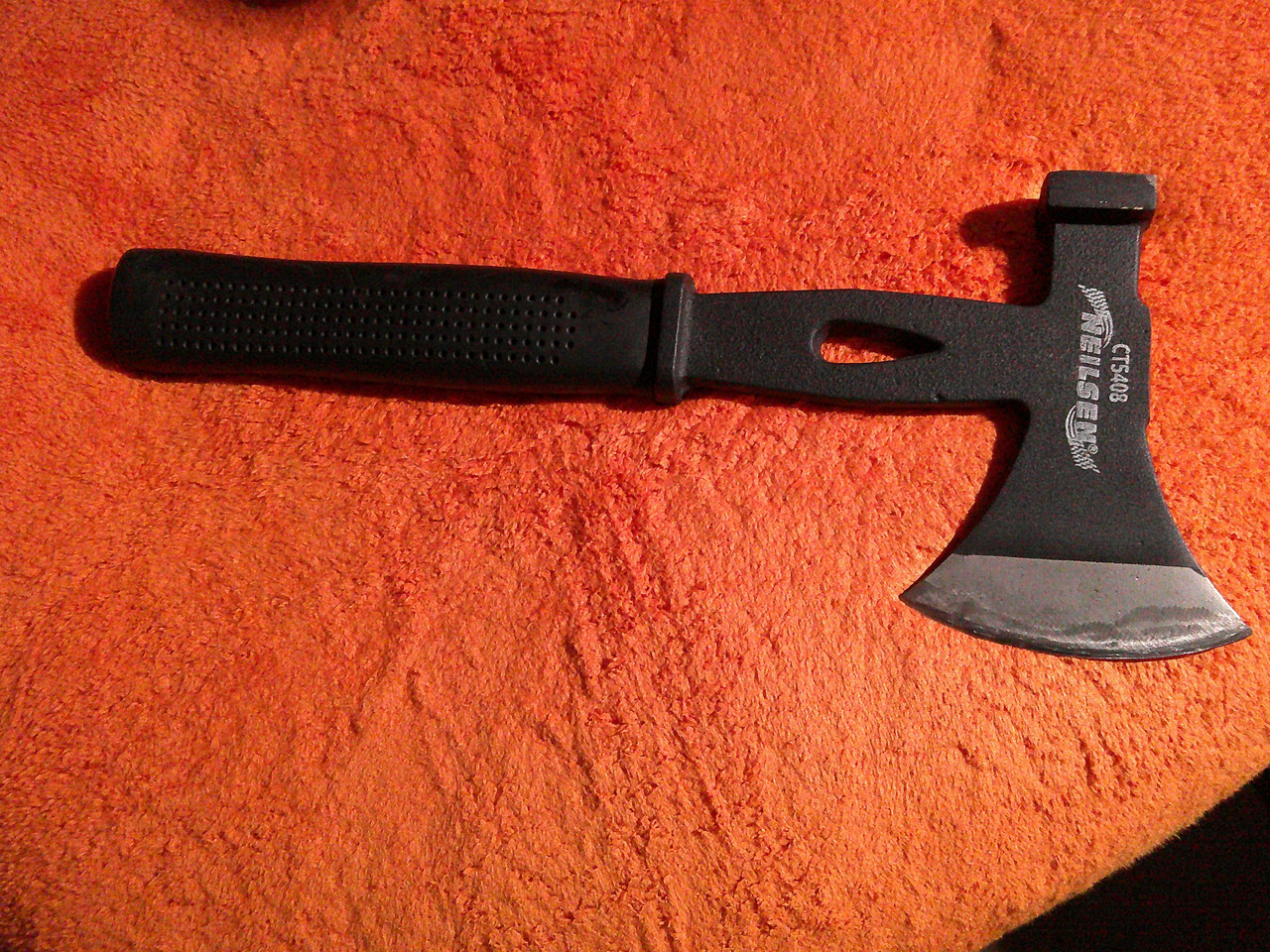
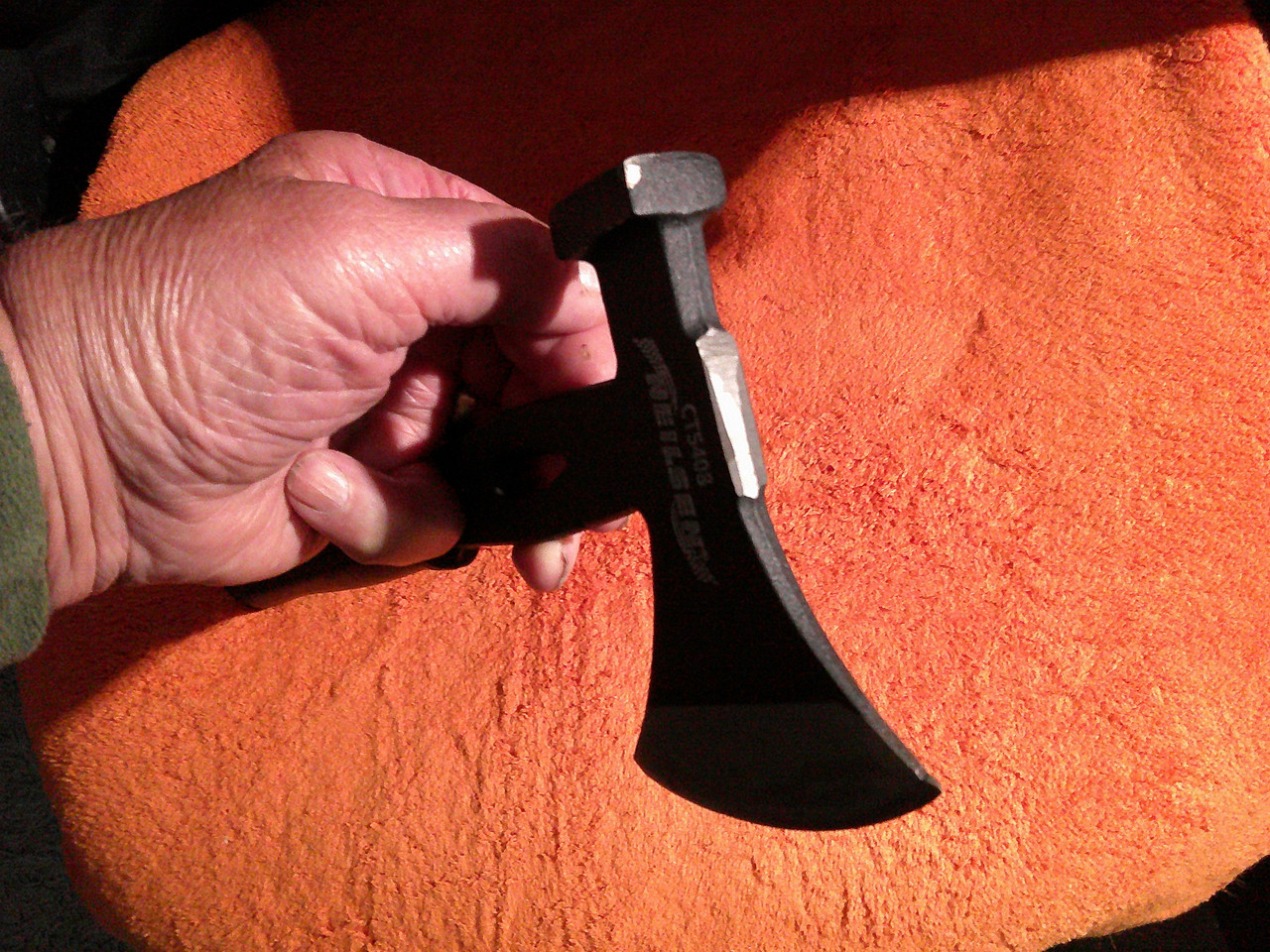
 I've found that this, with a little Doctoring on my Bench Grinder fills the need nicely. Hammer head is big enough for whacking pegs and the blade sharp enough for most Dead Fall.