
Home first aid kit
- Thread starter slowworm
- Start date
-
The awesome MakerMoot is coming up (13-15th Nov 2026), Visit the TORM & ARM markets,and have space back at camp to work on projects and enjoy great company. PLEASE CLICK HERE for more information.
You are using an out of date browser. It may not display this or other websites correctly.
You should upgrade or use an alternative browser.
You should upgrade or use an alternative browser.


All most of us need is a basic 10 person Industrial kit. They’re about £20.
I’d suggest swapping out the sticking plasters for a better quality than you usually find.
Then look around the house, are there any unusual risks that need to be catered for.
Ours probably needs to be replaced. It dates from before Britain left Europe.
The only addition is some tubular finger bandage and some left over bromine paste from an historical accident.
I have eyewash bottles and a bottle of Tom Cat P**s in the bathroom. Analgesics and other meds are in a cabinet out of children’s reach.
That’s it. It’s been fine for the fifty five years that I’ve been married and had my own home. We’ve brought up four adventurous children who have managed to damage themselves in most of the ways that children do. We have quite a lot of stitches between us.
The site autocarrot changes P**s to wee which doesn’t fit TCP
I’d suggest swapping out the sticking plasters for a better quality than you usually find.
Then look around the house, are there any unusual risks that need to be catered for.
Ours probably needs to be replaced. It dates from before Britain left Europe.
The only addition is some tubular finger bandage and some left over bromine paste from an historical accident.
I have eyewash bottles and a bottle of Tom Cat P**s in the bathroom. Analgesics and other meds are in a cabinet out of children’s reach.
That’s it. It’s been fine for the fifty five years that I’ve been married and had my own home. We’ve brought up four adventurous children who have managed to damage themselves in most of the ways that children do. We have quite a lot of stitches between us.
The site autocarrot changes P**s to wee which doesn’t fit TCP

Has anyone seen or can provide a link for what they consider a good well provisioned Home kit?
Seems it maybe more something one has to create , bit by bit.
This is purely my unqualified opinion based on previous research I did prior to upgrading my very basic cheap first aid kit to a more expensive comprehensive one. It really depends on factors such as your budget and the potential use cases that you expect it might be needed for. Do you just want to cover the basics of a good home first aid kit and expect a professional to come and help you in a relatively short space of time or do you want to be prepared to be able to deal with a wide range of medical possibilities and are not confident that professional help might not arrive on the scene for many hours or more?
If you are in the former camp and just want something basic I would suggest that you look to a reputable company like Adventure Medical Kits or St John Ambulance (links below) and buy one of their more well stocked kits. Probably one for somewhere around £40 or £50. Then you can just add a few select extra items of your own choice afterwards.
https://adventuremedicalkits.com/
https://www.sja.org.uk/first-aid-supplies/first-aid-kits/
This second option is going to be a massive overkill for most people and situations but may be worth considering if you live/work somewhere that is either very hazardous or is located somewhere many hours away from professional help. But if you are in this group then you may want to consider something that is more comprehensive than a home first aid kit and of a higher quality. Take a look at one of the professional kits that is intended to be used by a major incident first responder. These are not cheap though and prices start somewhere around the £200 mark give or take a bit. Even with one of these you would still likely want to add a few select extra items of your own choice afterwards.
Last edited:

VERY important to add head tilt chin lift, then check for NORMAL breathing for up to 10 seconds.Knowledge at home is as important as kit.
I think that everyone should be taught the basics - maybe in secondary school.
Checking breathing. This is the first question that the emergency switchboard will ask.
Taking pulse. No need to time it if you know/have been taught what a regular range of pulses feels like. Is it fast, slow or absent? Wrist and neck.
CPR
Recovery position (unconscious)
W position (conscious and not musculoskeletal issue) while you wait.
No pulse checks during primary survey.
Recovery position for an unconscious, normal breathing casualty, as long as you know there is no trauma to the spine, femour or pelvis etc. If you have reason to believe they may have such injuries, ie a fall from height, leave in position found and monitor breathing.
But you must check for Cat Bleeding.
W position for suspected heart attack.
GET TRAINED! The EFAW + F will suffice.
This is purely my unqualified opinion based on previous research I did prior to upgrading my very basic cheap first aid kit to a more expensive comprehensive one. It really depends on factors such as your budget and the potential use cases that you expect it might be needed for. Do you just want to cover the basics of a good home first aid kit and expect a professional to come and help you in a relatively short space of time or do you want to be prepared to be able to deal with a wide range of medical possibilities and are not confident that professional help might not arrive on the scene for many hours or more?
If you are in the former camp and just want something basic I would suggest that you look to a reputable company like Adventure Medical Kits or St John Ambulance (links below) and buy one of their more well stocked kits. Probably one for somewhere around £40 or £50. Then you can just add a few select extra items of your own choice afterwards.
https://adventuremedicalkits.com/
https://www.sja.org.uk/first-aid-supplies/first-aid-kits/
This second option is going to be a massive overkill for most people and situations but may be worth considering if you live/work somewhere that is either very hazardous or many hours away from professional help. But if you are in this group then you may want to consider something that is more comprehensive than a home first aid kit and of a higher quality. Look at one of the professional kits intended to be used by a major incident first responder. These are not cheap though and prices start somewhere around the £200 mark give or take a bit. Even with one of these you would still likely want to add a few select extra items of your own choice afterwards.
No point in getting a major incident, first responder kit if you have not been trained to use the items in that kit. That is a lot of training!

I have a strong John's large workplace kit. It covers most things likely to happen and is well stocked with stuff you might need for your average incident. I've added a few items of my own. Trauma bandage, steristrips, burn gel, and regularly renew things like eye wash which tend not to last once opened.
I also keep arnica cream for bruises, and sprains, and aloe Vera gel, which is good for sunburn, and keeping healing scars hydrated so it heals properly, and reduces the scar.
I also upgraded the plasters, and added a crepe bandage, and some elasticated stokingette..I've forgotten it's proper name, useful to support sprains. Two sizes, one for wrists and a larger size for knees.
I've got my usual everyday meds, analgesics, cold and flu, cough mixture etc in a safe cabinet . Though I'm learning basic herbal medicine, and making some simple concoctions when needed.
For instance, my friend sings in a choir, she had a nasty sore throat that strepsils and other recommended meds were not having much effect. So I made up a sage gargle and thyme and manuka honey tea to drink, within 24 hrs she was able to sing at a big performance that she thought she'd have to miss.
Don't underestimate using herbal meds to treat minor complaints, rather than reaching automatically for over the counter stuff.
Remember to do due dilligance and research before using though. Especially if someone is pregnant or on certain meds.
My favourite for a dicky tum is fresh mint tea. It realy sooths and calms the problem and is much gentler on the body, though herbs can sometimes, take a bit longer to work, so I don't always expect immediate results like standard meds.
I also keep arnica cream for bruises, and sprains, and aloe Vera gel, which is good for sunburn, and keeping healing scars hydrated so it heals properly, and reduces the scar.
I also upgraded the plasters, and added a crepe bandage, and some elasticated stokingette..I've forgotten it's proper name, useful to support sprains. Two sizes, one for wrists and a larger size for knees.
I've got my usual everyday meds, analgesics, cold and flu, cough mixture etc in a safe cabinet . Though I'm learning basic herbal medicine, and making some simple concoctions when needed.
For instance, my friend sings in a choir, she had a nasty sore throat that strepsils and other recommended meds were not having much effect. So I made up a sage gargle and thyme and manuka honey tea to drink, within 24 hrs she was able to sing at a big performance that she thought she'd have to miss.
Don't underestimate using herbal meds to treat minor complaints, rather than reaching automatically for over the counter stuff.
Remember to do due dilligance and research before using though. Especially if someone is pregnant or on certain meds.
My favourite for a dicky tum is fresh mint tea. It realy sooths and calms the problem and is much gentler on the body, though herbs can sometimes, take a bit longer to work, so I don't always expect immediate results like standard meds.
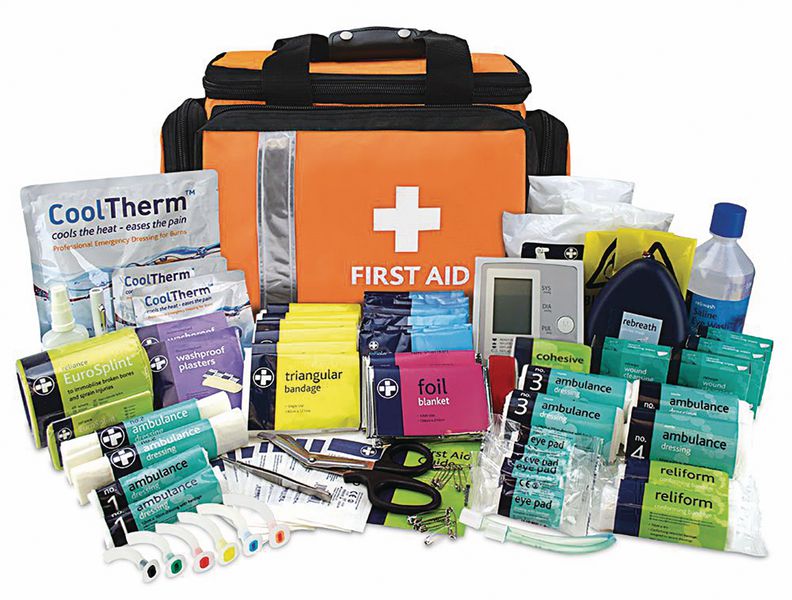
While there are definitely a couple of items which should absolutely not be used by anyone who has not been trained to use them (e.g. guedal and nasopharyngeal airway tubes) a major incident first responder kit for the most part just contains items which are often found in a regular home or workplace first aid kit (this accounts for probably over 90% of the contents).No point in getting a major incident, first responder kit if you have not been trained to use the items in that kit. That is a lot of training!
The main difference is that a first responder kit will be much better stocked, items have wider range of shapes/sizes and the items are manufactured to a higher professional grade quality. Apart from that there really is not much difference. They also contain a couple of extra items such as a resuscitation mouth mask and a blood pressure monitor which could come in handy too.
Last edited:
We love manuka honey at our house. It has so many wonderful mediational properties. A little tip though, when eating honey it is best to use a plastic or wooden spoon because a metal one will reduce the mediational properties.I'm learning basic herbal medicine, and making some simple concoctions when needed.
For instance, my friend sings in a choir, she had a nasty sore throat that strepsils and other recommended meds were not having much effect. So I made up a sage gargle and thyme and manuka honey tea to drink, within 24 hrs she was able to sing at a big performance that she thought she'd have to miss.
Don't underestimate using herbal meds to treat minor complaints, rather than reaching automatically for over the counter stuff.
Remember to do due dilligance and research before using though. Especially if someone is pregnant or on certain meds.
Also did you know that it takes longer to train to be a qualified herbalist than it does to be a medical doctor? This is because there are so many herbs which can have adverse reactions or be poisonous to people. Especially if they are already on some form of medication or have an existing medical condition or allergy other than the one which is being treated. My girlfriend is an aromatherapist and herbalist and she occasionally jokes with me not to annoy her because she knows multiple ways to poison someone without leaving any trace for the coroner find.
Last edited:

My paramedic mate recommended I just put my own 'proper' kit together from individual bits, as in his opinion there are no kits which give you everything, and the quality of items within the kits is variable.

My paramedic mate recommended I just put my own 'proper' kit together from individual bits, as in his opinion there are no kits which give you everything, and the quality of items within the kits is variable.
Looking around at what is being offered vs the price wanted I would tend to agree.
Its interesting to explore and see what others view are on home kits even if I only do so to see what the cultural gist is.
Somewhat pricey I think.

 meresupplies.co.uk
The Home First Aid Kit - MERE Supplies
The Home First Aid Kit, a well-stocked first aid kit in your home to treat common injuries, such as cuts, burns, sprains, and bruises, as well as to handle unexpected medical situations until professional medical help arrives.
meresupplies.co.uk
There are not many items included but what is there looks like it is of a higher quality than what is found in most budget first aid kits.Somewhat pricey I think.
The Home First Aid Kit - MERE Supplies
The Home First Aid Kit, a well-stocked first aid kit in your home to treat common injuries, such as cuts, burns, sprains, and bruises, as well as to handle unexpected medical situations until professional medical help arrives.
I’d say well overpriced. The pouch is the expensive part there.Somewhat pricey I think.
The Home First Aid Kit - MERE Supplies
The Home First Aid Kit, a well-stocked first aid kit in your home to treat common injuries, such as cuts, burns, sprains, and bruises, as well as to handle unexpected medical situations until professional medical help arrives.
You can put something together that’s better and cheaper.
Our home kit consists of a plastic organiser with various types of plaster, sting cream, some small dressings, wound spray, steri strips and one or two big dressings.
If someone does get a cat bleed in the kitchen at least one of the cars is on the drive with trauma based kits, or my work bag is by the door if I’m home with a CAT etc.
Pre filled kits always work to a price, with lower quality fillers to keep the costs down.
Our horse stable and car first aid kits were made by using air-tight sandwich boxes with sticky labels added saying ‘First Aid’ on them. Then we filled them with items that were pilfered from the big first kit at home. This way we have now have four separate specialized kits using just one just big good quality kit as a base to make them all from. For people like us who want to have multiple first aid kits dotted around in various different locations this was a fairly economical way of doing it.
Last edited:
Then just fill your kit with what you think you need, putting various airway tubes in the hands of the untrained. Not for me, sorry.While there are definitely a couple of items which should absolutely not be used by anyone who has not been trained to use them (e.g. guedal and nasopharyngeal airway tubes) a major incident first responder kit for the most part just contains items which are often found in a regular home or workplace first aid kit (this accounts for probably over 90% of the contents).
Resuc mask is a good idea to have in any FAK, I have had them for years, but you don’t need to buy such a kit to have them in it. Well OTT for what we need.
Exactly what I taught my learners in nearly 20 years teaching EFAW, FAW, + F, Paediatric and outdoor First Aid, Catastrophic Bleeding and Anaphylaxis Management.My paramedic mate recommended I just put my own 'proper' kit together from individual bits, as in his opinion there are no kits which give you everything, and the quality of items within the kits is variable.
But I will say it again……..Get Training! You will then know.
Just make sure your training provider/training centre is a “Regulated” First Aid Trainer/Training Centre.
Another bit of kit that has helped me out on a couple of occasions is a finger pulse oxometer, that will tell you your heart rate and oxygen saturation level. I also have my own nebuliser, as I have asthma, and my surgery no longer has one, so I'd have to wait an hour or more for help from an ambulance. Especially at night or weekends. A severe attack is scary and can kill. So I figured I'd better be safe rather than sorry. I replace the ventolin capsules every two years.
It has actualy helped a neighbours kid out when they had an attack, and she remembered I had one. Her Banging on my door on a Saturday at 11pm scared me half to death, but I was jolly glad to have the machine and help out before the ambulance arrived. She has one herself after seeing how usefull it was. A mere £60 probably saved that kids life. He has been airlifted to hospital from school during the day before now.
It has actualy helped a neighbours kid out when they had an attack, and she remembered I had one. Her Banging on my door on a Saturday at 11pm scared me half to death, but I was jolly glad to have the machine and help out before the ambulance arrived. She has one herself after seeing how usefull it was. A mere £60 probably saved that kids life. He has been airlifted to hospital from school during the day before now.

Has anyone seen or can provide a link for what they consider a good well provisioned Home kit?
Seems it maybe more something one has to create , bit by bit.
That was my conclusion. I did pick up a cheap refill kit as my stuff was getting rather old but not only does it not have many useful things in for us, it also has items I can't see us ever using. Things like 4 triangular bandages which I've never needed in anger. Even when my Mum had her arm put in one at a hospital it was a bit useless and I ended up getting a decent sling for her.
I've added some large single use saline pods for eye washing/wound flushing, a few trauma dressings, a couple of large sterile pads, antiseptic wipes, burn gel etc. Nothing too advanced.
Don’t underestimate the humble Triangular Bandage, but make sure they are Calico Triangular Bandages, not those paper things. They are very versatile, I would not have a FAK without at least two, they are a strong and reliable bit of kit.That was my conclusion. I did pick up a cheap refill kit as my stuff was getting rather old but not only does it not have many useful things in for us, it also has items I can't see us ever using. Things like 4 triangular bandages which I've never needed in anger. Even when my Mum had her arm put in one at a hospital it was a bit useless and I ended up getting a decent sling for her.
I've added some large single use saline pods for eye washing/wound flushing, a few trauma dressings, a couple of large sterile pads, antiseptic wipes, burn gel etc. Nothing too advanced.
Uses:
A Pad
A bandage
An improvised Tourniquet
Packing
A sling
I am sure there are more uses if we use our imagination.
Similar threads
- Replies
- 24
- Views
- 3K

- Replies
- 19
- Views
- 588


