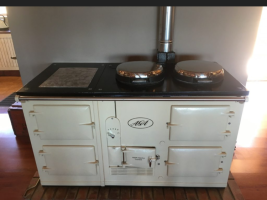
Dish washing in UK.

  • BushMoot: Come along to the amazing Summer Moot 31st July - 5th August (extended Moot : 27th July - 8th August), a festival of bushcrafting and camping in a beautiful woodland PLEASE CLICK HERE for more information.
I just don't get that. It takes minutes. All done, kitchen clean and tidy. Nothing left undone.
I'm inclined to wash up as I go with stuff. Baking bowls and utensils washed while the food's in the oven, etc.,.
There's never really a lot of dishes to be done. Even when there's a crowd in, folks just muck in and the job's done by the time the kettle's on for a final cuppa or someone's opened another bottle.
I don't see it as a chore, it's just part of making food, and then setting things back to right.

As you say though, each to their own.
And if you have a range, the hot water is free from the kettle anyway

if theres 2 of you baking in the kitchen, putting chcolate batter/frosting utensils in to a clean bowl of water will get you grumped at ive discovered....this is a way to volunteer yourself to wash the next load of dishes
 
And if you have a range, the hot water is free from the kettle anyway

if theres 2 of you baking in the kitchen, putting chcolate batter/frosting utensils in to a clean bowl of water will get you grumped at ive discovered....this is a way to volunteer yourself to wash the next load of dishes

Yes, a kitchen range is a great thing. Lit the (coal fired) Rayburn last night as it's getting chilly at nights, when lit I always have the kettle parked on the side with water warming in it so it boils quicker, (and the cooking gets done on the range instead of the electric cooker).

Thing is, if the washing up water is hot enough and you've already mopped the fat out onto newspaper (popped in the range to burn), then hot enough water will clean the dishes.

Different world, different way of life. When you have a solid fuel range simmering away in the background, you do things differently.

GC
 
Yes, a kitchen range is a great thing. Lit the (coal fired) Rayburn last night as it's getting chilly at nights, when lit I always have the kettle parked on the side with water warming in it so it boils quicker, (and the cooking gets done on the range instead of the electric cooker).

Thing is, if the washing up water is hot enough and you've already mopped the fat out onto newspaper (popped in the range to burn), then hot enough water will clean the dishes.

Different world, different way of life. When you have a solid fuel range simmering away in the background, you do things differently.

GC


ive good wood fired Esse range, does loads of baking, heats half teh house, does the ironing, constant hot water from kettles, especially if being a big baking day of bread and cakes, lots of washing up needed so free hot water. empty flour bags to light the fire, old dish cloth scraps siaked in wax for fire lighters as well, all sorts of things get burnt ip, post, butter papers, grease/oil covered kitchen roll...

the flames are very atmospheric, wood costs me about £900 a year to do all the cooking and heating in 3 bed stone cottage....local wood delivery is about £180 for traielr full of about 2 cubic metres of wood.
 
@Herman30 : There's different versions of a "Range."

Fundamentally, it's a directly fueled closed appliance that is focused on cooking but will also heat a room. Typically it runs constantly- it will be capable of runnign overnight. In some cases the range also runs a central heating system and provides hot water. They will all have an oven and a hotplate for cooking as a minimum, and may also have extra ovens and/or a warming oven.

Originally, ranges ran on solid fuel. The Rayburn, Aga and Esse are types/brands of range. For a while, some ranges- mainly Agas- were converted to oil firing or electricity (Agas are bigger than Rayburns, so more Rayburns were removed and replaced with newer oil boilers rather than being converted).

There is a trend to move back to solid fuel firing. There's also a market in the UK in refurbishing old solid fuel ranges- typically Aga/Rayburn. There was (is?) a level of status in some brands; Aga were seen as "posh" and Rayburn the working class relative, but truly, the Rayburns are decent bits of kit.

Whether you choose Aga, Rayburn or Esse depends on (1) size of range needed and (2) fuel available. Agas are bigger and can be coal fired but still mostly oil fired. Rayburns are typically oil or coal fired (probably mostly coal fired), but a wood burning grate is available. Esses are exclusively wood fired. (Coal fired ranges run best on a decent grade of smokeless fuel which can be difficult to get in many parts of UK).

Coal fired ranges seem to be very much a UK thing, whereas much of Europe continued to use wood for cooking/heating for longer, and developed "masonry stoves" (kachelofen) to get the most out of wood.

I did consider a masonry stove of the new place, but costs were way out my budget for "certified" stoves and for anything else there was the challenge of complying with UK Building Regs..... culturally, the UK regulatory system struggles to understand European-style wood burning appliances.

GC

 
  • Like
Reactions: Herman30
I've had people handwash (myself included) and have to have it go back in for another wash as a bit of food was still on there. It doesn't mean I think all handwashed items are not 'clean'.
Thing is though, you see it needs re-done, you don't lay it out for folks to use and just claim that oh it's been in the dishwasher, it's sterile :roll
 
Please tell me this isn´t true! Saw a video where a person washing dishes said in UK you don´t rinse dishes in clean water after washing in soapwater.
In that case without rinsing all the food will taste of soap!
My missus doesn't rinse and our dishes don't taste or smell of washing up liquid, but I will always rinse in fresh water! The dumb/clever balance has been restored and marital harmony retained...
 
I air dry. If the water is hot enough plates are dry before you could get to dry then. Rarely use a tea towel.
EXCEPT…….
There had better be a bloody good reason for the miniature lakes that persist in the bottoms of inverted mugs and which spill everywhere!!!!!!:aargh:
 
Do you have these drying cabinets like we in nordic countries have?

Astiankuivauskaappi-20060227.jpg
 
  • Like
Reactions: GreyCat
Depending on if its had oinion, garlic or something else thats bad for the dog its usually the four legged pre-wash, put the washing up liquid on the sponge and not just in the water.
Wash and a quick swill in the bowl to get the rough of the soap off and allow to dry or dry manually.

I'm either too numb or tastless to notice any soap taste or smell.
I do like to try to rinse the bulk of soap off my dishes usually by pouring a jug of water over as they sit on the drainer. I got more fussy after reading that modern detergents can lead to perforation of your gut lining (especially very young or the elderly)- I was having stomach problems at the time, after coming back from a 5 year sojourn in India in less than sanitary conditions. Nowadays, a few decades later, at the age of 60, I’m as fussy about excess soap suds as I was then.
 
Do you have these drying cabinets like we in nordic countries have?

That's a new one on me. So many questions! Is the cabinet open at the bottom, or does it have a floor? Obviously you keep the doors open to allow thigs to dry, when do you close the doors? Why are doors needed? Do the contents get transferred to other cupboards/drawers once dry?
 
  • Like
Reactions: Toddy
That's a new one on me. So many questions! Is the cabinet open at the bottom, or does it have a floor? Obviously you keep the doors open to allow thigs to dry, when do you close the doors? Why are doors needed? Do the contents get transferred to other cupboards/drawers once dry?
There was one in the apartment I stayed in in Italy this summer - it was a first for me. It had a removable drip collection tray at the bottom. I just removed it as it seemed unnecessary to catch it as it was dripping straight ot the sink. I left the doors closed as soon as I had finished washing.
 
  • Like
Reactions: Toddy
That's a new one on me. So many questions!
Cabinet open at bottom, water dripping on the sink. Doors open only open when putting dishes in to dry. All other times closed, no need to be open when dishes dry.
Doors are not needed per se, it just looks nicer with closed doors compared to looking at drying dishes. And doors do not close tight. When closed there is an open slit on upper sider and lower side of door to let air circulate.
Yes, contents get transferred to other cupboards/drawers once dry.
 

BCUK Shop

We have a a number of knives, T-Shirts and other items for sale.

SHOP HERE