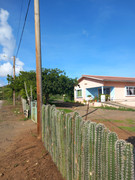
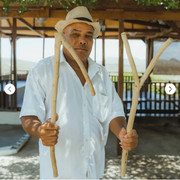
I had a 2 week holiday on the South Caribbean island of Curaçao (my fathers birthplace), and in this thread I will try to post some stuff on plants and animals there that might be of interest to a bushcrafter. Most of the information in this thread will be applicable to Aruba and Bonaire as well.
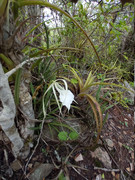
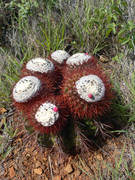
Curaçao lies some 50 miles off the coast of Venezuela and is part of the ABC islands, Aruba, Bonaire & Curaçao. The temperature is mostly between 27-30 °C with a near constant Northeast trade wind, and the climate is quite dry which is reflected in the scrubby/thorny/spiky flora.
The only indigenous land mammals are bats (8 species), a vesper mouse, a rabbit and an endemic subspecies of white-tailed deer, probably introduced in pre-Colombian times by the indians that lived here. Nowadays there are also rats, mice, cats, dogs and goats to be found in the wild. There are some other invertebrate animals that can best be avoided: Scolopendra-centipedes (up to 30 cm!) with a poisonous bite, and these two scorpions:
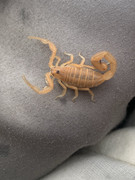
Centruroides testaceus (a stowaway in our beach bag!)
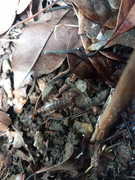
Didymocentrus hasethi
Both have a poisonous sting, but it should be comparable to a beesting (I have been told).
There are no tarantula on Curaçao.
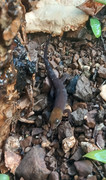
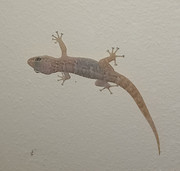
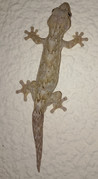
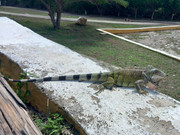
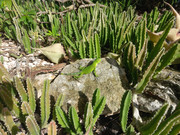
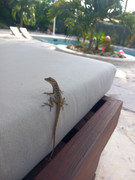
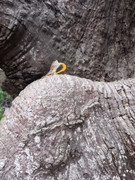
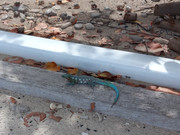
There is an indigenous (harmless) snake, an also harmless blindsnake, and some lizard species on the island of which the iguana is the biggest. The last one is still on the menu in some restaurants (tastes exactly like chicken) but is less eaten than in the past when it was a common food item. In the early eighties you could still see young children selling these alive after catching them with a catapult.
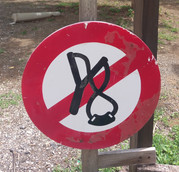
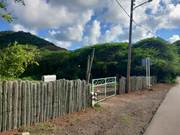
Despite this sign at the Christoffel mountain national park, I think most of todays kids on Curaçao have never seen a catapult...
One of the thorny plants that has a remarkable use is Randia aculeata, or by its native (Papiamento) name palu di lele. 'Palu' means wood and 'lele' means to stir. It blooms with small white flowers.
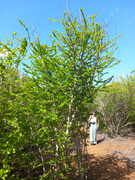
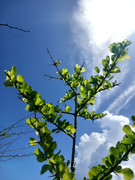
Here is the bush, from its main stem side stems appear in 2's or 3's at an acute angle, and in an equidistant way:
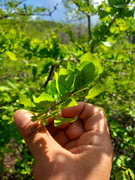
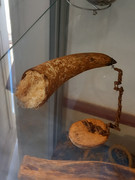
And here is the implement that is made from it:
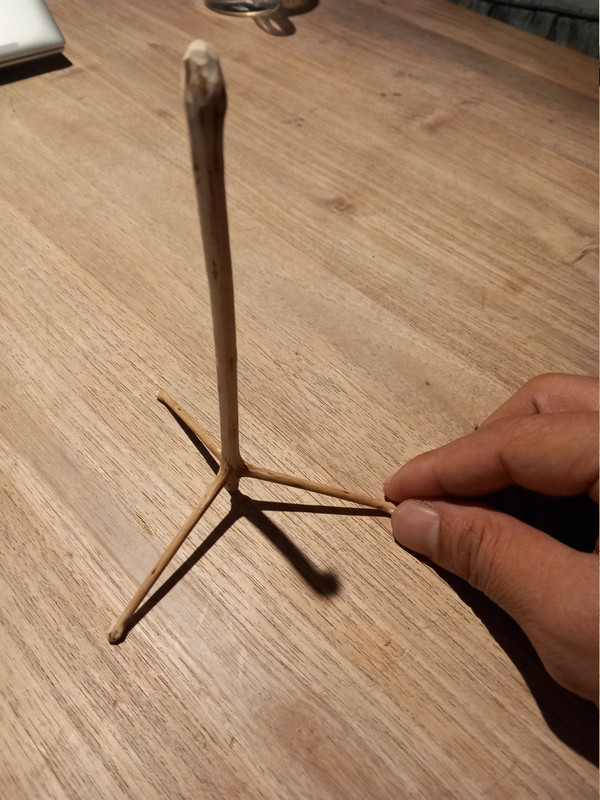
In the old days the palu di lele could be found in every Curaçao kitchen to be used as a whisk for milk, cream or eggs.
That is it for now, more to follow soon!
Cheers,
Tom
Curaçao lies some 50 miles off the coast of Venezuela and is part of the ABC islands, Aruba, Bonaire & Curaçao. The temperature is mostly between 27-30 °C with a near constant Northeast trade wind, and the climate is quite dry which is reflected in the scrubby/thorny/spiky flora.
The only indigenous land mammals are bats (8 species), a vesper mouse, a rabbit and an endemic subspecies of white-tailed deer, probably introduced in pre-Colombian times by the indians that lived here. Nowadays there are also rats, mice, cats, dogs and goats to be found in the wild. There are some other invertebrate animals that can best be avoided: Scolopendra-centipedes (up to 30 cm!) with a poisonous bite, and these two scorpions:
Centruroides testaceus (a stowaway in our beach bag!)
Didymocentrus hasethi
Both have a poisonous sting, but it should be comparable to a beesting (I have been told).
There are no tarantula on Curaçao.
There is an indigenous (harmless) snake, an also harmless blindsnake, and some lizard species on the island of which the iguana is the biggest. The last one is still on the menu in some restaurants (tastes exactly like chicken) but is less eaten than in the past when it was a common food item. In the early eighties you could still see young children selling these alive after catching them with a catapult.
Despite this sign at the Christoffel mountain national park, I think most of todays kids on Curaçao have never seen a catapult...
One of the thorny plants that has a remarkable use is Randia aculeata, or by its native (Papiamento) name palu di lele. 'Palu' means wood and 'lele' means to stir. It blooms with small white flowers.
Here is the bush, from its main stem side stems appear in 2's or 3's at an acute angle, and in an equidistant way:
And here is the implement that is made from it:
In the old days the palu di lele could be found in every Curaçao kitchen to be used as a whisk for milk, cream or eggs.
That is it for now, more to follow soon!
Cheers,
Tom