Water access rights / cooperation between outdoor activity organisations?

  • BushMoot: Come along to the amazing Summer Moot 31st July - 5th August (extended Moot : 27th July - 8th August), a festival of bushcrafting and camping in a beautiful woodland PLEASE CLICK HERE for more information.
OK, I'm out now - we're just getting back to name calling. Good luck with making it work. :)
If that was aimed at me, could you point out the name calling please? I've suggested your attitude is a head in the sand approach, i.e. ignoring an existing problem. That isn't name calling.

Like most problems, pressures on the countryside are due to population, most of us appreciate that. That isn't going to be solved soon, as those who govern want population to be maintained and increased, and use the media to help achieve this. It's happening, and will continue to happen regardless of how daft it is.

There is going to be increasing pressure on the countryside. A fee-paying entry system to rights of way and access land isn't realistic and unlikely to happen. We are not the US and are not likely to adopt hard line rangers. The current situation is problematic, there is growing pressure to increase countryside access which may ease the strain on some areas but will bring a small amount of trouble to some other new hotspots.

All of the above is happening, regardless of conservationists like it or not. And human nature is what it is. Many people can be influenced by the media, and the social pressure the media can eventually create. Could there be answers here?

Even with a better educated majority, there will always be a few bad actors as in all situations in life. Who is going to clear up after them, repair damage? Individuals, communities, national government?
 
  • Like
Reactions: Toddy and Pattree
I spent 34 years protecting the environment, never heard of the council having the duty of stopping people polluting water, EA,or polluting it themselves. You would have no obligation to remove a branch that had lodged in your stream, unless it is “main river” As for your upstream neighbour receiving thousands of pounds of grant money to put logs in the stream! Sorry.

Well, my council, and probably all others state it "is the Lead Local Flood Authority has enforcement powers under the Land Drainage Act 1991 to ensure that any obstruction causing a flood risk in a watercourse is removed by the landowner." It goes on to mention pollution, however they change their tune when you raise issues with pollution they pass on.
 
  • Sad
Reactions: Toddy
You do not require a "shooting licence" to shoot but you do need a shotgun\firearms licence for gun ownership and land owners permission.

You do need a "rod licence" to fish but you don't need a licence to own fishing rods but you do require the landowners owners permission.


If the general public are given free access to the detriment of fishing, you should at least be compensated for your now disturbed enjoyment which is no longer exclusive by not having to pay for a "rod" licence.

EA can be funded from general taxation just like everything else.

It's not as if the general public will be asked to pay a swimming\paddling\kayaking\rafting licence.... is it?

Fishing (rod) licences are an anachorism of control and taxation which have no place in the modern UK.

Oh, I see what you mean. It seems to me though that the firearm certificate is there because owning a firearm can be dangerous just by virtue of owning a firearm given the danger it can present. Not so with a fishing rod.

Then again, having a way of managing fish health/populations in a joined up way seems important and not something that can just be done by individual landowners who own the fishing rights of relatively small stretches of river, as migration and populations cover a much larger area and have a wider impact. So having something in place to manage (and fund) that seems like it’s necessary?
 
  • Like
Reactions: Ozmundo and Pupers
Well, my council, and probably all others state it "is the Lead Local Flood Authority has enforcement powers under the Land Drainage Act 1991 to ensure that any obstruction causing a flood risk in a watercourse is removed by the landowner." It goes on to mention pollution, however they change their tune when you raise issues with pollution they pass on.
Is your stream designated “Main River” by the Environment Agency? Any pollution to a watercourse should be reported to the Environment Agency, they are the regulator and enforcer.
 
And who is going to take my money and give me an entry ticket for the public footpath which runs behind my house? Or the twenty acres of access land it leads to?
Which National Park do you live in?
………or at best coming up with ideas seemingly from the middle of the last century like charging entry to national parks hundreds of square miles in area, or handcuffing litterers....
It would appear the US has it all wrong, how silly of them! How many US National Parks have you visited, and have you ever spoken to a Ranger?
 
Then again, having a way of managing fish health/populations in a joined up way seems important and not something that can just be done by individual landowners who own the fishing rights of relatively small stretches of river, as migration and populations cover a much larger area and have a wider impact. So having something in place to manage (and fund) that seems like it’s necessary?
Absolutely correct.
 
  • Like
Reactions: Ozmundo
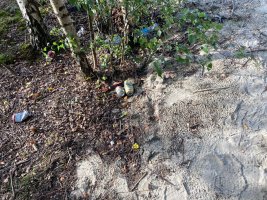
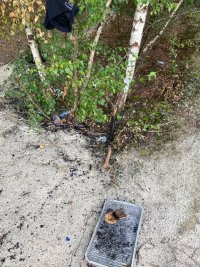
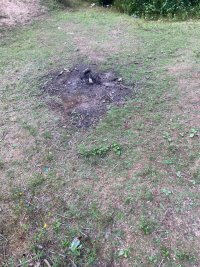
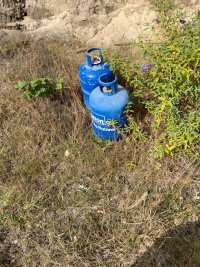
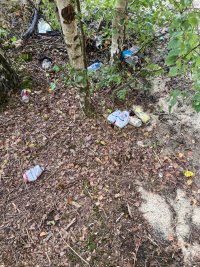
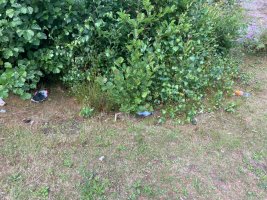
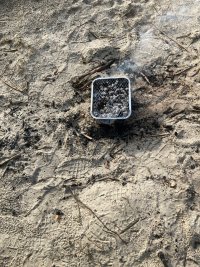
IMG_4687.jpegIMG_4645.jpegIMG_4642.jpegIMG_4640.jpegIMG_4644.jpegIMG_4643.jpegIMG_4686.jpeg

The charms of the river bank!

I have a few qualms about the public being given unfettered access to waterways as a right. It’s far from a small minority who leave waste or cause problems.

One of the locals here was beaten unconscious by fly tippers last month. I encounter two or three groups of intruders on the farm every weekend. The largest group was twelve.

If there is any kind of payment system then it will need to be policed.

If there is a free to access system then there will need to be a method to deal with waste, damage and pay for that.

Funds can’t just come out of the mythically deep pocket of the payer.
 
Last edited:
Is your stream designated “Main River” by the Environment Agency? Any pollution to a watercourse should be reported to the Environment Agency, they are the regulator and enforcer.

Nope, it's just a stream. According to the council web site EA will look after main rivers and the council looks after ordinary watercourses such as our stream. They state they "regulate" and I gather could enforce against land owners, so in theory I could be prosecuted for passing polution down the stream received from the same council road run off.
 
View attachment 97088View attachment 97089View attachment 97090View attachment 97091View attachment 97092View attachment 97093View attachment 97087

The charms of the river bank!

I have a few qualms about the public being given unfettered access to waterways as a right. It’s far from a small minority who leave waste or cause problems.

One of the locals here was beaten unconscious by fly tippers last month. I encounter two or three groups of intruders on the farm every weekend. The largest group was twelve.

I sit partially in both camps here to be honest, whereby I think people should have more land/water access, but also that those who abuse it should be treated incredibly... firmly, shall we say. Littering/fly-tipping is already illegal, the issue is that nothing is actually done about it. The sort of people who will leave places in such a disgraceful state as in these pictures are not the sort of people who will be put off by the fact they aren't allowed to be there in the first place.

Let's also not forget that there are landowners who abuse their own land and the environment in their charge.

I genuinely don't believe this to be a landowner vs non-landowner issue, rather an issue of respect and morality. Perhaps the focus needs to be on people who abuse nature in general, rather than curtailing rights to explore, experience and enjoy the environment we are born into and are a part of.

If I (as someone who wants to access and preserve nature) and a large landowner (who wants the same) both work together against those who harm both of our interests, are we not at an advantage over those who ruin it, compared to if we are busy fighting about which of us is more deserving of accessing the countryside based pretty much entirely on our individual financial resource?
 
I sit partially in both camps here to be honest, whereby I think people should have more land/water access, but also that those who abuse it should be treated incredibly... firmly, shall we say. Littering/fly-tipping is already illegal, the issue is that nothing is actually done about it. The sort of people who will leave places in such a disgraceful state as in these pictures are not the sort of people who will be put off by the fact they aren't allowed to be there in the first place.

Let's also not forget that there are landowners who abuse their own land and the environment in their charge.

I genuinely don't believe this to be a landowner vs non-landowner issue, rather an issue of respect and morality. Perhaps the focus needs to be on people who abuse nature in general, rather than curtailing rights to explore, experience and enjoy the environment we are born into and are a part of.

If I (as someone who wants to access and preserve nature) and a large landowner (who wants the same) both work together against those who harm both of our interests, are we not at an advantage over those who ruin it, compared to if we are busy fighting about which of us is more deserving of accessing the countryside based pretty much entirely on our individual financial resource?
The problem is Chris that catching people littering is incredibly hard. Any opening up of waterways must include mechanisms to ensure that those waterways are not just thrown open to louts but properly managed and landowners fully compensated for all damages. That implies a raise in taxation to fund supervision, education & compensation. Loch Lomond showed what happens otherwise, with landowners forced to clear up after the feckless at their own expense.

Any "access rights" that damage other peoples land and cost landowners money & time are grossly unfair so any proposal must include the costs of supervision & landowner compensation
 
I have been a keen kayaker and I am sure the freedom to use many more waterways is appealing to many.

I can’t imagine anyone one on theses forums thinks enough is being done about water pollution in this country.

Increased access will bring increased use. The ratio of sensible to fookwit may not change but the numbers will go up. Therefore they’ll be a price to pay. Who pays and who does the work?
 
Nope, it's just a stream. According to the council web site EA will look after main rivers and the council looks after ordinary watercourses such as our stream. They state they "regulate" and I gather could enforce against land owners, so in theory I could be prosecuted for passing polution down the stream received from the same council road run off.
No you couldn’t, the actual polluter is the one whose is responsible, so road run off is not your responsibility. The EA would be responsible for all watercourses, including your stream, should a pollutant enter it.
 
Which National Park do you live in?

It would appear the US has it all wrong, how silly of them! How many US National Parks have you visited, and have you ever spoken to a Ranger?

As in the previous thread on this subject, you don't seem to be differentiating between Dartmoor National Park and the rest of England. The majority of Dartmoor is already open access. Nobody is suggesting the rest of uncultivated England becomes a National Park, just that it gains right to roam status.

I think you're trying to suggest that if more of England gains right to roam status, we'll see Dartmoor's issues magnified over the rest of England, which is unlikely.

Drawing comparisons with the US seems a bit far fetched to me, due to the enormous differences in scale, society and culture. I don't think trying to incorporate their methodology here would catch on.... I imagine militant rangers in England in 2025 would get a pretty rough reception to say the least, being close to tears is probably better than being on the receiving end of violence. Out of interest I don't have experience of the parks stateside, a sibling has been there for a decade and spent a lot of time in them and reports they suffer the same issues as here- over popular trails and campgrounds, remains of fires, litter etc. And plenty of wilder country where you see none of it once you get away from the touristy areas.

The fly tipping argument comes up every time... but as has already been pointed out, criminals who fly tip aren't concered about the access status of land.
 
  • Like
Reactions: Toddy
No you couldn’t, the actual polluter is the one whose is responsible, so road run off is not your responsibility. The EA would be responsible for all watercourses, including your stream, should a pollutant enter it.

That is not what their info states and implies, or indeed their actions show. In our case it was just a log, but the fact it came from further upstream was irrelevant and it became our responsibility. It would be the same for a lump of plastic and other debris. I have not fully investigated what happens if you knowingly pass polluted water on but it doesn't seem that simple. In my case the EA didn't seem interested when the polution came from a road.

But my point is many others are polluting our water courses, the road network, apart from some of the larger main roads, just route water with all it's polution into local ditches, rivers and streams. I have noticed a few news stories about this recently, mainly focussing on the microplastic polution from tyres etc but I think more problems will emerge.
 
  • Like
Reactions: Toddy
Selfishly I would prefer the situation to remain unchanged. The reality is if access to our rivers was made 'officially' public we would have very few quiet rivers for us to enjoy. As it stands, I can canoe many places and not see another person. Do I have a right to? well that is the unanswered and argued question but, so far, I have not had any serious objections.

Then there's the issue of cost - I pay a fee to use British navigations and cover my insurance, anglers pay (high) fees to fish the rivers; how much is the general public prepared to pay for access?
Do you pay for access to the hills? Why rivers?
Because everything carries a cost. Why should the tax paying public pay for a minority to use the rivers (or any other part of the countryside). Wherever the public go there is a cost - a cost of access, a cost of clearing up the mess, a cost of accident and damage liabilities, a cost of facilities.

In my view we should be charging for people going up Yr Wyddfa or other over-visited and trashed areas. People have zero respect for anything they don't pay for.

There are so many visitors to places like Pistyll Rhaeadr now (because of social media influences) that the roads in the area are so blocked that locals cannot move about, can't get on with their work, and have no peace. People regularly block drives and picnic in private gardens and worse! The amount of rubbish and litter that's left behind every weekend is unbelievable.

Before people come out into the country they should pay a fee and complete an access and behaviour test! After all, we now have to pay a fee to go into cities in our diesel vehicles :) OK, that's a bit tongue in cheek, but people living in the villages and working the land are so incensed at times that many are serious about such ideas.

Rant over :)
You could argue similar to towns and cities people visit. Even our village gets loads of tourists at times. Shall we charge them to come here. Perhaps London should charge tourists. Perhaps Bristol, Bath, Edinburgh, York, etc do the same.

Let's charge to leave your town, village, street? You go anywhere there's a cost to get there and be there. So charge for doing anything anywhere that's not in your own house.

More seriously, canoeing costs no more and possibly less than walking in the hills. Sure access points might need money to put them in place. Just like when CRoW came into effect. That's no difference there.
 
People do get charged to use the roads, toll bridges, car parks as well as various congestion charges.

Often these were built using tax money as was the public transport network which is subsidised and not free for most.

So we do pay to leave the house already.

If it’s an everyone’s right to access do thirty drunk chaps on lilo’s have as much right to be on the river as a group of canoeists or a continually cruising narrow boat?
We have various types of track and footpath access so a similar setup maybe needed, mapped and marked. Some waterways are seasonal. So that must be funded somehow.
Quangos will be created, NGO’s will stick an oar in and money will disappear into a politicians mates pocket.

“Just saying you can now all swim where you like” will not go smoothly or cheaply.

I may be very cynical. I am not saying it’s impossible. How much did the right roam in Scotland cost to implement?
 
  • Like
Reactions: GreyCat and Pupers
This started off as a question about river access and now it's about flytippers beating up locals and land users having BBQs and fires. I'm struggling to see the link personally.

To get back to the topic a bit more, in the past local access officers within the BCU negotiated access agreements and the potential issue with irresponsible river access was agreements being cancelled. However the majority of canoeists were responsible but landowners still cancelled agreements for no other reason than they could and wanted to.

Or perhaps the angling club that paid for access to the river complained about those paddlers stopping them catching a fish this big (holding hands a metre apart in the classic it got away size way).

I've actually read research by a university team on the effects of paddlers on fish activity and IIRC the fish became inactive when the boats were there but soon became active again when they left. No idea if there's been anything new on this but I don't think you can blame paddlers for all your bad days angling without a catch.

Rod licence, from the leaflet I read when I once bought a day licence, was to maintain the stocks and general health of the river so the were fish to catch. That's a cost for that activity, paddlers have different costs and probably a lot less. At most the cost of setting up the access at the ingress/egress points (which will no doubt be on the council / state to pay out of general taxation just like when they did that for land access when the CRoW act came into effect.

In all my years of canoeing rivers there's been very little issue with the paddlers. Most are responsible and I've seen many a group of badly behaved paddlers being put straight by others on the river.

Most of the issues that did come around were threats of violence and other aggressive acts by anglers. It surprised me once when a very experienced paddler friend and probation officer in a prison lost his temper with an aggressive angler but he did nothing violent he just told the guy to eff off as he was committing an offence under x, y , and Z act it clauses of an act. Then he told the angler to go ahead and call the police like he threatened as it'll be him carted off.

Another time there were what we thought were three generations of males fishing. It was on an access agreement / access day. The granddad's aggressive temper towards us left the young boy hiding from his own grandad completely scared of the older guy.

My old club had bricks through the boat hull (expensive slalom boat in carbon fibre). One angler made express threats about what he'd do if he got hold of us. At that point big Simon got out of his boat on the same bank and the anglers couldn't get away fast enough. The guy just got out of his boat didn't threaten them. He was at the time fresh out of royal marines training with the TA so he looked like a man mountain and could back his size up of needed.

There are irresponsible paddlers but back when I did it they were rare and often clubs and groups got rid of them or sorted the issue out themselves. Now there are lots more hitting the lakes and no doubt rivers. We see some on the estuary here. Sit on tops and paddle boards mostly as they're easier to use safely I guess or perceived so. As a result these haven't learnt to paddle through the club system so there's no passing on of the right behaviour to then but experienced people. This I feel is potentially the issue with access rights coming into effect. More irresponsible people due to not being trained in the right way to paddle.

All this isn't meant to be a them and us thing. It needs to be cooperative to find the best way forward for all. Whether they use the water for fishing or paddling or anything else.. Locals and visitors alike.

PS as a kid my parents were looking for a new house. One that I wanted then to buy had over 400m of riparian rights on one bank of the river Lune and 250m on the other. Or something like that, could be more TBH. I'd have loved to see them kick the anglers off their land but it was never to be. I was young and petty. They've tried to stop me paddling rivers so I'll do the same with my parents help. My attitude isn't the same now. I know the hard way that stopping people doing their thing so you can do your thing isn't a good way. There needs to be compromise and cooperation. Perhaps the BCU, BMC, RA and landowner groups could work together to sort the whole land and water access issue out.
 
People do get charged to use the roads, toll bridges, car parks as well as various congestion charges.

Often these were built using tax money as was the public transport network which is subsidised and not free for most.

So we do pay to leave the house already.

If it’s an everyone’s right to access do thirty drunk chaps on lilo’s have as much right to be on the river as a group of canoeists or a continually cruising narrow boat?
We have various types of track and footpath access so a similar setup maybe needed, mapped and marked. Some waterways are seasonal. So that must be funded somehow.
Quangos will be created, NGO’s will stick an oar in and money will disappear into a politicians mates pocket.

“Just saying you can now all swim where you like” will not go smoothly or cheaply.

I may be very cynical. I am not saying it’s impossible. How much did the right roam in Scotland cost to implement?

I think that's not quite relevant, even if it appears so at first glance.

In Scotland being somewhere 'just for a walk' was considered normal and inoffensive to the majority, landowners included. That was a cultural thing, not enshrined in statute until recently. Just the way things were.

However riparian rights are an entirely different matter. Fishing is 'sport', and it can be a very expensive, and lucrative, sport.
Conflict between those who pay to fish and pay to keep the rivers in order, and those who don't is not so simple. The fisherfolks and the landowners/those who make their living from the sport, are understandably not always best pleased to have their fishing disrupted.

It all comes down to respect really.
Go for a walk, cause no damage, no one has a problem.
Go for a paddle, don't disturb the fish or fishermen, don't wreck the banks, etc., and there's little comment.

Get found with fishing gear in your vehicle, or person, without a licence near a fishing beat, and you can lose your car and equipment though. Legal confiscation.
 

BCUK Shop

We have a a number of knives, T-Shirts and other items for sale.

SHOP HERE