Always great to see a friction fire!
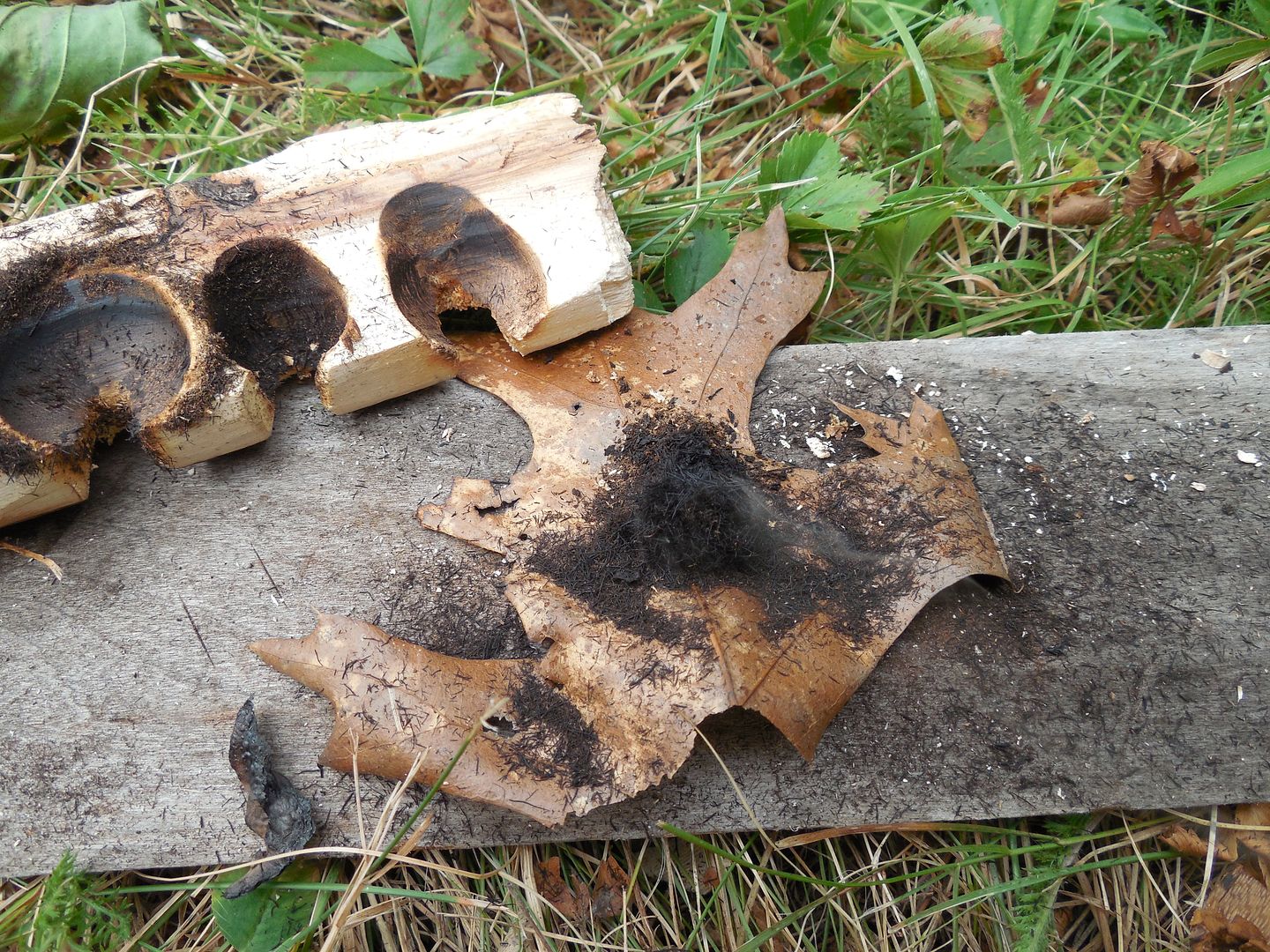
There looks like there is a large amount of slippage of the spindle on the board. Otherwise there would be a perfect circle there. I mention it as I was having failures recently and it was the same issue. The spindle/board socket was loose so heat couldn't build enough to make ember. I managed to correct it by locking my wrist tighter to my shin and getting more over the board whilst making sure I had a straight turning spindle.
I am looking for a comprehensive resource on friction fire for bow and hand drilling. If there are any out there I would love to know.
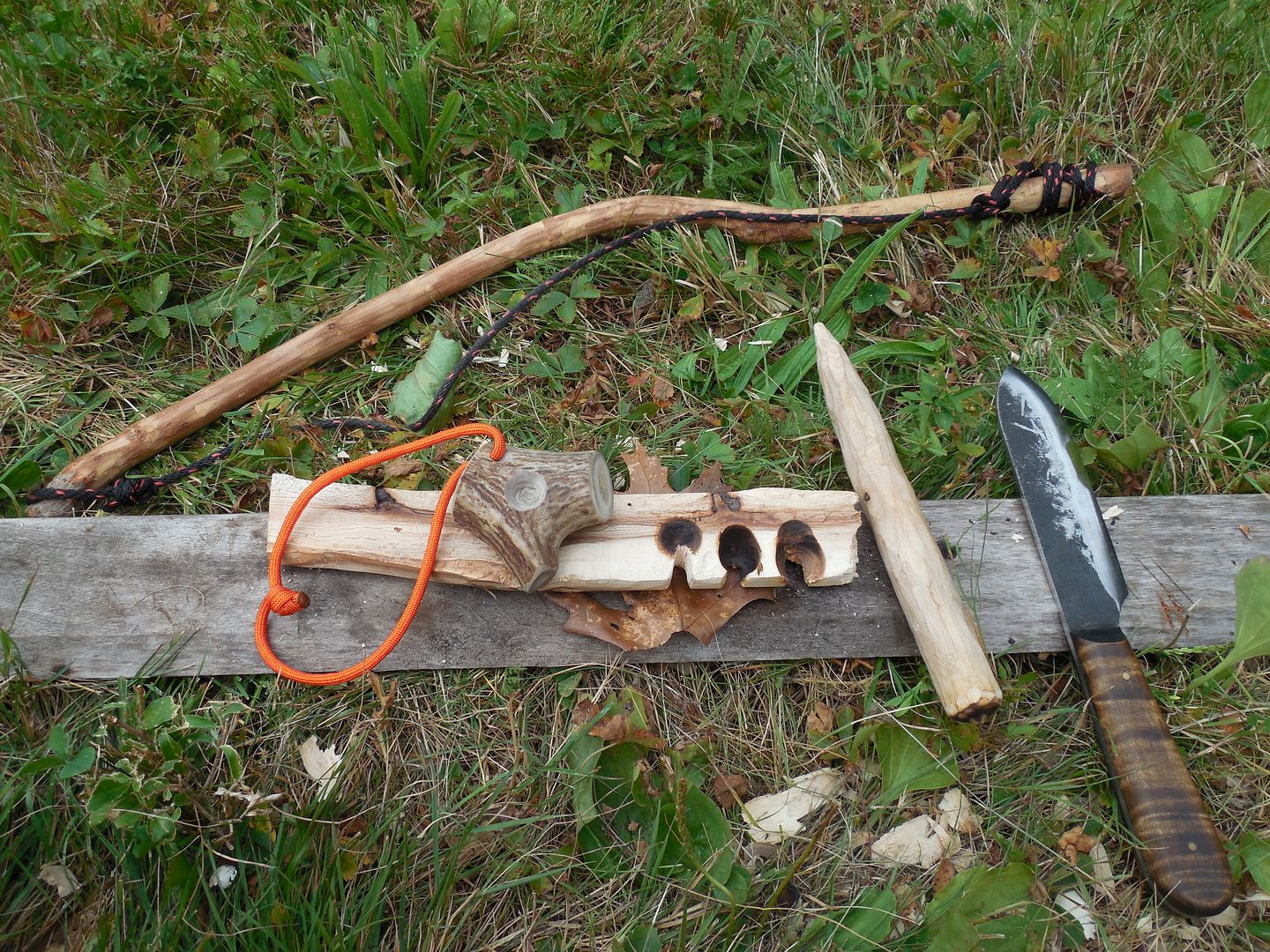
The antler bearing block is great addition as it takes one less equation out of the picture and is reusable!
The white part of that Sycamore was so soft it was difficult to keep from drifting away from the harder inner area. This Polar (not 100% sure as just grabbed an old fireborad) is harder than the soft white area of the Sycamore. The Spindle is the same as used in the syc on syc fire. Seemed to have more uniform holes.

I like to take material from the back of the grove for extra air flow.

I was pushing my luck here with the 4th spindle hole so near the front edge but it held true. I think if this fireboard was made of weaker material I might have have tossed the spindle more. As it was it flew once. LOL!

I never read an official book on the topic. Here are a few tips I learned from many failures.
1. If the wood is soft enough for your fingernail to mark it's probably ok for a friction fire but that's really only a guide not a rule. For example my Eastern White pine on White pine is very difficult to spin a coal despite appearing very promising. However a white pine fireboard or spindle used with another wood seems to work.
2. If a set isn't working toss it.
3. Conserve energy for when it' needed. Watch the V groove fill up with dust. Feel the fireboard get warmer ( I often do FF without shoes) then start to smoke. Once yea got the dust put the hammer down and get the coal.
4. Don't be in such a hurry to put the coal in the tinder bundle. Give it a bit to form a more solid mass. Time is on your side.
5. Scrape away the glaze off the blunt end of the spindle between attempts. This will increase friction at the fireboard.
6. Friction at the bearing block is very very bad.
7. You can do friction fire in the mist of a rainy period of weather with natural materials found in the field. The environment can be soaked but if your materials can be found reasonably dry it will help. I also believe that failed attempts will help dry the fireboard and spindle.
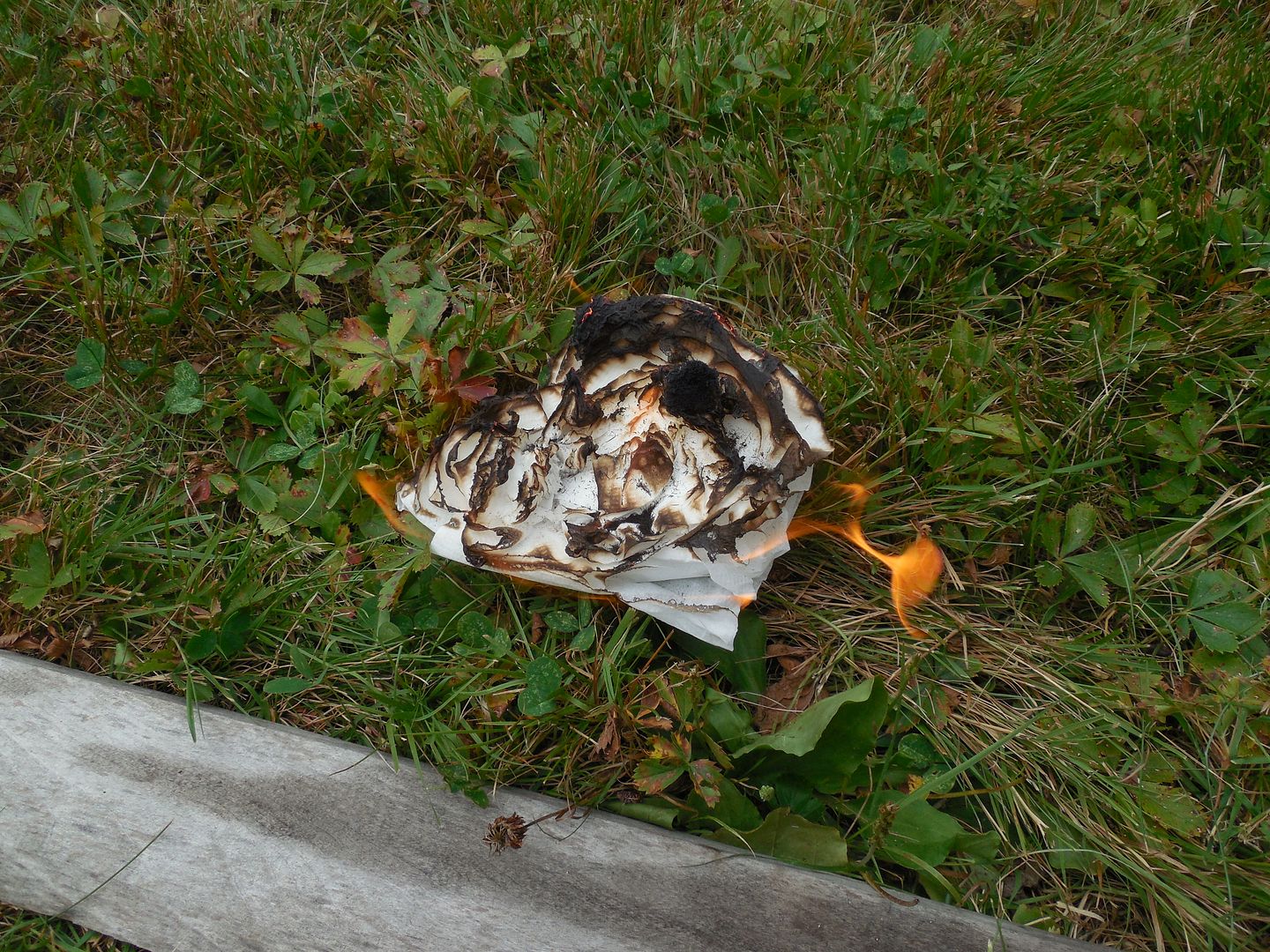
8. The tinder bundle seems to be the most overlooked aspect.
There are probably more but that's what comes to mind. I am no expert so could be wrong on any account.