Beginners crafts advice.

  • BushMoot: Come along to the amazing Summer Moot 31st July - 5th August (extended Moot : 27th July - 8th August), a festival of bushcrafting and camping in a beautiful woodland PLEASE CLICK HERE for more information.

leon-b

Bushcrafter (boy, I've got a lot to say!)
May 31, 2006
3,393
23
Who knows
I’m currently living abroad - in a flat, in the city centre and I’m pulling my hair out slightly!

So, I figured I’d try and find my creative side (which is extremely hidden) and have a crack at some crafts. I’m after any ideas and advice to get started. Needs to be something I can do in my flat so nothing that requires a ton of space or noise. I was thinking carving, maybe some leather work, basket weaving I’m open to ideas…. Something I can get my teeth stuck into.

Thanks in advance
 
  • Like
Reactions: Stanleythecat
If you do not know what you want to do; we probably cannot help much.

I have a collection of those old 70s craft books; tons of inspiration.

The Readers Digest are possibly the best.
 
  • Like
Reactions: leon-b
Leatherwork is not too hard, in that you can start with very few tools and you can work with a pricking wheel to mark out stitches and use an awl to make holes, rather than using pricking irons that you hammer (therefore a noisy process).

It's similar to sewing cloth, but you can also do carving, embossing, "pauting" on leather, as well.

Then there is tablet and inkle loom weaving.

And all the stuff that sailors used to do, using up bits of rope during slack times, making decorative knots and mats.

Plenty of tutorials on YouTube or elsewhere on teh Intarwebs.
 
  • Like
Reactions: leon-b
Leatherwork needs few tools - to start with I used an old fork to mark stitch holes - a sharpened nail as an awl and a darning needle to sew with. Another fork with bent tines was used to mould sewing grooves and decoration lines on belts....
 
  • Like
Reactions: Toddy
How about you buy a roll of paracord, and maybe start there ?

It makes braids, it lets you practice rope work, netmaking, it weaves, it makes belts and 'survival' bracelets, it lets you try a firebow from a bent stick, or baskets from found twigs/branches, it's very cheap, but it's useful.

£11.62 for 100m on eBay just now, and that includes delivery.

 
Last edited:
  • Like
Reactions: GreyCat and Pattree
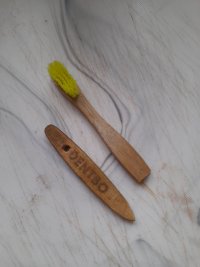
How about nalbinding? Carve your own needle (I made one from an old bamboo toothbrush,) and make a viking wooly hat, socks or mitts.
Once again many yt videos on the techniques.
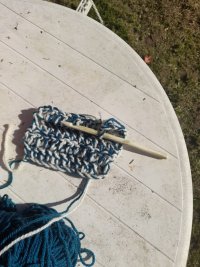
I also made a couple of crochet hooks from strong twigs. Nice Xmas present for someone if you don't want to take crochet up yourself.
Make a stick weaving board.. a plank and some sticks again. Scarves and mats rugs, blankets, made while watching TV.
These are my quiet crafts, along with knitting.
A lot of chaps think it's female orientated, but my father(a royal navy chap) taught me to knit. Many naval sorts knit....or at least used to. Maybe the skill has been lost nowadays. Time to bring it back?
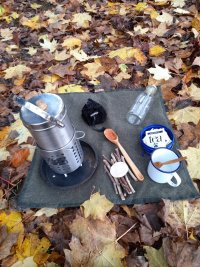
I think I still have a copy of his balaclava, scarf, 20250902_182420.jpgand fingerless gloves patterns knocking about somewhere.20241026_121415.jpg20241117_131311.jpg almost all of this brew kit, and sit mat was home made bar the mug, milk bottle, and tea bag tin.
Ikea cutlery drainer stove on old baking tin base, tea caddy Billy, tinder pouch and home made wax fire starters., carved spoons, and hand sewn wool and waxed cotton sitmat. There, that should keep you busy! ;)
 
  • Like
Reactions: Toddy and GreyCat
A lot of chaps think it's female orientated, but my father(a royal navy chap) taught me to knit.
I hinted at this in my earlier post: sailors, especially in the age of sail, had quite a bit of idle time when they had to occupy themselves and had lots of waste, frayed rope laying around, so would combine the two.

When I was in the cubs then scouts we had to learn to sew badges onto our kit, and then how to repair it. My dad said that one of the first things that he learnt doing his national service in the army in Germany was the same: sewing badges onto uniform.
 
  • Like
Reactions: Toddy
The paracord ideas are sound, lots of useful things beyond bracelets, and you just need some scissors and a lighter, plus maybe a fid.

Another option is to try making the cordage instead of a reel of paracord - jute twine is super cheap and can be dyed, and you can learn to do twisting with multiple colours together to create interesting cordage (again YT is good for this). This can then be used in craft projects like rope cargo-netting, monkey-fist heave-lines, rope baskets etc.
 
@leon-b : you also might want to consider materials availability outside UK and also what the local crafts are.

For example, making baskets with willow is a great craft- but you (a) need space not just for soaking and storing dry willow, but also for some stages of weaving; and (b) getting willow outwide UK can be difficult. However, if you were in Scandinavia, you might be able to find a local group working with birch bark to weave..... locally available materials and needs much less space than willow baskets (doable in a flat). Similarly, making pine needle baskets in USA/Canada.

What sort of things might you buy that you could have a crack at making?

If you are somewhere that does classes, it's a useful way of trying a craft because it (a) gets you out and (b) you don't need space at home. In the days when adult evening classes were much more available in UK, I did a couple of years of stained glass classes at one point, really great way of learning something.

GC
 
  • Like
Reactions: Toddy
We do classes at the Scottish Crannog Centre, -whatever craftsperson is on hand and you feel like.

£50 a half day and £80 a full, which is really cheap.

And it includes an Iron Age lunch!

But very few have booked. (irksome for me, who spent out a lot on tools for this).

We need to advertise this better, I think.
 
  • Love
Reactions: plastic-ninja
The instructables site can be good as inspiration though the project quality can be variable.

 
I hinted at this in my earlier post: sailors, especially in the age of sail, had quite a bit of idle time when they had to occupy themselves and had lots of waste, frayed rope laying around, so would combine the two.

When I was in the cubs then scouts we had to learn to sew badges onto our kit, and then how to repair it. My dad said that one of the first things that he learnt doing his national service in the army in Germany was the same: sewing badges onto uniform.
Ditto this. My great-uncle was a shell back (a sailor who had been round Cape Horn under sail). He was as tough as nails and maintained that a real man should be able to make and mend his own kit. He knitted his own sweaters while at sea. "No shops in the ocean", he would say. He was also a dab hand at carving all sorts of things using a small pocket knife.
 
In addition to space and noise, I would consider dust, waste, material availability and final use.
  • Carving can produce a lot of shavings which can be annoying to manage and hard to dispose of from a flat.
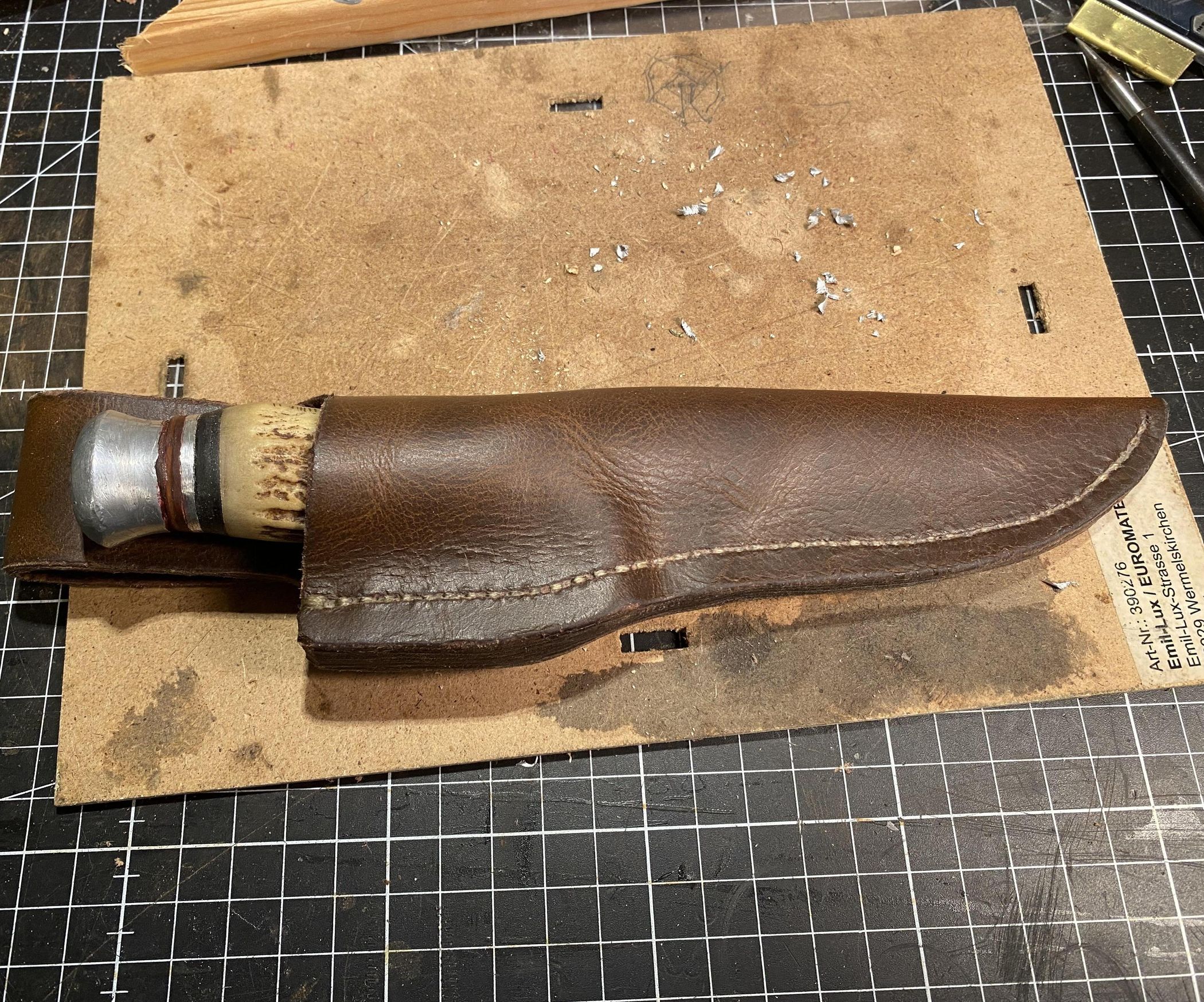
  • Leatherwork is a good one, but don’t just think of sheaths and belt pouches. People do fine work too, like watch straps and pocket wallets.
  • Paracord work is good and can produce useful items from key fobs to light pulls
  • Gear sewing is a possible, although getting good materials can require mail order which can be tricky. Needs a sewing machine. In Europe there is a good supply of materials from Germany. Produce stuff sacks, organisers, pack pockets, tarps, hammocks, all the way to garments, packs and tents.
  • Scrimshaw
  • Engraving/etching
 
Just a few meters of rope and a book on knots can lead to making all sorts of things. I’m making a cinquefoil table mat from seven meters of hemp rope.

May I offer you a challenge?
Choose something from the many suggestions in this thread and get going.
Make something before the end of the year.
 
The paracord ideas are sound, lots of useful things beyond bracelets, and you just need some scissors and a lighter, plus maybe a fid.

Another option is to try making the cordage instead of a reel of paracord - jute twine is super cheap and can be dyed, and you can learn to do twisting with multiple colours together to create interesting cordage (again YT is good for this). This can then be used in craft projects like rope cargo-netting, monkey-fist heave-lines, rope baskets etc.

An easy cheap way to learn cordage making is to use raffia which can be bought from garden centers and craft shops in a big hank. I always use raffia to teach beginners as it's stupid cheap for a lot of product, and it makes yards of cordage which can be used for many things, for instance tying up Xmas and birthday presents .
 
  • Like
Reactions: Toddy

BCUK Shop

We have a a number of knives, T-Shirts and other items for sale.

SHOP HERE