Advice for a Hampshire woodland 5-day bushcraft training course

  • The awesome MakerMoot is coming up (13-15th Nov 2026), Visit the TORM & ARM markets,and have space back at camp to work on projects and enjoy great company. PLEASE CLICK HERE for more information.

Astrochicken

Tenderfoot
Jan 15, 2024
75
58
46
Conwy
Hi Everyone, I'd like to pick your brains about a trip I've got at the end of the month. I'm travelling to Hampshire to attend a bushcraft course (Level 3 NCFE) for 5 days in the woods, which will be different to my normal North Wales home. I have a kit list and have been thinking about what I might need to bring / prepare for, however I'd be keen to understand what you would recommend for me to consider in advance. I'm expecting to make my own shelter to sleep in for the 5 days, however will have tarps and a fully enclosed hammock for back-up should the weather be a serious challenge. As such I'm already expecting to place emphasis on my sleep system, however I am aware that keeping warm during the day is just as important, so will be planning layers to help regulate my temp depending on the time of day / what activity we'll be doing.

It might be that you've done a L3 course somewhere else and wished you'd taken / left behind certain kit, or it might be that you're intimately familiar with the Hampshire geography, or simply that you've had a lot of time in later Autumn woodland trips, and have good advice you'd be willing to share.

The subjects we're doing are:

  • Skinning and butchery of large game
  • Primitive food preservation techniques (smoking/curing)
  • Glues/Tar/Pitch
  • Long term shelter / Winter survival
  • Green woodworking & Spoon carving
  • Advanced fire lighting
  • Traps/Snares
  • Foraging
  • Basketry
  • Axe work
I've done the Level 2 course, albeit with a different training party in a different location, and have 5+ years of camping / bushcraft in mixed locations, so have a fair base of experience, equipment and training to work from.

I'm naturally a 'take-everything' type and won't want to regret having left something at home that would really make a difference, however don’t want to haul stuff half the length of the country for no reason. Any thoughts you would be happy to volunteer on what would make this a positive and enjoyable trip would be much appreciated.

Thanks in advance.
 
I’m New Forest based and it’s still very dry and mild, presently.
If you have option to sleep in other shelters and have a car I would bring the hammock and also a ground shelter option. If it’s wet and windy you’ll have a decent ‘admin’ area to organise yourself. If it is very wet and windy then a more enclosed shelter made from a couple of tarps or even a small tent might be preferred. It can get a bit relentless if you are under tree cover for days in the wet.

You can leave them in the car, ready to go. I expect you will be very busy all day and might want somewhere comfortable to chill at night.
 
Last edited:
  • Like
Reactions: Broch
My thoughts exactly. Don't overthink it if you're driving down. By all means make a 'preferred' list of kit that you anticipate you'll need, that's a useful task in itself, but take options that you leave in the car in case things aren't quite what's expected.

If you were hiking in, that would be a different matter but you're on a course and you've spent money, don't risk getting less out of it by being uncomfortable.
 
  • Like
Reactions: Pattree
Good thinking, thanks. I've got an ever-growing list, sectioned out to help me try to think logically so I can later on trim down to what I genuinely think I'll need, but I should have a list for what I could take but deliberately leave in the car for use if needed. Fortunately my hammock has a couple of hoops in it so it can actually be stretched out with a couple of ground pegs to become a one-person tent, and it has an outer waterproof layer which helps keep the wind out too.
 
  • Like
Reactions: nigelp
I'd take a robust bivi bag like the army one, possibly instead of the hammock as it'll likely be more useful under a tarp and potentially within the shelter if it's a bit leaky. You don't want a wet bag for that period of time (though hopefully the weather will be dry so you can dry it out).

I'd also recommend ear plugs. If it's anything like the course I was on, snoring from fellow attendees was astonishingly loud through the trees! Not to mention if in a shared shelter.
 
  • Like
Reactions: nigelp and Pattree
I'd also recommend ear plugs. If it's anything like the course I was on, snoring from fellow attendees was astonishingly loud through the trees! Not to mention if in a shared shelter.
This is excellent advice.

I snore for England and I’m very careful to pitch well away from other campers.

I tend to be a solo Winter camper so it’s not difficult to avoid others.

Were I ever to take part in an course or event, I would advise the organisers and ask for an isolated pitch at night.

I don’t see it as a courtesy, more of an obligation when others have paid for their time away.

Have a great time and if you forget something - hey you’re a bushcrafter among bushcrafters. You’ll get by!
 
Thanks everyone.

I've got a couple of ways to address the shelter with tarps and my hammock (which as mentioned I can use at ground level almost like a bivvy) so I'm hoping to sleep ok. I have earplugs and have used them successfully before sometimes with a blackout eye mask in the Summer when it gets light really early. Don't expect that to be an issue in October though.

I do have insect spray and tick removal tools, as these get included when I camp out anywhere.

I am thinking I'll be able to bodge certain things on site if I think of something, I'm just aware that it'll be busy most days so I'm not entirely sure how much spare time there will be to make complex items.

This is good input, keep it coming :)

Ps. I know not everyone is a fan of paid courses, but if it's of use to people I'll be happy to write a short debrief on the forum after on what it was like. I don't mean rating the company delivering the training, more what we did and how helpful it was, just in case others are considering doing formal training too.
 
Ps. I know not everyone is a fan of paid courses, but if it's of use to people I'll be happy to write a short debrief on the forum after on what it was like. I don't mean rating the company delivering the training, more what we did and how helpful it was, just in case others are considering doing formal training too.
That’s would be good. As an outdoor instructor I’m a big fan of paid courses.
 
  • Haha
Reactions: Broch
Hi Everyone, I'd like to pick your brains about a trip I've got at the end of the month. I'm travelling to Hampshire to attend a bushcraft course (Level 3 NCFE) for 5 days in the woods, which will be different to my normal North Wales home. I have a kit list and have been thinking about what I might need to bring / prepare for, however I'd be keen to understand what you would recommend for me to consider in advance. I'm expecting to make my own shelter to sleep in for the 5 days, however will have tarps and a fully enclosed hammock for back-up should the weather be a serious challenge. As such I'm already expecting to place emphasis on my sleep system, however I am aware that keeping warm during the day is just as important, so will be planning layers to help regulate my temp depending on the time of day / what activity we'll be doing.

It might be that you've done a L3 course somewhere else and wished you'd taken / left behind certain kit, or it might be that you're intimately familiar with the Hampshire geography, or simply that you've had a lot of time in later Autumn woodland trips, and have good advice you'd be willing to share.
?
The subjects we're doing are:
  • Skinning and butchery of large game
  • Primitive food preservation techniques (smoking/curing)
  • Glues/Tar/Pitch
  • Long term shelter / Winter survival
  • Green woodworking & Spoon carving
  • Advanced fire lighting
  • Traps/Snares
  • Foraging
  • Basketry
  • Axe work
I've done the Level 2 course, albeit with a different training party in a different location, and have 5+ years of camping / bushcraft in mixed locations, so have a fair base of experience, equipment and training to work from.

I'm naturally a 'take-everything' type and won't want to regret having left something at home that would really make a difference, however don’t want to haul stuff half the length of the country for no reason. Any thoughts you would be happy to volunteer on what would make this a positive and enjoyable trip would be much appreciated.

Thanks in advance.
I have a question. Have the course instructers provided a list of what you should bring? or do you decide? Regardless; I will speak as if it was me doing the course. The course is Bushcraft so I would be tempted to take the minimum kit possible and make as much as I could from local resources. Looking at the activities. and excluding sleeping stuff I wouldn't need any more than a cooking vessel and a decent knife. and , of course an axe for the axe work tutorial I would be challenge myself. I could take a shed load of kit and have an easy time. Naaahhhhh I could do that anytime. Let us know how it goes and post pictures please. DDF xxxx
 
Have shovel Will travel.

I’ve never been on a bushcraft course so I have no idea of the level of facilities available.
1791287201538.png
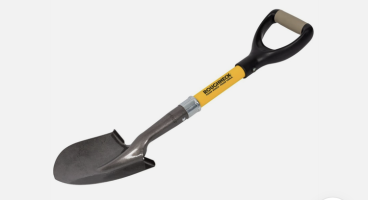
This is a Roughneck Micro shovel/spade. Best tool for the job that I’ve ever owned.

I believe that there is one with a serrated edge for roots. Mine lives in the car.
 
So I have had a list of kit to bring, and have all of this in hand (nothing beyond what you'd expect - appropriate clothes, knife, folding saw, sleeping bag etc). It's perhaps some of the not-so-obvious kit items that would be worth knowing about, like the micro shovel idea (I've got a pretty tough mini spade that I was thinking about taking, which may be part of the 'take-but-leave-in-the-car' kit). It'll perhaps not be needed, but could prove really helpful if for example we plan to cook the large game in a hangi.

Kit aside, I'm also thinking about what might prove valuable to think about in advance and whilst I'm there - I've not done 5 solid woodland days back-to-back before where I'll be away from normal daily life. Holidays, sure, but that's different, so I'm trying to ensure it's a valuable experience. The training activities during the day will take concentration however I expect there will be plenty of hours without direct tuition, so I'm considering what might help me make the most of it all, as well as having access to highly experienced and qualified instructors. The days will pass quickly I expect, and I want to make the most of my time in the woods.
 
  • Like
Reactions: Pattree

BCUK Shop

We have a a number of knives, T-Shirts and other items for sale.

SHOP HERE