
Mainstream Media "Stock up on food"
- Thread starter Edcraft
- Start date
-
BushMoot: Come along to the amazing Summer Moot 31st July - 5th August (extended Moot : 27th July - 8th August), a festival of bushcrafting and camping in a beautiful woodland PLEASE CLICK HERE for more information.
You are using an out of date browser. It may not display this or other websites correctly.
You should upgrade or use an alternative browser.
You should upgrade or use an alternative browser.


I've been reading.
I was told, and believed, that it wasn't for use on agricultural land, but was fine for forestry.
Lo and behold.....
 www.theferret.scot
I was told, and believed, that it wasn't for use on agricultural land, but was fine for forestry.
Lo and behold.....
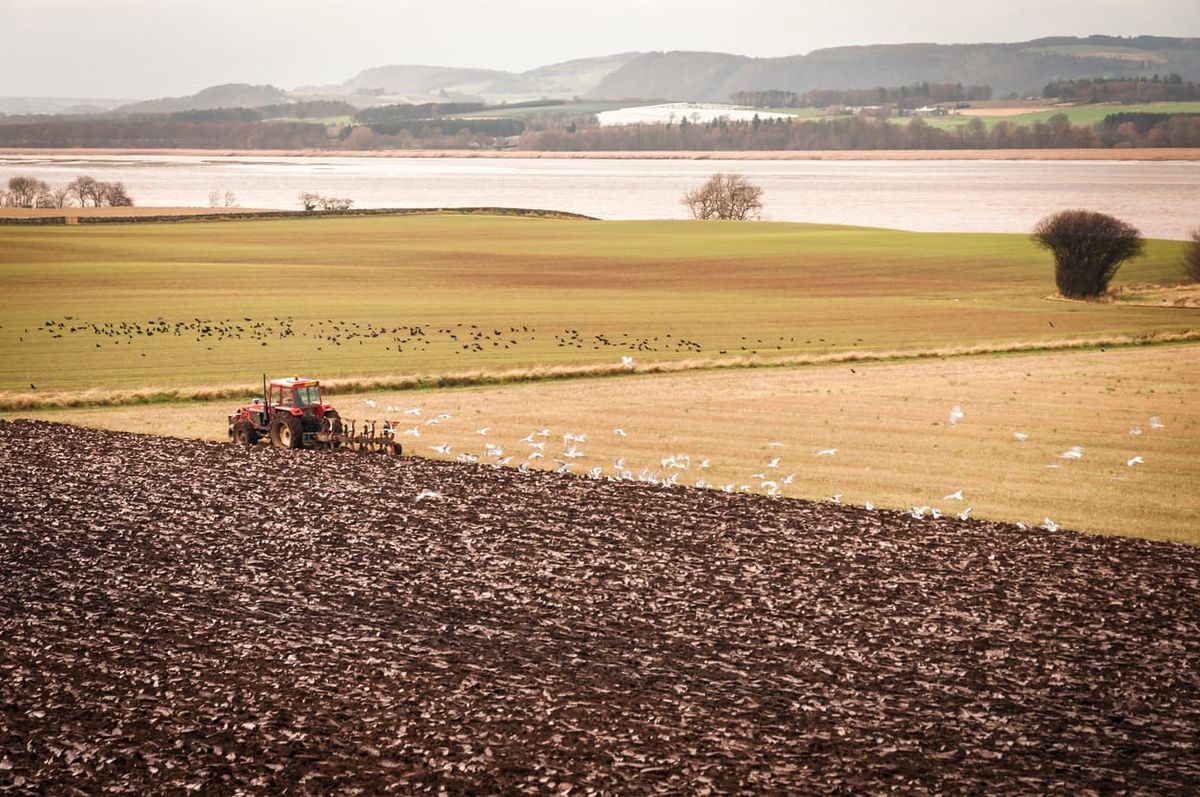
More than half a million tonnes of sewage sludge spread on Scotland's fields
Huge volumes of sewage sludge have been used to fertilise Scottish farmland. Studies show it contains microplastics, forever chemicals and cancer-linked pollutants.
www.theferret.scot
I wonder if we've actually got more dependant on imported fertilizer since the original post well over a a decade ago? I would have thought one of the first things done on the push toward net zero or whatever would be to reduce fossil fuel based fertilizers and make more use of nitrogen fixing plants and human waste.
I believe we have.
About 5 years ago, I did some speculative business development whereby I was able to operate a (large) drone to cover a 50Ha field with a muilti-spectral sensor at a resolution of 2cm/pixel, covered that field in about 45 minutes. With processing and recharge, there was potential for a field level service of some 300Ha per day and the results within 12 hours.
Idea was that pests/disease and poor crop growth could be identified quickly, allowing spot-treatment (ideally with drones) rather than full field treatment. Saving on chemical use/run off, and also opening the door to using solar/wind to recharge the batteries rather than diesel for the big tractor for whole-field treatment.
With the help of a farm estate allowing us to fly their fields, we got the proof of concept stage sorted, but then couldn't get funding for scale-up as we got to that stage without anything and were not as "out there" as some bizarre ideas that were being grant funded. (We even had ideas on longer term reducing the impact of sourcing the drone equipment).
Next stage: it needed to wash it's face. But we couldn't even persuade a wealth ag farm estate to cover expenses the following year because for them, it wasn't a priority- as they just paid extra if fertilizer/chemicals/fuel prices went up, harvested and put the crop into conditon-controlled storage, and could wait for market conditions to enable them to sell at a price that guaranteed profit. So we walked away and the drone/sensor kit is still parked in one of my outbuldings.
That's the problem that will eventually lead to food scarcity: there is no incentive for the producers to reduce use of the chemicals they rely on. Or to adopt alternative methods such as use of argoforestry and use of diverse populations of crops (such as the Wakelyn experiments).
The whole experience opened my eyes on a lot of levels- including the lobby which wants us to go vegan "for the planet." Well, I have seen what a crops-only industrially-farmed landscape is like and I don't want it. In the West of Britain where the fields naturally grow grass in the wet conditions and animal manure provides dung to support insects, the place is (literally) buzzing and there's birdsong. Whereas over in these big crop flatlands in east of Britain, it's comparatively lifeless- silent, and few insects. And insects are the foundation.
[I am also totally against "net Zero" as it's driving the wrong behaviours- and is fundamentally flawed as apparently gas purchased from Norway doesn't count towards UK net zero whereas that we drill ourselves does! Couldn't make it up etc etc etc. We really need a much more sophisticated view of the whole ecological system and a localised lower-input system with more acceptance of modest consumption and carrying capacity of a system, not a made-up metric that's easy to measure and which achieves nothing useful (and arguably is causing significant harm).]
GC

Nothing wrong with disagreeing and counter-position, it's how we learn new stuff.Not sure if I agree with that on this occasion ( a polite way of saying I don't ) - but yes that type of story is wheeled out and dusted off on occasion.
Misunderstanding there, I was commenting on the original newspaper article not your reference. Which of course is entirely correct.
UK farmers use increasing amounts and increasing costs of fertilizers at the encouragement of Govt, main buyers, the Stock Market/shareholders and fertiliser manufacturers. It has been that way since the second world war. Big Pharma and Big Business will not permit the UK Govt to go an alternative path even if they could, which is debatable.
That Scottish suggestion is laughable. Realistically, pollution is now so much of our lives and hence our waste that it is not removable at the treatment stage. Arguably, it is better to spread it on the fields where some, but not all of it, will held for evermore, than to dump it into the waterways and sea. There is some justice in that our food will also be affected, as we created the original pollution.

The whole experience opened my eyes on a lot of levels- including the lobby which wants us to go vegan "for the planet." Well, I have seen what a crops-only industrially-farmed landscape is like and I don't want it. In the West of Britain where the fields naturally grow grass in the wet conditions and animal manure provides dung to support insects, the place is (literally) buzzing and there's birdsong.
It's not that idyllic these days. The farm near us that was sold last year seems to have completed its works of scalping many of the hedges back with a couple of large excavators. All the fields are now covered in plastic presumably to grow forage maize. All the grass has been sprayed off and ploughed. I hope this year is a one off and they go back to planting some grass but even that will be a monoculture and any wild flowers, herbs or even the wrong grass will be weeded out. The multiple larger tractors seemed to be working day and night for several weeks. Hence me wondering about the amount of diesel and fertilizer that will now be required.
In the past a large amount of sewage sludge has been spread on the fields around here too, thankfully they didn't seem to use it this year. Although it does add some nutrients I gather it's done to get rid of the stuff and only so much can be used due to the heavy metals and other toxins in it.


We're spoilt for choice these days. Any history of our food shows how very seasonal, and how very unvaried it was for most people.
There's an awful lot of waste in the system now, an awful lot of 'I want' and not 'I need' too.
I know, I'm an optimist, I think we'll manage.
There's an awful lot of waste in the system now, an awful lot of 'I want' and not 'I need' too.
I know, I'm an optimist, I think we'll manage.
We're spoilt for choice these days. Any history of our food shows how very seasonal, and how very unvaried it was for most people.
There's an awful lot of waste in the system now, an awful lot of 'I want' and not 'I need' too.
I know, I'm an optimist, I think we'll manage.
Yes , maybe.
Agree to waste in the system and I don't think people can even distinguish between want and need anymore - returning to seasonal based eating and actual tangible food miles may help - also having a single set of coding on packets that makes sense.
I guess my main point of concern is that this is potentially culminative to the overall increase in living costs.
Housing / Rent
Fuel costs
Food costs.
Its ALL going up with no sign of easement ( currently ) - It all the small things together that tend to sink the boat Or just one really big black swan iceberg.
Biggest worry for most folks is mortgage payments.
That's actually another want/need situation.
Everyone seems to want their own place these days, but there are actually an awful lot of empty bedrooms in houses.
I'm not saying homelessness isn't an issue, but well, that's a social construct for many instead of a dire need to build another million houses....with more empty rooms.
That's actually another want/need situation.
Everyone seems to want their own place these days, but there are actually an awful lot of empty bedrooms in houses.
I'm not saying homelessness isn't an issue, but well, that's a social construct for many instead of a dire need to build another million houses....with more empty rooms.
Biggest worry for most folks is mortgage payments.
That's actually another want/need situation.
Everyone seems to want their own place these days, but there are actually an awful lot of empty bedrooms in houses.
I'm not saying homelessness isn't an issue, but well, that's a social construct for many instead of a dire need to build another million houses....with more empty rooms.
Interesting.
I think that ownership is more about sense of security isn't it? it would be for me , I'm not bashing Landlords as I'm one myself but I know myself my anxiety levels do peak with regards to that matter which isn't wasted on me.
But when you say spare Bedrooms - Modern housing stock barely have actual usable bedrooms - box rooms are turned into dressing rooms / laundry rooms / office spaces ( wfh ) as no storage space is included. So whilst they may not be bedrooms for occupants they are utilised for other purposes
I do think we have a more ingrained 'need' for ownership than maybe our European neighbours from what I understand but thats probably more down to supply vs demand in areas of limited building stock.
Its a good segue however - Your point of "Biggest worry for most folks is mortgage payments." when you apply it to any country ( I'm thinking States but no doubt other countries also are included ) when medical care is provided as an individual.
In a situation where you have to decide where the money is going to go - Mortgage - Medical Insurance - Food , its a tricky one to triage and you can see why people get into a downwards spiral once they are forced/chose to opt out.
Ah, cultural and political (sorry, that's verboten) differences.
We don't really 'do' medical debt here, do we ?
Thankfully
I live in a fairly affluent area (we're local, not posh) and while I know a lot who choose to go privately for health care, that's always backed up by the NHS if things go amiss.
I think a lot of that is back to want vs need though.....they want a facelift, they want a tummy tuck, they want.....
Housing, again, an awful lot of it is want not need.
We all need a safe, dry, warm and clean home, but that has become 'investment', and so many times salary type mortgages that many will never pay off, but hope that their house will increase value and sell well to clear that mortgage and leave a profit too.
Political again....sorry.
We don't really 'do' medical debt here, do we ?
Thankfully
I live in a fairly affluent area (we're local, not posh) and while I know a lot who choose to go privately for health care, that's always backed up by the NHS if things go amiss.
I think a lot of that is back to want vs need though.....they want a facelift, they want a tummy tuck, they want.....
Housing, again, an awful lot of it is want not need.
We all need a safe, dry, warm and clean home, but that has become 'investment', and so many times salary type mortgages that many will never pay off, but hope that their house will increase value and sell well to clear that mortgage and leave a profit too.
Political again....sorry.

I know you love working there, but there are a lot of Heritage sites in England, a fair number near where you live.
I realise that that's perhaps not quite your experience of 'near', but here if I want to work a commute of over a hundred miles each way was fairly common.
M
I realise that that's perhaps not quite your experience of 'near', but here if I want to work a commute of over a hundred miles each way was fairly common.
M
Last edited:
Ah, cultural and political (sorry, that's verboten) differences.
We don't really 'do' medical debt here, do we ?
Thankfully
I live in a fairly affluent area (we're local, not posh) and while I know a lot who choose to go privately for health care, that's always backed up by the NHS if things go amiss.
I think a lot of that is back to want vs need though.....they want a facelift, they want a tummy tuck, they want.....
Housing, again, an awful lot of it is want not need.
We all need a safe, dry, warm and clean home, but that has become 'investment', and so many times salary type mortgages that many will never pay off, but hope that their house will increase value and sell well to clear that mortgage and leave a profit too.
Political again....sorry.
I see what you are saying now - yes Property has become its own asset class as opposed to a physical requirement of need. However I can't blame people speculating on property ( Safe as bricks and mortar ) when I look back at my lifetime and the amount of Pension funds being robbed, swindled or dipped and the pensionable age being pushed up and up people will look for other means of investment.
Biggest worry for most folks is mortgage payments.
That's actually another want/need situation.
Everyone seems to want their own place these days, but there are actually an awful lot of empty bedrooms in houses.
I'm not saying homelessness isn't an issue, but well, that's a social construct for many instead of a dire need to build another million houses....with more empty rooms.
Who decides what "spare" is....? Our rooms are all used thanks. We have hobbies rather than going on expensive holidays abroad several times a year or having the latest gadgets.
On the other hand, there's a bunch of empty houses in UK, the difficulty is the capital needed to bring them to a fit standard to live in. Mortgage lenders will not usually lend for them, and as VAT us charged on renovations, the cost is 20% higher than it needs to be.... and the empty house council tax exemption is typically only a year...... nor are those houses necessarily in the places where people want to live, jobs have moved so people follow, time to bring jobs back north and west.
We also bring in a lot of extra people a year, and a bunch of other flats in London are bought as investments by overseas people and kept empty so they retain value. Houses owned as AirBNB are a sore point in some cities as are second homes in some rural locations.
There is an argument that there's actually quite a lot of housing not being used, plus there's already planning permission granted for more than enough housing to meet needs, just that they housebuilding companies take their time to keep prices high......
Complicated subject.
GC

My next door neighbour lives alone in a three bedroom house. No hobbies, two of the bedrooms are literally mothballed. She did have a friend staying for a couple of years, but decided she wanted her own space, so friend had to go. She lives in a studio flat now miles away from where she grew up, from family and friends.
This is fairly common in the UK, there are other houses in the street with sort of similar situations, family houses with one resident...we're actually not that short of housing, we're short of joined up thinking on housing.
As Greycat said, it's a complicated subject.
This is fairly common in the UK, there are other houses in the street with sort of similar situations, family houses with one resident...we're actually not that short of housing, we're short of joined up thinking on housing.
As Greycat said, it's a complicated subject.
But one persons Needs maybe another persons Wants. And vice versa - enforcing the idea and concept of what is required by others ( ie those not paying the mortgage or rent ) isn't one that would sit too well with myself.
But yes - its true that there are some people that possibly treat housing as aspirational life goals which I guess is a motivator in itself whilst diametrically there are those that neither have a 'home' or any sort and that is a difficult thing to balance - free market forces can only create natural economic results of demand vs supply.
A while back I looked into which countries had the highest home ownership vs the lowest and at the time the results surprised me somewhat - alot of the countries with high ownership are ex/current communist in nature - and the housing stock owned may well reflect that. IE The house assigned to you is in a state of disrepair but at least you 'own' it - or at least are responsible for it. Cuba is a good example of this but I understand the financial real estate market there is now starting to change.
The countries with the lowest home ownership is a bit of a mixed bag - some countries I would want to live in , others, not so much.
 worldpopulationreview.com
Anyway -digression!!
But yes - its true that there are some people that possibly treat housing as aspirational life goals which I guess is a motivator in itself whilst diametrically there are those that neither have a 'home' or any sort and that is a difficult thing to balance - free market forces can only create natural economic results of demand vs supply.
A while back I looked into which countries had the highest home ownership vs the lowest and at the time the results surprised me somewhat - alot of the countries with high ownership are ex/current communist in nature - and the housing stock owned may well reflect that. IE The house assigned to you is in a state of disrepair but at least you 'own' it - or at least are responsible for it. Cuba is a good example of this but I understand the financial real estate market there is now starting to change.
The countries with the lowest home ownership is a bit of a mixed bag - some countries I would want to live in , others, not so much.
Home Ownership by Country 2026
Data and analysis on home ownership by country, including countries with the highest percentage of home ownership and countries where the most people own their homes.
Anyway -digression!!
My next door neighbour lives alone in a three bedroom house. No hobbies, two of the bedrooms are literally mothballed. She did have a friend staying for a couple of years, but decided she wanted her own space, so friend had to go. She lives in a studio flat now miles away from where she grew up, from family and friends.
This is fairly common in the UK, there are other houses in the street with sort of similar situations, family houses with one resident...we're actually not that short of housing, we're short of joined up thinking on housing.
As Greycat said, it's a complicated subject.
Indeed. There's quite a bit of housing which could be brought into use- and probably much more quickly than new build- if the incentives were there.
Empty houses: these articles are interesting:
The complexity of dealing with empty home purchase is a thing, plus the record of local councils is also unacceptable. Clearly, public ownership of empty houses does not of itself lead to available housing. (Mind you, to those of us old enough to remember the pre-Thatcher era, it's never as simple as public = good and private = bad......).
The place we renovated, the only other offer the seller had was from a venture capitalist type asset company, presumably they would have either knocked it down/allowed it to fall derelict and planted trees on the land it came with for the carbon credits. It was certainly not in a fit state for habitation, and work to make it so was not going to be cheap whoever bought it. We qualified for the full level available for an Empty Homes grant from the Welsh government, the amount just about covered the VAT. Whereas new build is zero VAT. Ironically, if we'd been able to get planning permission to level the place and start again (highly unlikely), we would have had more flexibility and lower costs (as it is we had to meet modern building regs for the whole place including the old part).
On the subject of VAT. In theory, if a house has been empty for over 2 years then VAT of 5% applies to renovation to bring it back into use, and if it's over I think something like 10 years, there's no VAT. HOWEVER..... my accountant (who specialises in small businesses including many builders and tradespeople) assures me that there's no local builder or small tradesperson in the land who will charge other than the full 20% VAT even if the empty property clauses apply as the proof HMRC requries for the empty period is so onerous, and the mere fact of charging the lower VAT rate can trigger a VAT investigation- and small businesses just don't have the resource and headspace of dealing with that (classic "process is the punishment" situation). The place we did up had been empty for over 2 years, but we could only categorically prove 18 months to a level HMRC would accept, so we had 20% VAT charged. We also didn't get the "empty home" council tax exemption as the previous owner had maxxed that out (and it applies to the property not the owner) and the "construction exemption" when renovating is only for a year. So, for 18 months of the 2.5 years it took us to renovate, we paid double council tax......
You often see questions about "why don't youngsters buy do-er uppers". Well, perhaps if they had a 3-year council tax exemption and an zero-rate VAT applied automatically, then maybe they would be tempted. There's also a lack of accessible mortgage products for such properties, so unless they are VERY cheap, they are not an attractive purchase unless there is a very good reason (e.g. perfect location, family nearby, appreciating local housing market).
So, the only way that this level of empty housing will be brought back is if some govt (of any party) stops milking property for as much tax as possible, and provides some incentives for renovation, with the right conditions (targetted to individual families who want to live in them) it's perfectly possible. But I guess it's much easier for all parties to use sound-bites to attract voters than actually do something which would help fix the issue.
Sorry, I have also digressed. But in my defence, sustainability of housing is another aspect of the wider sustainability this was originally about!
GC
Dont look at me. I cannot work because I cannot live close to my employer.
Not that unusual unfortunately.
In 2008, I spent a year commuting by 737 between Glasgow and Cardiff. Thankfully, the expected job transfer did happen and I was able to move back home. I spent a big chunk of 2020-21 on sites living out of my Big Van over in the East Midlands. Most major construction projects have "contractor accommodation" of mobile home type villages and a fair chunk of skilled artisans in maintenance trades have caravans so they can follow project work around. A whole subset of logistics people (not just truck drivers) have vans kitted out for overnight.
The series "Auf Wiedesehen, Pet" in 1983 was based on construction workers from Tyneside who have to go overseas to find work.
The point I am making is that "t'was ever thus" if you were either living in a depressed area or your skills were specialist.
That said, it is perhaps more of a male worker thing, as typically the work moves about but the wife and children are settled in schools and with family close by, so one of the couple- usually the husband- lives away during the week. Wages typically won't sustain 2 houses, and in the days of AirBNB and tenant rights a low-cost "contractor" temporary lease is not going to happen, so the person ends up living out of a van or caravan on site. Indeed, I have one friend whose parents live full-time in a motor-home, following their work around the country (and into southern Europe during winter).
Gets harder as you get older. All depends on how keen/desperate you are, it was also more common in days gone by when benefits were at a lower level and you really had to go out and find work, often that was the other end of the country (I grew up in north east England, and I remember the eighties..... for many years my dad worked away all week we only saw him at weekends, that "wasn't unusual" either).
GC
Add in seasonality and tourism, and it's often a nightmare for local young folks who do want to live where they grew up and rear families there......and for older people who need access to social resources but half empty villages don't have enough resident population to have those.
Similar threads


- Replies
- 6
- Views
- 600


- Replies
- 12
- Views
- 1K

- Replies
- 48
- Views
- 2K