

A New Tinder (for me)
- Thread starter Broch
- Start date
-
The awesome MakerMoot is coming up (13-15th Nov 2026), Visit the TORM & ARM markets,and have space back at camp to work on projects and enjoy great company. PLEASE CLICK HERE for more information.
You are using an out of date browser. It may not display this or other websites correctly.
You should upgrade or use an alternative browser.
You should upgrade or use an alternative browser.


I see you have a nice horn beaker, Jonathan.
(She changes the subject hurredly)
(She changes the subject hurredly)

That’s my mead cup. A good 16 years old bought from the Sherwood archers shop. The amount of wasps I’ve rescued from that and also transferred to my mouth before realising is no joke.I see you have a nice horn beaker, Jonathan.
(She changes the subject hurredly)
No point in changing the subject. She’ll see it eventually. Luckily she’s obviously up to something today and might miss it when it gets buried down the list.
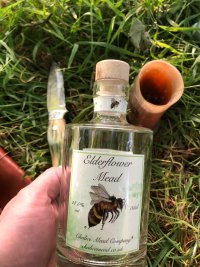
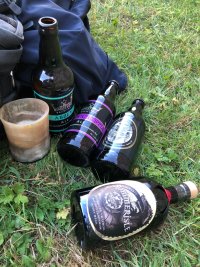
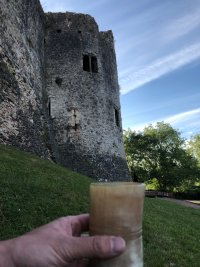
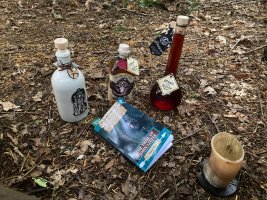
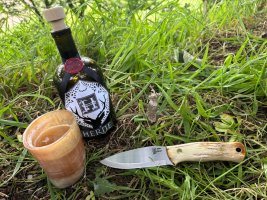

How do you find the horn for drinking from @JonathanD ? Does it impart any flavour to the ale? I ask as I have a ram's horn horn, and blowing on that you can definitely smell the rammyness! Not unpleasant, just definitely not a neutral scent.
It goes after a while. Get some cheap lager and leave it in there for a few hours. Tip it out. Rinse, dry. Repeat. Mine just smells of honey now. I drink red wine and ale out of their too. Not spirits though.
Much appreciated. How do they bond the base to it in a food safe way? Or is it more of a 'drink from so seldom that the content of the cup is rather more damaging than the bonding agent'?It goes after a while. Get some cheap lager and leave it in there for a few hours. Tip it out. Rinse, dry. Repeat. Mine just smells of honey now. I drink red wine and ale out of their too. Not spirits though.
I’ve no idea. Mine looks like some kind of resin. I did accidentally leave a kiwi in one of my old ones for a couple of months to protect it and put that inside another larger cup. When I found it, the whole bottom had rotted out of both cups. I always rise and dry immediately after use or when I get home.
The honey in mead kills most bad stuff so it’s not so much of a necessity. But I do with red wine and ale.
The honey in mead kills most bad stuff so it’s not so much of a necessity. But I do with red wine and ale.


Well there have been a lot of happenings on here that I can’t unsee now. So I’m just going to paste these facts down.
In short, and I could go on for another twelve hours: wasps are predators, pollinators, scavengers and prey—and despite their bad reputation, they play a valuable role in healthy ecosystems. So stop putting bullyments and murderous intent upon them
- Natural pest controls — Wasps hunt and eat up an absolutely huge number of insects, including caterpillars, mozzies, midges and really annoying buzzy flies.
- Pollination — Loads of wasps visit flowers for nectar and can transfer pollen between plants, helping a stack of wildflowers reproduce.
- Supporting food chains — All wasps are an important food for birds, spiders, dragonflies, mammals and other wildlife. Including silly badgers.
- Controlling insect populations — And wasps prey on loads of other insects, and wasps help prevent certain species from becoming excessively abundant and taking over the planet.
- Helping ecosystems stay balanced — The predatory and parasitic wasps play a most important role in maintaining biodiversity and regulating insect communities.
- Reducing the need for pesticides — Wasps natural pest control can benefit agriculture and gardening by suppressing loads of crop pests.
- Decomposition and scavenging — Some social wasps eat carrion and dead insects, helping recycle nutrients within ecosystems. Elton wrote a song all about that.
- Food for specialist wildlife — Certain animals depend heavily on wasps and their larvae as part of their diet. Stupid badgers again.
- Great biodiversity indicators — And the presence of different wasp species can reflect and show the health and diversity of ecosystems.
- They are really interesting and diverse — The UK has thousands of wasp species, although only a small number are the familiar social wasps that people commonly encounter and get annoyed about. They are a far harder species to study as well. There are 7000 species in the U.K. And there are only 3 species of snakes. Easy peasy.
And they have a load of benefits to us human beans directly as well. So I am going to go on for another few minutes. You brought it on yourselves.
- Natural pest control — Wasps kill whoppingly enormous numbers of insects that can damage crops, gardens and stored food. This benefits farmers and can reduce reliance on chemical pesticides. And that’s got to be good hasn’t it?
- Protection of food crops — Again the predatory and parasitic wasps attack caterpillars, aphids, beetles and other agricultural pests, helping protect crops that us humans rely on.
Like I said. Stop wasp bullyments and mass murder
- Pollination — Wasps visit flowers for nectar and pollinate some plants. Certain plants also have particularly close relationships with specific wasp species.
- Potential medical benefits — The chemicals that can be found in wasp venom are being studied for possible medical applications, including treatments that target bacteria and cancer cells.
- Scientific research — Wasps help scientists study behaviour, evolution, ecology, venom chemistry and social organisation.
- Biological pest control — Some species of parasitic wasps are deliberately used in agriculture and horticulture to control loads of pest insects naturally.
- Helping produce fruit and vegetables — Waspies control insects that eat plants and wasps indirectly help improve yields of farmers food crops.
- Economic benefits — Wasps pest-control services can save farmers a pile of money and potentially reduce crop losses as well.
- Supporting healthy ecosystems — Us human beans depend on functioning ecosystems for food, clean water and biodiversity. Wasps contribute to keeping those ecosystems balanced.
Did you know the odds to be born on this Earth's one in four hundred trillion?
I conquered those odds, yet I can't conquer leaving this house
I eat, sleep, scroll, and work, but there has to be more than just merely existing
In fact, I was thinking there's not enough wine in the fridge to unleash me
And this feeling fiends for some feminine healing.
So I’ve spent the last few days out with my baddest womans.
I conquered those odds, yet I can't conquer leaving this house
I eat, sleep, scroll, and work, but there has to be more than just merely existing
In fact, I was thinking there's not enough wine in the fridge to unleash me
And this feeling fiends for some feminine healing.
So I’ve spent the last few days out with my baddest womans.
Last edited:

Who let those girls outDad. Did you know the odds to be born on this Earth’s one in four trillion? I conquered those odds, yet I can’t conquer leaving this house. I eat, sleep, scroll, and work, but there’s got to be more than merely existing. In fact, I was thinking there’s not enough wine in the fridge to unleash me. and this feeling fiends for feminine healing. So I’ve spent the last few days out with my baddest womans.

We must have faith in the bulbs that she planted beneath the snow
We must hold on, and we must let go.
We must hold on, and we must let go.
I hope they survived this drought. Proper made me tear up now. It is the most wonderful and saddest thing I’ve ever read.
Last edited:

Similar threads


- Replies
- 7
- Views
- 1K

- Replies
- 14
- Views
- 2K
- Replies
- 18
- Views
- 810


- Replies
- 6
- Views
- 986