I’ve been kicking a similar idea around.
From my personal experience, the right tool depends A LOT on the exact job or environment. My other consideration is that I’d be packing out whatever vegetation I took down… Truth be told, I can’t really imagine or recall situations where I didn’t rip the trees limb from limb or cut them up with a saw or loppers... which is still using back and chest muscles.
If your talking wild rose, brambles or Berberis you’d have more reach via long handled loppers and be snipping those prickly pests into very short 1 or 2 foot lengths. You aren’t likely to waste time turning half that stuff into kindling.
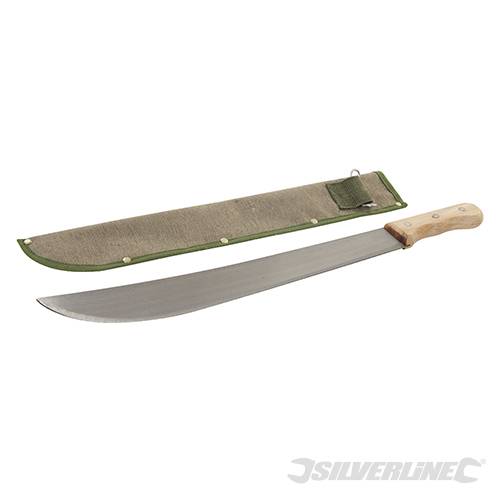
Nowhere would I be swinging a machete. Swing a stick, or 'improvise' to reap some nettles or weeds sure. But cutting tools would only be swung against a some kind of chopping block or a tree truck I was removing.
Back on topic.
My core message is: I’m not sure a smaller hatchet will work?
[*]
To be brief:
- I would like to play with lighter tools, and think further outside the box. So I'm willing to be wrong about the Trail Hawk and other offerings.
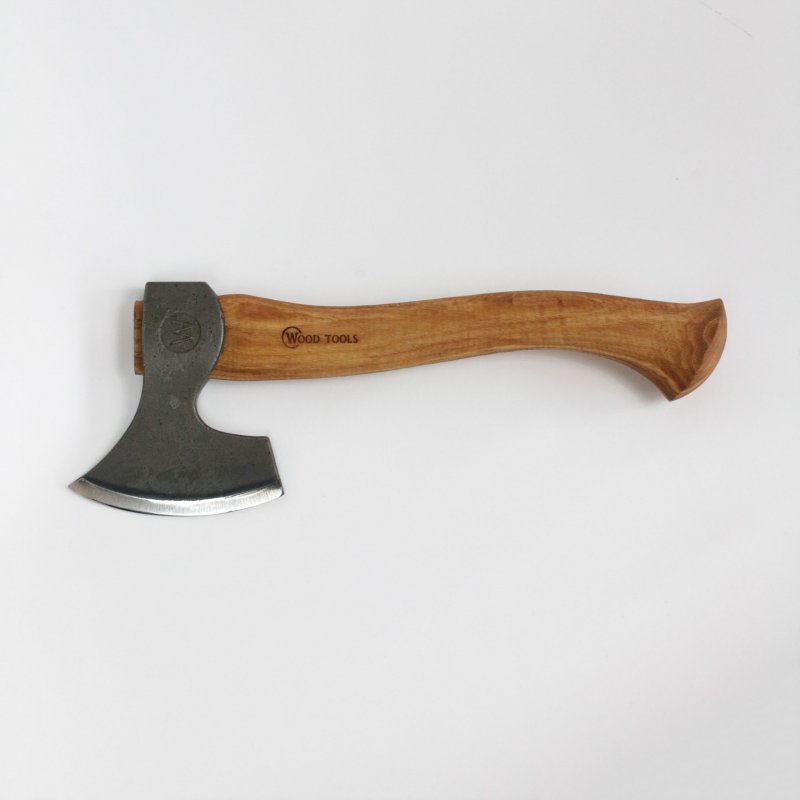
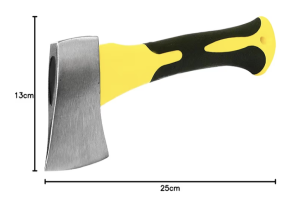
- I have light hatchet... It's shaving sharp and thinned a little but it's a splitter. It's a cheap worn out convex cheeked wedge, without the weight (narrator: "it never had the weight!"). I don't find it effective. I think it's about 350 g head? And the total is a whisker under 500 g) I can choke up on the Montreal pattern for crafting. It's a cheap toy I seek to upgrade at some point. So a pig's ear and all that.
- My primary hatchet, is largely as described below. It's a flat wedge cheeked profile, It chops and splits the small stuff like a dream. But it has a full broad blade, so no good for crafting and erm erm it's kind of heavy. I might say it's a work of art.
My personal dogma goes something like this:
- I’d want a minimum of about a pound and half. (Alternatively, there are good options.)
- A thin, or even real thin limbing blade. ( Big topic. Splitting fire work is different but most axes aren't very special. Axes are either easy to cast cheap fat splitters, or flat ground, or thin limbers.)
- a 14 inch handle so that the centre of my hand and the middle of the cutting edge is a particular distance. (Pure personal preference, your mileage may vary. I would lock or 'nail' this variable down. For me, something portable and easy to use will simply get more field time. But remember it's a piece of wood, so tune to your liking.)
- I would also want to shave the shaft to absorb the shocks and have something big enough for my hands. (Also highly personal preference. But let's not over think this one...)
I’d skip the tomahawk, I feel it’s a multi-tool unless you bought the much larger sizes. Tomahawks are supposed to be light and used with a long handle. I would also feel a little weird to pack a take down tomahawk only to grunting and swearing every time the head wobbled or worked loose.
[*] Suggestions:
Home page for Rinaldi tools. (You don't need to read this... it's very much for reference at your leisure.)
https://www.br-rinaldi.it/en/index.html
The wonderful catalogue. With all sizes and weight variations  (Read this.)
https://www.br-rinaldi.it/en/download/CATALOGO2025.pdf
(Read this.)
https://www.br-rinaldi.it/en/download/CATALOGO2025.pdf
N.B: Is
that review really showing the
exact weight you are interested in?
Yup 350 gram head. (micro bonus)
UK supplier… A guide to what you might easily get. (A little starter for you.)
https://www.lamnia.com/en/search?mid=833&sgid=134
https://byxco.com/search?q=Rinaldi&options[prefix]=last
Starter part 2. (homework)
Option 1. "America" the most extreme thin limbing axe. 400g option.
Option 2. "Trento" still thin but a wider bit.
Option 3. "Calebria" flat wedge, the bits are a narrow. 350 g option.
Option 4 / Bonus. "Sicilia" (Tomahawk) Very narrow, flat wedge. 250 g alternative.