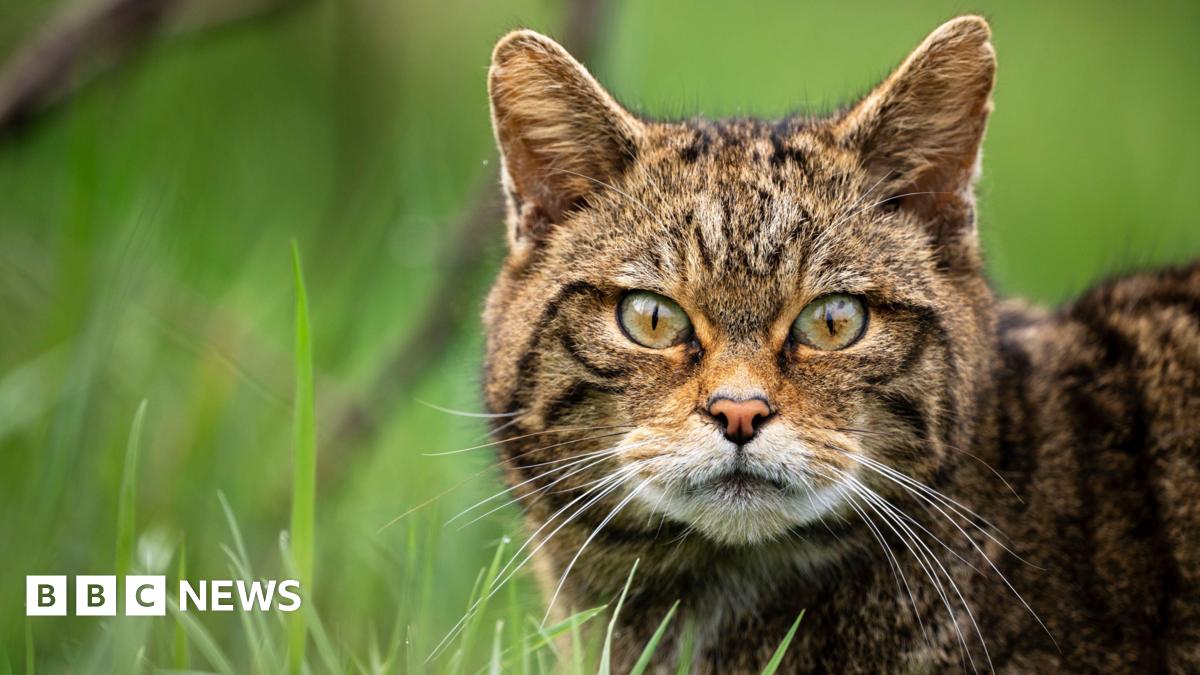
No one knows where it came from': first wild beaver spotted in Norfolk for 400 years

  • BushMoot: Come along to the amazing Summer Moot 31st July - 5th August (extended Moot : 27th July - 8th August), a festival of bushcrafting and camping in a beautiful woodland PLEASE CLICK HERE for more information.
I haven’t, the estate team do. The damn is on a footpath and people do watch the beavers working on summer evenings.
 
  • Like
Reactions: nigelp
I was luck and got close up to some on a few years ago for a licensed project. I kinda like the aspect of seeing the evidence of their presence but the animal is elusive. There is a badger set not far from the lodge too.
 
Speaking to the team they are convinced and that the number of rare species has improved. Some work does take place to make sure there are half cut trees over paths for example.
 
  • Like
Reactions: Ozmundo
How's that going to help the bird and small mammal stocks ?, they're under pressure already due to lack of viable habitat and food sources. Bet the wildcats don't go for the mink!

I'm guessing that they are hoping they predate of Wabbits.
But as Demographic advises - domestic cats take a large amount of birds and smaller vermin.

Mine certainly do - what shall I do ? Muzzle them?
 
Within urban areas there is very little that can be done to improve viable habitat/food sources for wild animals, or anything to prevent/reduce domestic cat predation. Arguably the domestic cat is also keeping down the rat/mouse vermin population and is therefore a benefit.

Wild cats will presumably be released in the limited "wild" areas, where stressed species still survive and there are less predators, (there are still cats, but less of them). The wildcat's survival depends entirely upon a higher kill rate than domestic moggies, who generally get their main meal from a householder.
 
  • Like
Reactions: GreyCat
It’s getting harder and harder to discover true wildcats as they interbreed with feral domestic cats. The release site needs to be isolated.
 
  • Like
Reactions: GreyCat
There are estimated to be 1.5 million feral cats in the UK, not household but feral. To put that in context, there are only about 250,000 foxes, and 300,000 badgers. Household cat numbers are estimated at 10.5 million. It's ridiculous and something should be done :(
 
There are estimated to be 1.5 million feral cats in the UK, not household but feral. To put that in context, there are only about 250,000 foxes, and 300,000 badgers. Household cat numbers are estimated at 10.5 million. It's ridiculous and something should be done :(

What do you suggest as a solution.
 
I confess, I don't have (an acceptable) one. I think we need to restrict numbers going forward somehow but it's too emotive a subject to get any traction I suspect.

We have members of our group, that are managing land for biodiversity, won't cull grey squirrel to protect the sapling regeneration but, at the same time, are happy that their moggies kill field voles, bank voles, shrews, yellow-necked mice, wood mice, and birds.

I just don't understand the logic :(
 
I confess, I don't have (an acceptable) one. I think we need to restrict numbers going forward somehow but it's too emotive a subject to get any traction I suspect.

We have members of our group, that are managing land for biodiversity, won't cull grey squirrel to protect the sapling regeneration but, at the same time, are happy that their moggies kill field voles, bank voles, shrews, yellow-necked mice, wood mice, and birds.

I just don't understand the logic :(
I respect your honest view. Its a very difficult question to answer.
 
  • Like
Reactions: CrispyDuck
For feral cats: Trap, neuter, return (TNR). Over time the population reduces naturally, and the cats also have a better life. Win-win. Also need to be careful about reducing the population too much given the level of food available for rats and mice, especially in urban areas.

Easy to blame cats for prey population crashes, but really the effort should be in making sure the prey population is robust. Also don't forget increased competition from kite and buzzards as they make a welcome return......

....... I visited the Yorkshire Wolds once. Big arable area. Lifeless, not a sound of an insect of birdsong. It's the insects that are key and modern farming, especailly arable farming, leaves the soil dead with few insects. There's your root cause.

With pet cats, mandatory microchipping and encouraging neutering helps, the cat has better life quality and there are no offfspring. Also education- cats are not necessarily an "easy maintenance" pet that should be left outside a night. Indeed, a responsible cat owner doesn't leave cats outside at night. They will also adapt to an indoor life if enrichment is provided and they have space and views.

We have three cats, all indoors only. One is very old- we are his third set of people- and we decided he's too creaky to go outside any more. The middle cat has always been indoor. The youngest is very young, and a former feral (mother and kittens rescued, kittens just inside the socialisation window and rescued as pets, mother neutered and returned to the farm colony). He is a pure white cat and so more likely to get cancer, so one of the conditions when we adopted him is that he is indoor only. He has adapted well to indoors, plays a lot and he and the middle cat are firm playmates. There's lots of views of outside, lots of toys and the house is big enough they can all find a private corner if they want it.

GC
 
For feral cats: Trap, neuter, return (TNR). Over time the population reduces naturally, and the cats also have a better life. Win-win. Also need to be careful about reducing the population too much given the level of food available for rats and mice, especially in urban areas.
Who will be doing this and how will they be funded?

< Just asking :) >
 

BCUK Shop

We have a a number of knives, T-Shirts and other items for sale.

SHOP HERE