GOOD WOODS FOR BOW DRILL.

  • BushMoot: Come along to the amazing Summer Moot 31st July - 5th August (extended Moot : 27th July - 8th August), a festival of bushcrafting and camping in a beautiful woodland PLEASE CLICK HERE for more information.
What a useful video.
How much of your bow drill kit do you carry and how much do you forage the components? He seemed to be using local woods but carried the top bearing.
Looking at the need to refresh the spindle top so frequently as it “shoulders” made me think. I’ve seen that very expensive knife with a steel bearing hollow in the handle.

Does anyone carry anything like say a 30mm taper bearing for this job?
 
What a useful video.
How much of your bow drill kit do you carry and how much do you forage the components? He seemed to be using local woods but carried the top bearing.
Looking at the need to refresh the spindle top so frequently as it “shoulders” made me think. I’ve seen that very expensive knife with a steel bearing hollow in the handle.

Does anyone carry anything like say a 30mm taper bearing for this job?
It depends on where the line is for you.

I know of folk how do carry a bearing but for me that’s the point where it feels too far - might as well just carry a lighter then to my mind.
 
  • Like
Reactions: Pattree
My favourites -
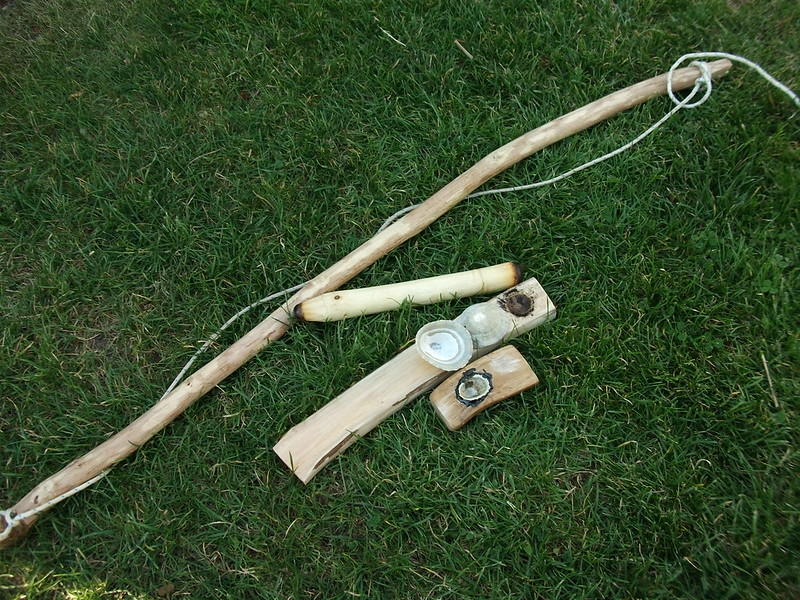
Hazel spindle, Ivy hearth, any old bow but usually Hazel, paracord cord (synthetic) bramble (natural), Antler bearing block with Limpet bearing insert. This was my usual teaching kit but I also like Lime on Lime and Willow on Willow (all very old and dry) ,,, never tried Elder....
 
  • Like
Reactions: Toddy
My favourites -
Hazel spindle, Ivy hearth, any old bow but usually Hazel, paracord cord (synthetic) bramble (natural), Antler bearing block with Limpet bearing insert. This was my usual teaching kit but I also like Lime on Lime and Willow on Willow (all very old and dry) ,,, never tried Elder....

You know how elder cracks off branches if you grab hard ?
Well those branches usually split a bit too, and you can pull that split apart and break off a decent hearth board. It's pretty reliably good.
 
  • Like
Reactions: John Fenna
My favourite combinations in no particular order;

  • Sycamore on Sycamore
  • Hazel on Hazel
  • Willow on Willow
  • Hazel on Ivy
  • or a mix of any of the above
Bearing blocks, when i was doing lots of demos at shows and schools i used to use a stone with a depression in it or a block of wood with a Limpet shell, when teaching i used the same as the students which was normally a wooden bearing block with a green leaf in it.

53607770598_16dea89baa_c.jpg


Yes, that block has seen many, many friction fires as can be attested by the polish of the central depression.

53607743961_d1783d1224_c.jpg


Cord, i always like many others here used pull start cord, cheap as chips and seriously resilient, always had a hank of it with me when out and about, makes good emergency boot laces too.
 
My favourite combinations in no particular order;

  • Sycamore on Sycamore
  • Hazel on Hazel
  • Willow on Willow
  • Hazel on Ivy
  • or a mix of any of the above
Bearing blocks, when i was doing lots of demos at shows and schools i used to use a stone with a depression in it or a block of wood with a Limpet shell, when teaching i used the same as the students which was normally a wooden bearing block with a green leaf in it.

53607770598_16dea89baa_c.jpg


Yes, that block has seen many, many friction fires as can be attested by the polish of the central depression.

53607743961_d1783d1224_c.jpg


Cord, i always like many others here used pull start cord, cheap as chips and seriously resilient, always had a hank of it with me when out and about, makes good emergency boot laces too.

Yep, my current bearing block is a granite pebble with a depression ground in it and polished - it will last forever.

I think we need to remember paleo man carried everything with him. He did not rely on finding a good, dry, hearth or a seasoned drill, or make his string on the spot; getting a fire going was too important to put it to chance.
 
  • Like
Reactions: Toddy
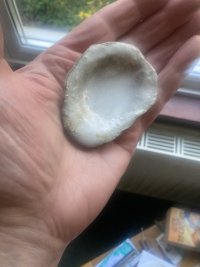
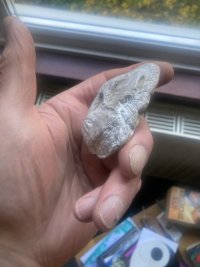
Those limpets have given me an idea.

IMG_6233.jpeg
IMG_6234.jpeg

This glazed pottery oyster was made by my pottery tutor in a matter of seconds.
I’m going to make a glazed pottery limpet or two :red: (in a bit longer!)
 
  • Like
Reactions: Toddy
What different woods do you consider useful for making a bow drill set? What have you used? what worked/didn't work? I looked on the forum and whilst there is a tremendous amount of knowledgeable postings they are scattered. I could not find a thread specifically discussing just this one aspect. As ever I look forward to your collective knowledge and experience. d x
What materials have people tried that have been difficult or even useless. I think that is just as important as the ones that work x
 
  • Like
Reactions: Toddy
It depends on where the line is for you.

I know of folk how do carry a bearing but for me that’s the point where it feels too far - might as well just carry a lighter then to my mind.
the guy in the video had been gifted the metal bearing block and was just showing it out of interest. His entire set was made by what was at hand. x
 
I like elder or sycamore maple hearth, elder or sycamore drill. Didn't get on with alder, birch. Haven't tried willow, never had ivy big enough at the same time as thinking about hearths.

Novel bearing block, on advice of Mors: Black poplar bark! not as long lasting as stone, but much better than green wood, and easier to put a depression in.
 
  • Like
Reactions: Toddy
I mostly use Poplar for my kits but have had success with several different types of wood, When I was younger and didn't know better and made kits from hardwoods and were successful but it's not worth the effort it takes.
Yesterday I used cotton wood and was surprised to get a huge ember in under a minuet so i will be looking for more of that, seemed to have been the easiest ember that I have ever gotten.
 
Jako ktoś, kto nigdy tego nie próbował, ale jest zaintrygowany, mogę również zapytać, jakiego powrozu wszyscy używacie? Czy to w porządku z tobą Dale?
I only use a natural leather string. It has withstood regular use for many years. I completely eliminate and do not use synthetic, plastic strings such as paracord, shoelaces, etc.
 
  • Like
Reactions: Falstaff
I think dryness and level of degradation of the wood comes into it too.

Willow hearth and willow spindle made out the same dead-standing branch worked very well for me. The wood was found with no bark, grey in colouration, dry but also ever-so-slightly punky. The outside easily dent with finger nail. I’d say about 80% of its peak hardness.
I think this was the deciding factor of it producing a coal as fast as it did on this occasion. Spindle was carved to an even as possible 30mm diameter with a 15mm taper for the bearing block.

Less important; the bearing was hard seasoned cherry with sedum leaf used as a lubricant. Bow was hawthorn and para cord.

Both spindle and hearth dead standing sycamore was good too. Never tried lime (potentially the best) and never tried Ivy as it makes me sneeze my head off when I cut it.
 
Last edited:
In one of his books Ray Mears advises it's best to use both a hardwood and a softwood. I think the principle is that the hard one creates more frictional heat and ember dust as it wears at the softer wood.
Unable to remember which way round it is, possibly a hardwood drill and softwood hearth.
 
i got my first ember following a description in one of Ruediger Nehberg's books, using either poplar or hazel; my cord was from an old electric fence and similar to heavy-duty fishing line. one trick i found -- iirc -- in an older Tom McElroy video: the spot where the cord breaks first is where the two ends of the loop around the drill touch each other (=friction damage) : to avoid this hold the drill slightly at an angle instead of parallel to the ground (i hope i make sense...). no success with natural cord, yet, but thanks to this trick baling twine works in a pinch.
i remember reading somewhere that the Ainu used an alder species for friction fire, i used japanese cedar (sugi, hinoki) further south which might exist as an introduced species in europe, too. bit more exotic, but hibiscus tiliaceus works brilliantly along the coasts of northern Australia and cacao, indio desnudo, beach hibiscus (not sure if same species like Down Under), custard apple and porro (an otherwise useless species of tree notorious for dropping widow makers) along the carribean side of costa rica...
 
Last edited:

BCUK Shop

We have a a number of knives, T-Shirts and other items for sale.

SHOP HERE