
Walking Wild: My Journey into Barefoot Shoes for the Outdoors

Introduction: What Are Barefoot Shoes?
Barefoot shoes, as the name suggests, are designed to mimic the feeling of being barefoot whilst providing terrain appropriate protection. A growing number of chiropodists and other healthcare professionals, both in the quiet everyday GP practice and through internet stars like Dr. Rangan Chatterjee, are championing the myriad health and wellness benefits this shoe style can offer.
My Journey into Barefoot Shoes
Many choose to wear barefoot shoes for certain activities, like running, or wear a mix of shoe types as part of a transition phase. I moved cold-turkey over to barefoot shoes about two years ago, and haven’t looked back since. There were some shin pains when walking any real distance within the first few weeks, but this was the only problem I personally encountered; please note, I also had no pre-existing condition, such as plantar fasciitis, etc., to contend with.
Very quickly into this switch, I was shocked by how I could last on my feet all day in the city, with yes, some tiredness, but with none of the pain I was so accustomed to – around the ball of my foot in particular.
I have a slowly growing collection of barefoot shoes in different styles now, but have spent the most careful time and trial on finding what works for me, getting out in the open for a good long hike or adventure.
My Outdoor Barefoot Shoe Collection
Without further ado, I’d like to introduce my collection of barefoot shoes for the outdoors (a list I hope to expand…!):

Vivobarefoot Magna FG Women’s
This is a shoe I would describe as a hiking boot/trail trainer hybrid. The tougher, weather resistant leather of the lower shoe combines with a flexible fabric ankle surround which offers full movement, as well as a tougher and more protective shoe.
These are probably my heaviest pair of shoes but offer protection in terms of navigating rocks and debris so that there is no stubbing of toes, or easily scratching up of fabric! The nubuck leather is pretty weather resistant, and they come with a removable thermal insole which offers options across seasons and terrains as best suits. The insole is still zero-drop, but increases the sole thickness by a millimetre or two.

You can see from the image above that there is quite significant grip depth compared to everyday barefoot styles—this is still a flat shoe, and vastly more ‘connected’ to your terrain than in a standard shoe or boot, but for this reason it feels odd to wear them on the day-to-day; where these excel is a meaty hike, or cross-terrain walk where I know I’ll be comfortable, agile, and protected all day.
Xero Shoes Women’s Genesis Sandals
On the opposite end of the weight and coverage spectrum, we have barefoot sandals! Having briefly tried or owned a few pairs of sandals on my way to these, here’s where I’ve landed and why:
Vivobarefoot Opanka Sandal is a fairly stylish leather sandal, elasticated heel fitting, but otherwise not adjustable. The sole is less flexible than most other barefoot shoes I’ve had and would require more breaking in than other materials and styles. The design is overall more ideal for a casual stroll or day-to-day activity as opposed to really getting outdoors.
Xero Shoes Z-Trail EV Sandals have a sort of layered foam textured sole which is really comfortable and I imagine would very quickly mould to your feet. I returned these as they were a touch too small, and I kept the other Xero model below. A relative of mine wears another model from this line regularly, and swears by them. She loves that they will stay on her feet, are very adjustable, and do not feature a toe bar design. I think they suit wide feet particularly well – and have been advised that the only difference between the ‘Men’s’ and ‘Women’s’ styles of the same are the width – so order across gender if your feet are particularly narrow or wide!
This model also features slightly deeper grip patterns to the sole, ideal for varied outdoor terrain.

So – back to the Genesis Sandals. These offer the thinnest sole of any of my shoes, providing high sensitivity and proprioception, at the expense of greater grip depth design. Whilst these might not be the sturdiest for navigating loose or slippery terrain, they are as breathable as they could be, and are very adjustable.
I’ve worn these on miles long walks in the blistering heat, and have even stood in fossilised dinosaur footprints with them! Certified adventure sandals for sure.
Merrell Vapor Glove 3 Luna LTR Women’s Trail Running Shoes
Last but not least! These are trainers I wear regularly in any situation. They come in a range of colours, and the faux suede effect makes them slightly smarter-casual if you keep them clean enough!
The rubber sole curving up around the toe box helps reduce scuffs to the most common areas, particularly when getting out and about outdoors. The sole has a very grippy texture and material, but is also super thin, they are some of the thinnest soles I own.
The ‘Glove’ in the style name describes how slim of a fit they are compared with other barefoot shoes, I didn’t find them comfortable brand new, but they definitely break in to be a close but personal fit.

These have gone on far too many adventures to name from coastal, meadow, or riverbank walks to a very warm hike over Mésa Vounó on Santorini island (home to ancient Thira)!
Pokeboo Packable Wellies
I was blown away when these were delivered in what was essentially a large envelope. As a child my green Dunlop wellies were one of my favourite pairs of shoes, so enthusiastically donned for messy excursions that I have more than one story of getting too ambitious and having sand, boggy water, or mud still pour in over the top…!
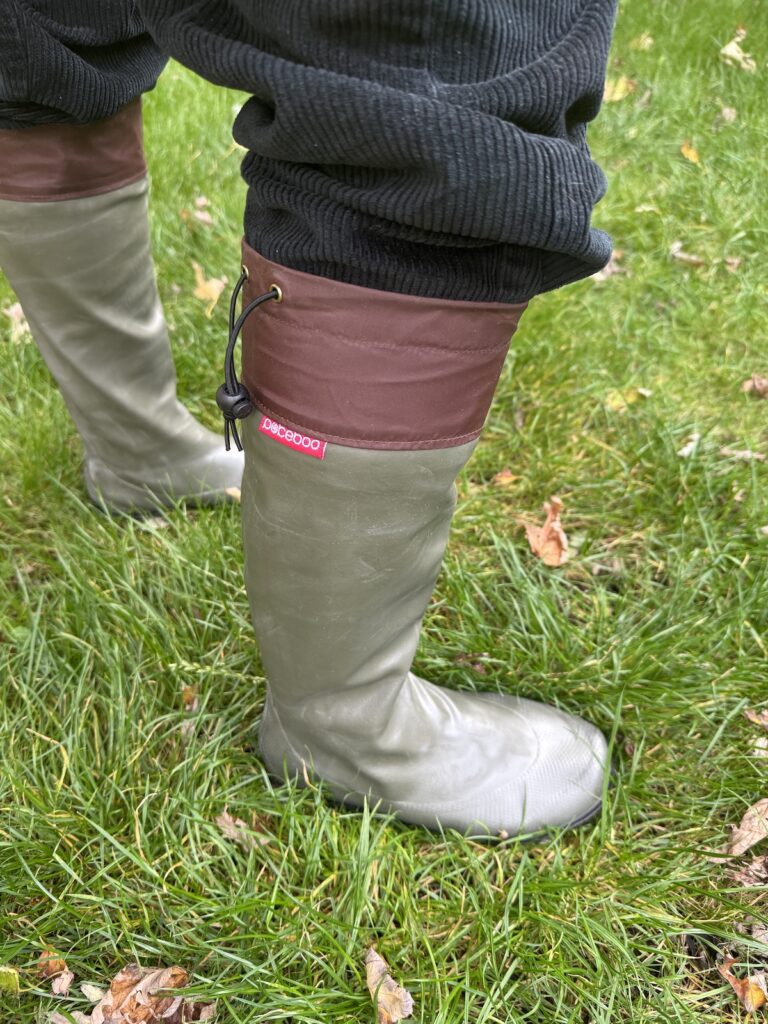
Wellington boots, I’m sure, are familiar to all as rubber tubes which stand on their own over a clunky sole and are always just too big enough that your feet slide around in them unless you wear 5 pairs of socks.
Not the Pokeboo Packable. These have the look of a wellie but are thin and completely flexible, so comfortable to wear and move entirely with you. The drawstring top means you can fit them to you if there’s room around your calf, and they fold up into the provided bag for easy (and super lightweight) transport.
They have such thin soles – technically a heel piece of about 1mm, which I assume is for additional traction, that they feel about as close to barefoot as it could be. Gone are the days of additional mud suction you can’t free from without pulling your foot out and plonking it straight into the mess!
These fit like a pair of socks, and bring all the delight of free movement in wet or muddy terrain whilst introducing the mind-blowing concept of actually being able to feel and navigate the terrain you’re working with.
Barefoot Shoes Vs Standard Shoes in Outdoor Activities
Heat Management
A big pro to barefoot styles, particularly outdoors and through summer is temperature levels. The shoes themselves are significantly lighter weight than equivalent standard styles, which means immediately you’re going to stay cooler for longer.
The wide fit provides much more space (and generally more flexible fabrics, I find) for heat swelling before it starts to rub, and certainly when running or hiking I keep my energy up in the heat notably longer without the weight and restriction of standard hiking boots or trainers.
What I will say as we turn to a colder weather season is that of course, barefoot shoe styles can be less warm than alternatives. Many barefoot shoe brands have specific winter styles for this reason which feature wool, fleece, or other lining materials, and a range of thermal insoles.
The thermal insoles I have are vivobarefoot, and around 1mm thick, but are still zero-drop and fully flexible. I also find that there is room for a thicker pair of socks if needed, it feels slightly unfamiliar to have less roominess, but it certainly doesn’t pinch because the space is already generous to start off with.
Terrain Management
It’s hard to articulate the benefits felt of being able to feel the ground much more accurately beneath your feet. The most common thing I get asked is ‘does XYZ ground hurt to walk on?’, and in some scenarios the answer is yes.
When I first moved to barefoot shoes very pebbly ground (or the surface you get at traffic lights on a kerb) was uncomfortable, however this has completely dissipated in most styles as my feet have strengthened.
The flexibility of barefoot styles across the board have a direct advantage for more involved footwork, think climbing, via ferrata’s. I don’t find myself slipping or struggling to trust my grip on something, if there’s contact with a surface I feel it.
Improved Posture and Balance
My centre of gravity has always been slightly off-centre, I lean on my heels slightly more on the right side. I’ve found that I notice it now and adjust, as there isn’t the heel raise or cushioning of standard shoes, and my posture, centre of gravity, and balance has slowly improved over the last year or so.
In specific activities such as intentionally balancing in parks etc. it is a definite benefit to barefoot shoes that you are better connected to your platform, and over time improving overall balance.
Less Injuries
Please note this is not a medical opinion. Personally I have pointedly noticed that I don’t get injuries relating to my footwear in an acute or wider sense.
I don’t get blisters due to the flexibility of the build, and the wide fit. Where I do wear narrower shoes (such as the Merrel’s above) they are formed to my footshape and I am very aware of what style suits my activity best these days.
It’s a more conscious decision to look after my feet and my footwear, and I’m more pre-emptively conscious of the ground. I navigate uneven floors better and with more familiarity—and (touch wood!) I haven’t had a fall or sprain in the time I’ve moved to barefoot shoes.
We’ve all heard about the long-term benefits of barefoot shoes which aren’t specific to a capsule outdoor activity, but include stronger feet, less risk of knee, back, and joint pain, and other foot injuries.
About the Author
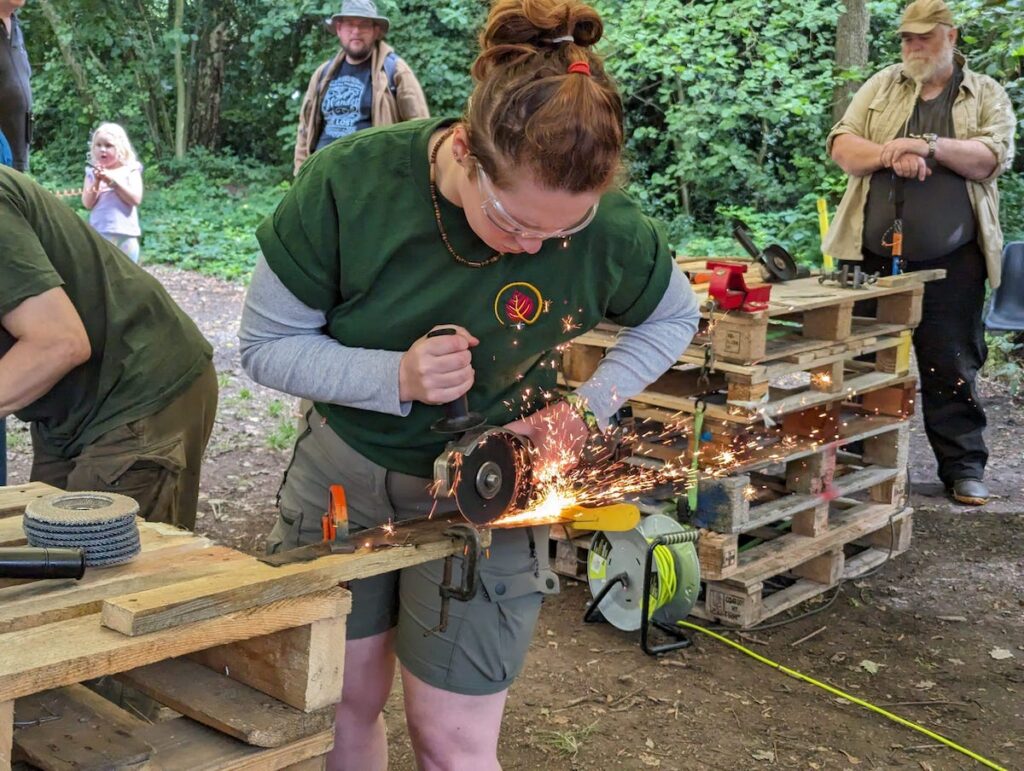
Emily Meldrum has been part of the BushMoot community since childhood, growing up with the event and continuing to attend into adulthood. A theatre director and playwright, she is currently completing an MA in Outdoor and Experiential Learning. Passionate about the outdoors, Emily loves diving into creative projects, making things with her hands, and finding peace in nature.