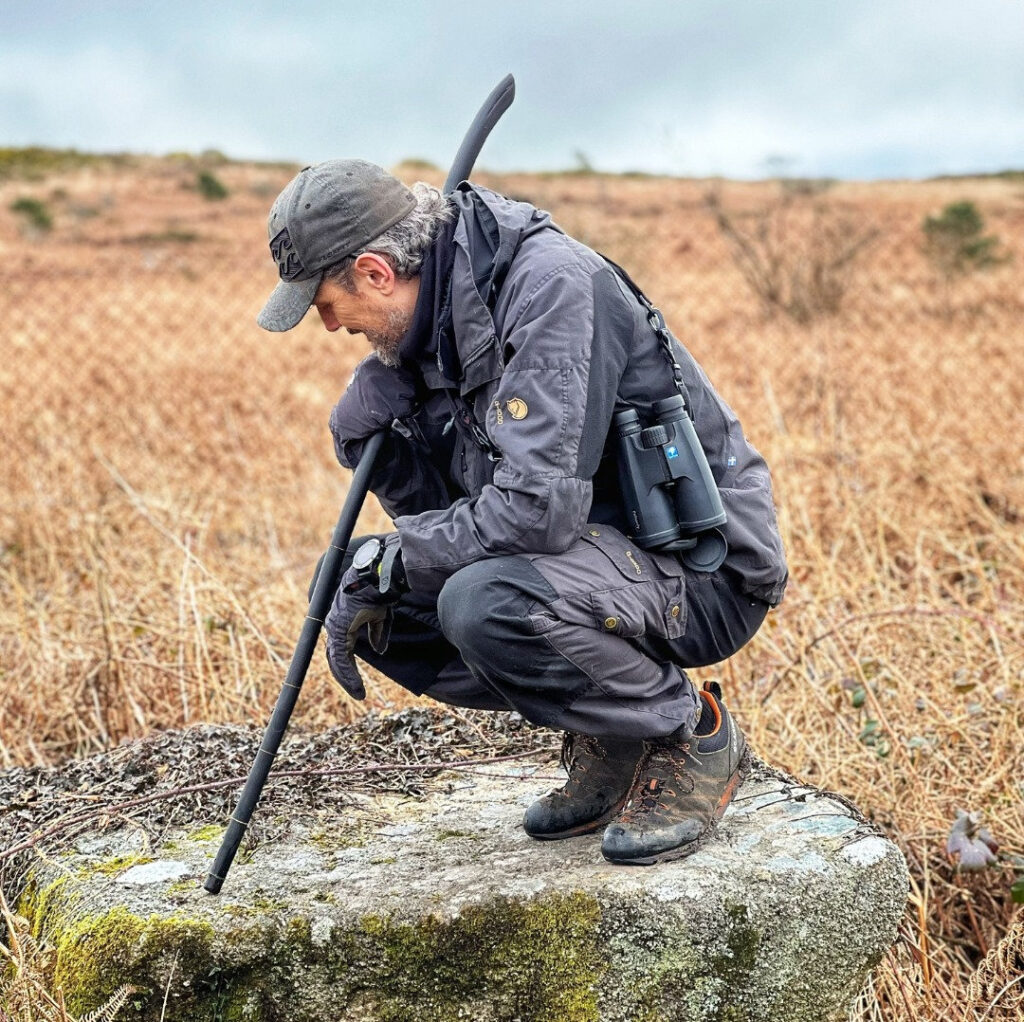
Tracking the Unseen: Terminology and Equipment in Mantracking and Wildlife Tracking

Tracking, whether it’s for a missing person through dense brush or a deer across mountain terrain, is a skill that combines sharp observation, patience, and specialised knowledge but very little equipment or technology. A small backpack or waist pack is all that is needed to carry a trackers kit; it’s always best to travel as lightly as possible to ensure you can move without hinderance through any terrain.
Visual tracking, or sign tracking, involves interpreting physical evidence left behind by humans or animals. Both mantracking and wildlife tracking share common principles but diverge in purpose and nuances.
Here’s a deep dive into the essential terminology and the kit used by trackers in the field.
Key Terminology
1. Sign
“Sign” is any disturbance or change in the environment caused by the passage of a person or animal.

2. Track
A track is the direct impression left by a foot (human or animal). In mantracking, this could mean the outline of a boot tread, while in wildlife tracking, it might be a paw print, hoof, or claw mark.

3. Track Trap
An area with a substrate, like mud, sand, or snow, that clearly shows tracks. Experienced trackers often look for or create track traps to get clear prints for analysis. Track traps can often be found in areas where there are “bottle necks” such as gateways, tunnels or river crossings.


4. Gait
Refers to the pattern and rhythm of movement. For wildlife, this includes walking, trotting, bounding, or galloping. For humans, gait analysis might determine whether a person was limping, running, or carrying a load.
5. Aging the Track
Estimating how long ago a track was made. This involves observing moisture, weathering, and environmental degradation of the sign.
6. Direction of Travel (DOT)
The direction in which a subject is moving. Trackers determine this to predict the path forward or backtrack movements.

7. Spoor
The trail, or marks left behind by the person, or animal that the tracker is following. This can be tracks, scent, droppings etc. Some trackers use the term “spoor” interchangeably with “sign” but we use it to describe the specific person/animal that we are in pursuit of.

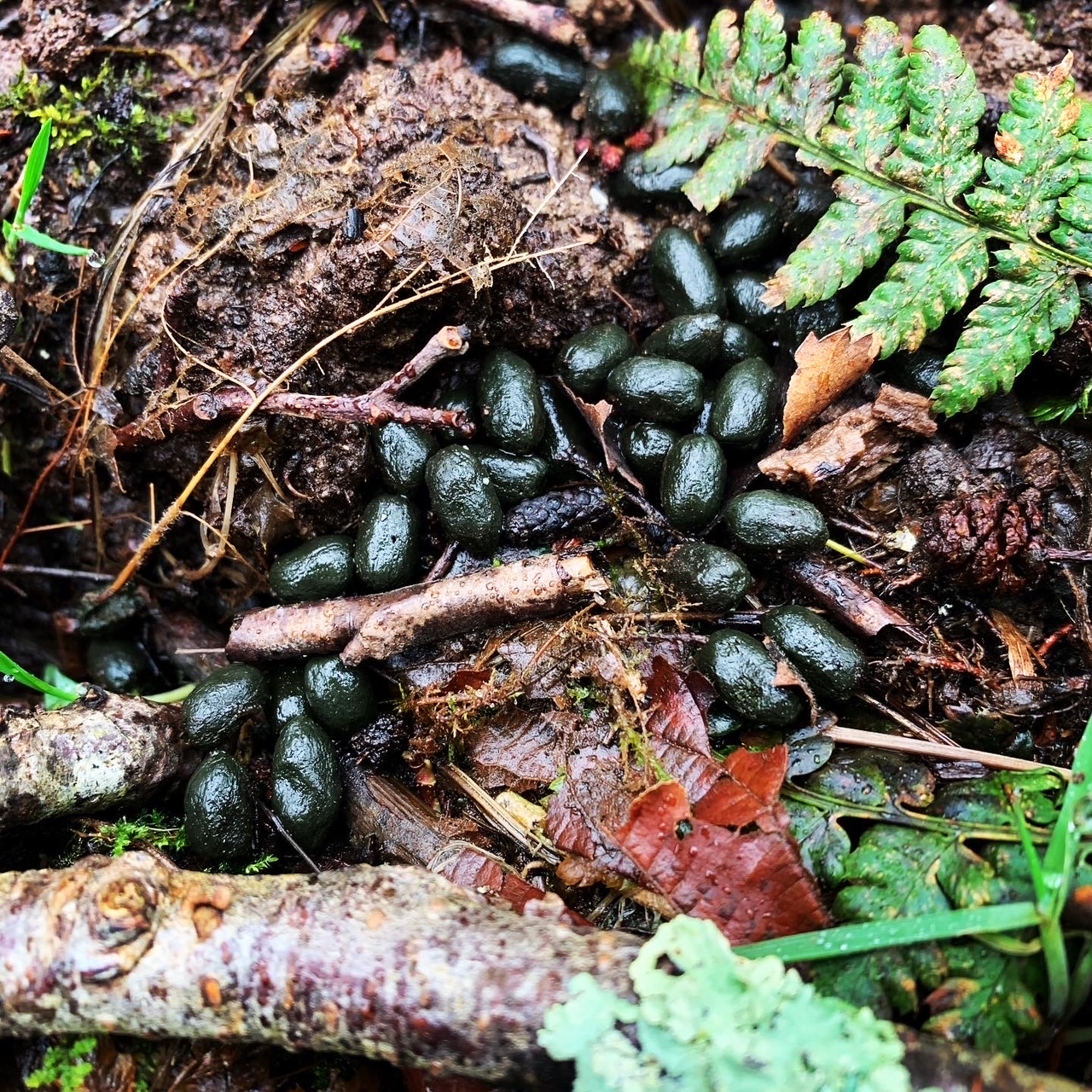
8. Scat
Animal droppings, which provide insights into diet, health, and time of passage.
9. Drag Mark
A trail made by something being dragged—common in both animal kills and in mantracking scenarios (e.g., a wounded person or carried body).
10. Sign Cutting
A technique where a tracker moves laterally across a trail or area to find sign where a subject passed through.
11. Trail
The path taken by the person or animal through the environment as evidenced by the sign left behind.

12. Categories of Sign
There are 3 categories of sign, ground sign, middle sign and top or aerial sign. These categories can be divided into sign found below ankle height (ground sign), between ankle and knee height (middle sign) and above knee height (top sign). Examples include footprints for ground sign, bent low lying vegetation for middle sign and broken branches for top sign.

13. Characteristics of Sign
There are six defined characteristics of sign:
- Flattening or compression
- Colour change (for example bruising on vegetation)

3. Regularity – the regular patterns of the lugs on boots, or simply the regular footfall of an animal through an area.
4. Transfer – the transfer of one type of material to another. For example mud onto a stile.

5. Displacement – stones dislodged from their sockets in the ground is a good example
6. Discardables – for humans this can be anything dropped, sweet wrappers, medication packages etc. For both people and animals it also means droppings, urine, blood etc.
14. Stride
The distance between two consecutive footprints, usually measured from heel to heel.
15. Straddle
The distance between two consecutive footprints measured from instep to instep, effectively the distance between the person’s feet horizontally.
16. Pitch
The angle that the person’s feet deviate from centre. The amount that the feet turn outwards (or inwards if “pigeon toed”).
Tracking Equipment
While the best tool is experience, a variety of equipment may be carried to enhance a tracker’s effectiveness:

1. Tracking Stick
A custom stick or staff used to measure stride and track length. Notched or marked to maintain consistent measurements along a trail. Tracking sticks are a great tool for beginners but a tape measure will also suffice and is much easier to carry.
2. Binoculars
Used for scanning ahead from a distance, especially in open terrain. Helps spot movement, sign, or disturbances in vegetation without approaching too closely.
3. Torch/lantern
Illuminates ground-level tracks at an angle. Low-angle light casts shadows into indentations, revealing faint prints that are hard to see under direct light.
4. Notebook and Pencil
Trackers take meticulous notes: time, location, conditions, track characteristics, and aging indicators. When searching for missing persons, a drawing of the footwear impression that the tracker is searching for is useful for identifying partial prints later on.
5. Camera or Smartphone
Photographs preserve tracks for analysis and comparison. Including a scale (like a ruler) in the image helps measure size accurately. Using compass for scale is a good tip, as it you can then record the direction of travel at the same time.

6. Mirror or Signal Mirror
Used to reflect light across surfaces to spot subtle signs or verify impressions.
7. GPS Device or Mapping App
While traditional trackers rely on terrain and memory, modern tools like GPS help document paths and coordinate searches in SAR (Search and Rescue) operations.
8. Tape Measure
For precise measurement of track features—stride, straddle, and size—which can help identify individuals or species.
9. Magnifying Glass
Used to examine fine details, like fingerprint ridges in a soft substrate or claw marks in an animal print.
10. Field Guide
Animal track guides or human gait analysis references support identification in unfamiliar terrain.
11. Trail Cameras
Trail cameras can be useful, particularly those with the capability to alert the tracker via an app that a person or animal has passed through the area where it has been placed. When tracking wildlife a trail camera can also provide evidence that the animal is indeed in the area, very useful for conservation purposes.

Applications and Differences Between Mantracking and Wildlife Tracking
While the foundational skills are similar, the goals diverge:
- Mantracking often supports search and rescue, law enforcement, or military operations. The aim is to locate a person quickly, alive or deceased, by interpreting subtle signs and behavioural patterns.
- Wildlife tracking is usually for research, conservation, or hunting. It emphasises species identification, behaviour observation, and ecological impact.

Mantracking also tends to place greater emphasis on interpreting intentional behaviour (evasion, distress, fatigue), while wildlife tracking requires understanding instinctual behaviour (territoriality, predation, migration).
Conclusion
Visual tracking is a blend of science and art. Every broken blade of grass or shifted stone tells a story, and trackers are the readers. Whether it’s following the trail of a lost hiker or learning from the paths of animals in the wild, this discipline demands focus, humility, and respect for the natural world. With the right terminology and kit, one step at a time, a tracker unveils the hidden narratives beneath our feet.
Article and photographs by Rhoda Watkins and Jay Opie. – If you want to know more about them and what they can offer go to Trackcraft

Rhoda Watkins is a skilled tracker, naturalist, and adventurer whose work bridges traditional knowledge and modern conservation. Trained by the San people in Namibia—renowned as the world’s master trackers—she is one of the few women to have immersed herself so deeply in this ancient craft. Her expeditions have taken her from the wilds of the Kalahari Desert to the rainforests of Costa Rica, while back in the UK she leads a specialist search and rescue tracking team and serves as a medic for Mountain Rescue. With academic roots in Zoological Conservation and Environmental Protection, Rhoda teaches tracking, foraging, survival, and rewilding, and is passionate about reviving ancestral skills. She’s a familiar face from documentaries including Panthera Britannia and Cat Hunters, and is currently working on her first book exploring the world of wildlife tracking.
Jay Opie was born and raised on a Cornish farm near one of Europe’s oldest archaeological villages, Jay grew up immersed in nature and ancient landscapes. A lifelong student of survival, ecology, and the human-land connection, his path has taken him from Army Cadet instructor to Lost Person Search Manager with Devon and Cornwall Police, and into the heart of Search and Rescue operations. Alongside formal studies in Conservation and Ecology, Jay leads bushcraft and tracking courses, works with beavers and biodiversity, and still finds time for traditional archery, caving, and the occasional TV appearance.