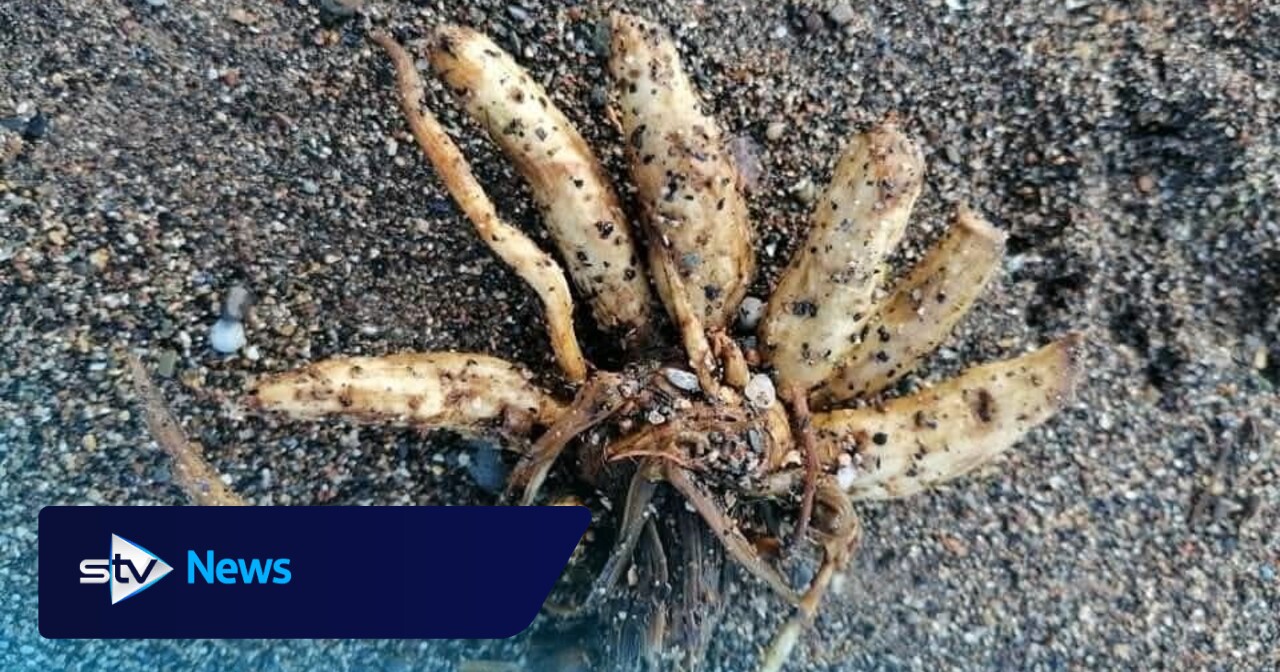
Hemlock water dropwort washing up on Loch beaches

  • BushMoot: Come along to the amazing Summer Moot 31st July - 5th August (extended Moot : 27th July - 8th August), a festival of bushcrafting and camping in a beautiful woodland PLEASE CLICK HERE for more information.

Toddy

Mod
Mod
Jan 21, 2005
40,439
6,426
S. Lanarkshire

According to the article it has also been spotted in Drigg and Parton in Cumbria recently too.

It's fairly common along some waterways and if washed out with heavy (hah!, as recently experienced) then it washes up on the shore and looks like something vegetably interesting.

There's a reason it's known as dead man's fingers though; it's really, really, not for foraging.
1766386003441.png

M
 
  • Wow
Reactions: Falstaff
Oh dear, that's nasty stuff.
The park rangers here have been trying to eradicate it localy, for several years. it's a tuff job if it gets established which it often does because people are not familiar with it, so don't realy notice it.
Need a crew on daily watch for roots and young plants. Get em young! Mature plants are a Pitt to eradicate. Full hazmat!
 
  • Like
Reactions: Falstaff and Toddy
The ditches, streams and boggy land around here is covered in hemlock water dropwort and I've never seen anyone control it. Roots can often be found in the streams and it washes up on the beaches all year round.

Although worth being able to identify it, personally, having owned a four legged dustbin (Labrador), I wouldn't let a dog off on the beach without keeping a close eye on it as there's been a few poisonings due to strange fatty substances being dumped at sea and it's not uncommon to find broken fishing tackle with bait and hooks on.
 
Last edited:
  • Sad
Reactions: Toddy
I am always perplexed when we try and eradicate something because it is poisonous to us. It clearly has its place in the eco system. This plant a haven for insect life. We just need to educate ourselves and steer clear of it. I read recently that cow parsley was called Mummy Die in days of olde. This was to stop children picking it because it looks like Hemlock which is different from Hemlock water dropwort but equally toxic. These plants fall into the umbellifer carrot family and there are several edible lookalikes. They are not for the inexperienced forager. Indeed when I first found Hemlock water dropwort it looked and smelt like it could go directly into a salad. I used a plant app to identify it and t came back as celery. It is essential that all foragers know and recognise this plant. As for it being washed up that is no surprise it lives on riverbanks, shorelines and generally wet places.
I am sure many of us on here know this but equally sure that many do not. Interesting thread. Thanks. DD. xxxxx

Ps Why not just put a sign up telling people all about the plant. I visited somewhere recently that had a poison garden. It was ace and rammed with loads of toxic plants along with skull and cross bone signs and information. "Thats the way to do it!"
 
Last edited:

According to the article it has also been spotted in Drigg and Parton in Cumbria recently too.

It's fairly common along some waterways and if washed out with heavy (hah!, as recently experienced) then it washes up on the shore and looks like something vegetably interesting.

There's a reason it's known as dead man's fingers though; it's really, really, not for foraging.

View attachment 100125

M
Are the dead mans fingers the roots then ?
 
I am always perplexed when we try and eradicate something because it is poisonous to us. It clearly has its place in the eco system. This plant a haven for insect life. We just need to educate ourselves and steer clear of it. I read recently that cow parsley was called Mummy Die in days of olde. This was to stop children picking it because it looks like Hemlock which is different from Hemlock water dropwort but equally toxic. These plants fall into the umbellifer carrot family and there are several edible lookalikes. They are not for the inexperienced forager. Indeed when I first found Hemlock water dropwort it looked and smelt like it could go directly into a salad. I used a plant app to identify it and t came back as celery. It is essential that all foragers know and recognise this plant. As for it being washed up that is no surprise it lives on riverbanks, shorelines and generally wet places.
I am sure many of us on here know this but equally sure that many do not. Interesting thread. Thanks. DD. xxxxx

Ps Why not just put a sign up telling people all about the plant. I visited somewhere recently that had a poison garden. It was ace and rammed with loads of toxic plants along with skull and cross bone signs and information. "Thats the way to do it!"

There are six Water-dropwort species in the UK; all of them native, five of them in Ireland. I think we should be precise when discussing plants with such lethality. Hemlock Water-dropwort (Oenanthe crocata) can easily be distinguished from other Apiaceae (Carrot Family) if the details are learnt.

Be very careful with foraging non-botanical references with the Apiaceae though; for example the 2001 edition of Food for Free, on page 35, wrongly labels an umbellifer as Hemlock (conium maculatum) :(

This is a crib sheet for the most common umbellifers:
 

Attachments

  • Love
Reactions: Toddy
I assume they are called dead mans fingers because the roots can look like a hand, not because they are poisonous.

Personally I would not use glyphosate and never near water.

I've just been down to our stream and there's plenty being washed out of the banks. Here's a quick photo, it's not the best but it shows the roots can be quite a pale off-white when fresh. They also have foliage all year round down here.

IMG_20251223_133225470~2.jpg
 
  • Like
Reactions: Toddy and Broch
There are six Water-dropwort species in the UK; all of them native, five of them in Ireland. I think we should be precise when discussing plants with such lethality. Hemlock Water-dropwort (Oenanthe crocata) can easily be distinguished from other Apiaceae (Carrot Family) if the details are learnt.

Be very careful with foraging non-botanical references with the Apiaceae though; for example the 2001 edition of Food for Free, on page 35, wrongly labels an umbellifer as Hemlock (conium maculatum) :(

This is a crib sheet for the most common umbellifers:
Thank you.
I am always happy to be corrected but I just reread what I wrote and stand by it. I did not know that there are several sub species but that doesn't matter because they are all poisonous as well so I do not understand your point. There is nothing fundamentally wrong with what I said. Which was learn about them and don't trust plant apps 100%. DD xx
 
  • Like
Reactions: Pattree
Mmm... sorry DD, it was not actually meant as a criticism directed at you, just a general statement that with plant species with similar names it is best to be specific and use the Latin names especially when they are very dangerous.

However, Oenanthe crocata, O. fistulosa, O. lachenalii, O. pimpinelloides, O.aquatica, and O.fluviatilis, are all separate species. Only O.crocata is considered deadly poisonous, one is considered toxic & dangerous, the others 'mildly toxic' (as are many plants). That said, none are suitable for foraging or consumption.

To be clear, there are no recognised sub-species of O.crocata.
 
  • Like
Reactions: Toddy
Not being plant educated, I just assume all Hemlock is bad as a safety position. For me these pics are very useful, as otherwise I would have no idea what Hemlock looks like. Especially the dead fingers.
The other bad one looking vaguely celery-like is Giant Hogweed, which I only learnt even existed, when my ex got a bad poisoning from it.
 
  • Like
Reactions: Toddy
Not being plant educated, I just assume all Hemlock is bad as a safety position. For me these pics are very useful, as otherwise I would have no idea what Hemlock looks like. Especially the dead fingers.
The other bad one looking vaguely celery-like is Giant Hogweed, which I only learnt even existed, when my ex got a bad poisoning from it.

Giant hogweed will give you severe burns as the sap is phototoxic. Strangely, it is rather debated as to whether it is edible.

Due to the severe burns you risk in gathering it, I recommend not trying to find out.
 
  • Like
Reactions: Falstaff
I've know people badly affected (red blisters from the sap sprayed up onto bare skin via a strimmer) by plain hogweed, Heracleum sphondylium, even though that's edible. I always advise people to be careful of the sap.
 
  • Like
Reactions: Falstaff and Toddy
I know, and have eaten, both, but honestly it's not worth it. It's certainly not worth the risk of sap burns from the giant one.

The only bit I reckon worth foraging from hogweed are the seeds from the little hogweed. H. sphondylium.
They dry well, are a bit footery to gather from the papery like seed case things (like tiny honesty, sort of) but if you roast those seeds in a dry frying pan, and then bake with them .... lovely, and it's native. It's a sort of coriander/orange/cardomom spice, and is excellent in biscuits, in fruit cakes, or even just stirred through muesli.

Otherwise, I wonder why they're called hogweed and I reckon it's because pigs foraged on them when they were just coming up in Spring. Pigs have skin like ours and they'd blister too.

The dried stem tubes aren't even safe to use as tinder to pull a fire. Something of the sap remains.

M
 
Not being plant educated, I just assume all Hemlock is bad as a safety position. For me these pics are very useful, as otherwise I would have no idea what Hemlock looks like. Especially the dead fingers.
The other bad one looking vaguely celery-like is Giant Hogweed, which I only learnt even existed, when my ex got a bad poisoning from it.
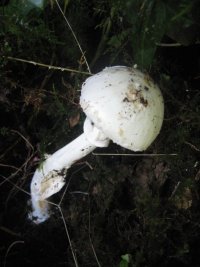
F. just to gently clarify. What you are seeing in the photo is Hemlock Water Drop wort aka dead mans fingers to some. Hemlock is an entirely different plant but still deadly. It merits some research. I really like the deadly ones. There is something very powerful about them. I found a destroying angel mushroom once. I knew what it was but if I hadn't known factually I think I would have known intuitively such was its sinister look. Here is a picture of it. It is probably my favourite find ever. xxx
 

Attachments

  • desroying ange 1l.JPG
    desroying ange 1l.JPG
    184.4 KB · Views: 4
There are six Water-dropwort species in the UK; all of them native, five of them in Ireland. I think we should be precise when discussing plants with such lethality. Hemlock Water-dropwort (Oenanthe crocata) can easily be distinguished from other Apiaceae (Carrot Family) if the details are learnt.

Be very careful with foraging non-botanical references with the Apiaceae though; for example the 2001 edition of Food for Free, on page 35, wrongly labels an umbellifer as Hemlock (conium maculatum) :(

This is a crib sheet for the most common umbellifers:
Thanks Broch. I downloaded that sheet and will add it my files when I have read it xx
 
Thanks Dale, kind of confirms my caution, and why I don't get involved with mushrooms except from the supermarket. In this case ignorance is not bliss, but awareness of one's ignorance is not exactly bliss but a warning.
I shall take take your advice and look at some pic's to be able to recognise it. (x6 as per Broch).
 

BCUK Shop

We have a a number of knives, T-Shirts and other items for sale.

SHOP HERE