
Bushcraft and Maslow – Why the Wild Feeds More Than Just Your Belly

Ever felt truly yourself under a tarp in the woods, a fire flickering away, something cooking, rain tapping on the canvas, and not a worry in the world? If you’ve been into bushcraft for a while, you probably have. It’s not just comfort, it’s connection. It’s confidence. And it’s something deeper too.
That “something” is what psychologist Abraham Maslow tried to explain with his idea of the Hierarchy of Needs, a simple way of looking at what drives us, from staying alive to becoming our best selves.
Bushcraft, whether you realise it or not, walks that path step by step.
What Is Maslow’s Hierarchy of Needs?
Maslow was a psychologist who developed a theory of thinking about human needs as a pyramid. At the bottom are your most basic needs – food, water, shelter. As these are achieved, you progress through safety, friendships, and confidence, eventually reaching what he called “self actualisation”, aka, becoming the best version of yourself.
Here’s the basic breakdown:
- Physiological needs – food, water, sleep, warmth
- Safety needs – shelter, stability, being safe
- Belonging – friendship, connection, community
- Esteem – confidence, purpose, being respected
- Self actualisation – living a meaningful, fulfilled life
Maslow believed you couldn’t really move up to the next level until the ones below were being met. If you’re freezing or starving, you’re not going to be thinking about your life goals — you’re going to be looking for shelter and calories.
Bushcraft lines up with that in a really natural way.
1. Base Needs – Food, Water, Warmth, Rest
This is where every bushcraft trip begins, sorting out your basic needs. You set up a shelter. You get the kettle on. You filter your water or collect it straight from a stream (then boil it!). You cook something warm and filling, maybe bread on a stick or stew in the pot.
You rest well because you’ve worked hard and the air is fresh. These are the core human needs, and bushcraft gives you a way to meet them with your knowledge and skills.
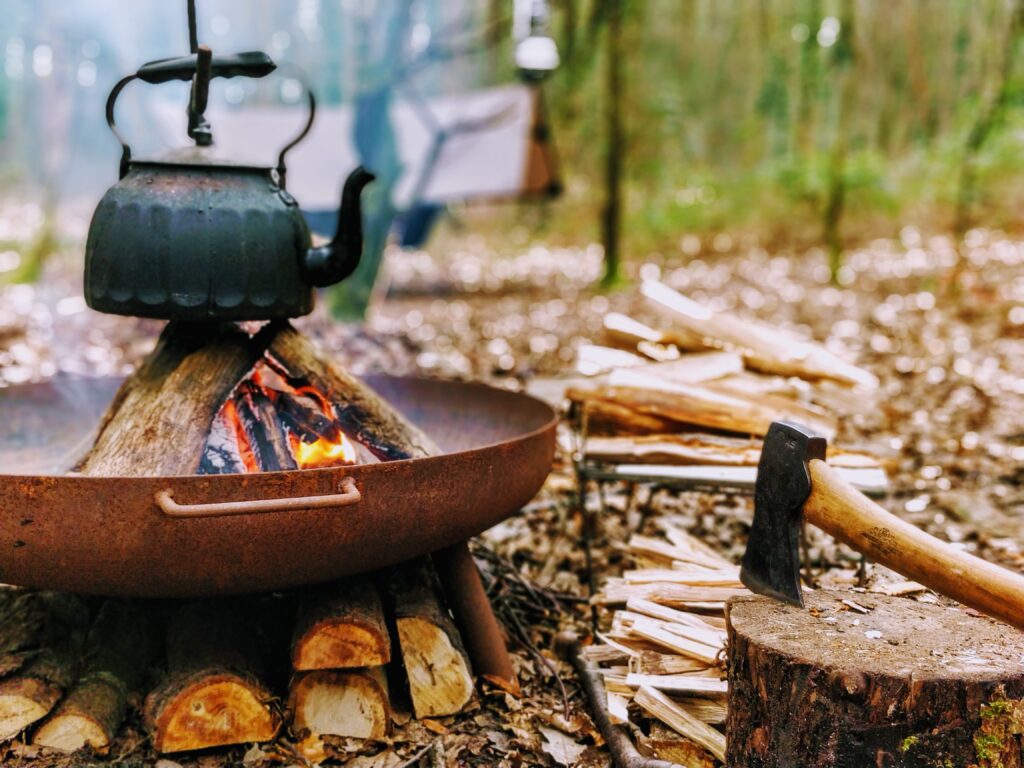
There is a deep sense of satisfaction in meeting your own needs in this way. It builds confidence and resilience, helping you feel capable. You don’t need much, just the right skills and a bit of preparation.
2. Safety – Feeling Secure and Settled
After the basics are covered, the next step is feeling safe. In the wild, that doesn’t mean luxury. It means confidence.
You’ve got the right kit. You know how to use it. You’ve practised your skills. You’ve thought ahead.
You may have a decent knife, a solid shelter, and the knowledge of what to do if something goes wrong. You’ve picked your campsite well. You’ve left word with someone. You’re not just surviving — you’re thriving.
“I feel content when I’m under my tarp, having prepared for wet weather, a warming fire, food and good company or the chance to ponder life.”

Bushcraft gives you that settled feeling that comes from knowing you can handle yourself. And that frees your mind up to focus on other things.
3. Belonging – Campfires, Forums and Friendship
Once you’re fed and feeling safe, something else starts to matter: connection.
Bushcraft has always been a shared experience. It’s learning from each other, helping out, and having a laugh around the fire. Whether it’s at a meetup, a course, or on the BushcraftUK forums, it brings people together.
Events like the BushMoot are a great example of people from all backgrounds and ages coming together to share skills, food, stories, and time.

There’s something honest about this kind of friendship. It’s not about status or image. It’s about being a friend – someone who is helpful, kind, curious, and open.
4. Esteem – Confidence That Comes from Doing
When you build a shelter that keeps you warm and dry in bad weather, light a fire with just a spark, or help someone new get the hang of carving a spoon, you feel good, and rightly so.
Bushcraft gives you real confidence. Not pretend confidence, but the kind that comes from knowing you’ve done the work. You’ve made something happen with your own hands.
“Bushcraft has helped me be more confident. It’s been an outlet for my creative side and it’s allowed me to build a community that brings people together.”

And it’s not just about you. When others see what you can do, it earns you respect, and that feeds into a strong sense of purpose.
5. Self Actualisation – Becoming Your Best Self, Quietly
This is the pinnacle of Maslow’s pyramid, the part that most people struggle to reach.
But out in the woods, away from the noise, the emails, and the pressure, it gets quiet enough to hear your own thoughts. You focus on the task in front of you. You notice small details. You create. You learn. You grow.
“The whole idea is that you become better at your skills and increase your knowledge, while not taking yourself too seriously.”
That’s the magic of bushcraft. It gives you space to be. Not to perform or impress, just to live well, learn a bit more, and enjoy it along the way.
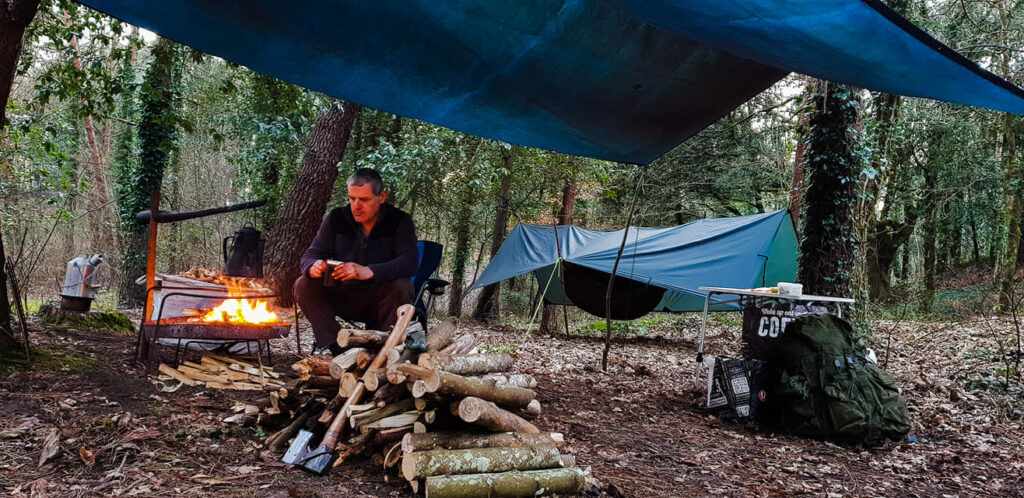
Maslow believed the environment we live in shapes what we’re capable of. If life is too noisy, crowded, or stressful (as modern life seems to be), we lose touch with who we are. We rush. We worry. We don’t grow.
Bushcraft offers a better environment. The woods are patient. The land responds to effort, not ego. And it’s in that slower pace that we find ourselves again, sometimes in significant ways, sometimes in small ones.
That’s why even a weekend or even a day in the woods can reset something in you. It’s not just a hobby; it’s a way of reconnecting with the parts of life that matter.
Final Thoughts
Maslow’s hierarchy is about understanding what humans really need. Bushcraft walks that same journey, from fire and food all through to personal fulfilment.
It gives us tools, yes, knives, saws, axes, pots, flint & steel, tarps, etc, but also provides us with: personal tools, patience, resilience, knowledge, experience, confidence and also the space to become better versions of ourselves.
Whether you’re there to learn knots, enjoy nature, or find a bit of peace, bushcraft has something to offer. And the longer you spend out there, the more you realise… you’re not just surviving.
You’re becoming who you were meant to be.

Tony Bristow is the founder of Bushcraft UK, which has been bringing people together around outdoor skills, community, and a love of nature for over 22 years. He also runs the BushMoots — now in their 21st year — and more recently launched MindMoot, blending mindfulness and bushcraft to help people slow down, reconnect, and build resilience.
With a background in teaching, mentoring, and a lifelong love of the outdoors, Tony’s all about sharing practical skills in a relaxed, down-to-earth way. Whether it’s through articles, hands-on workshops, or online conversations, his aim is simple: help people feel more at home in the wild — and in themselves.