
AFERIY Nomad1800 Pro and Expansion Battery Review
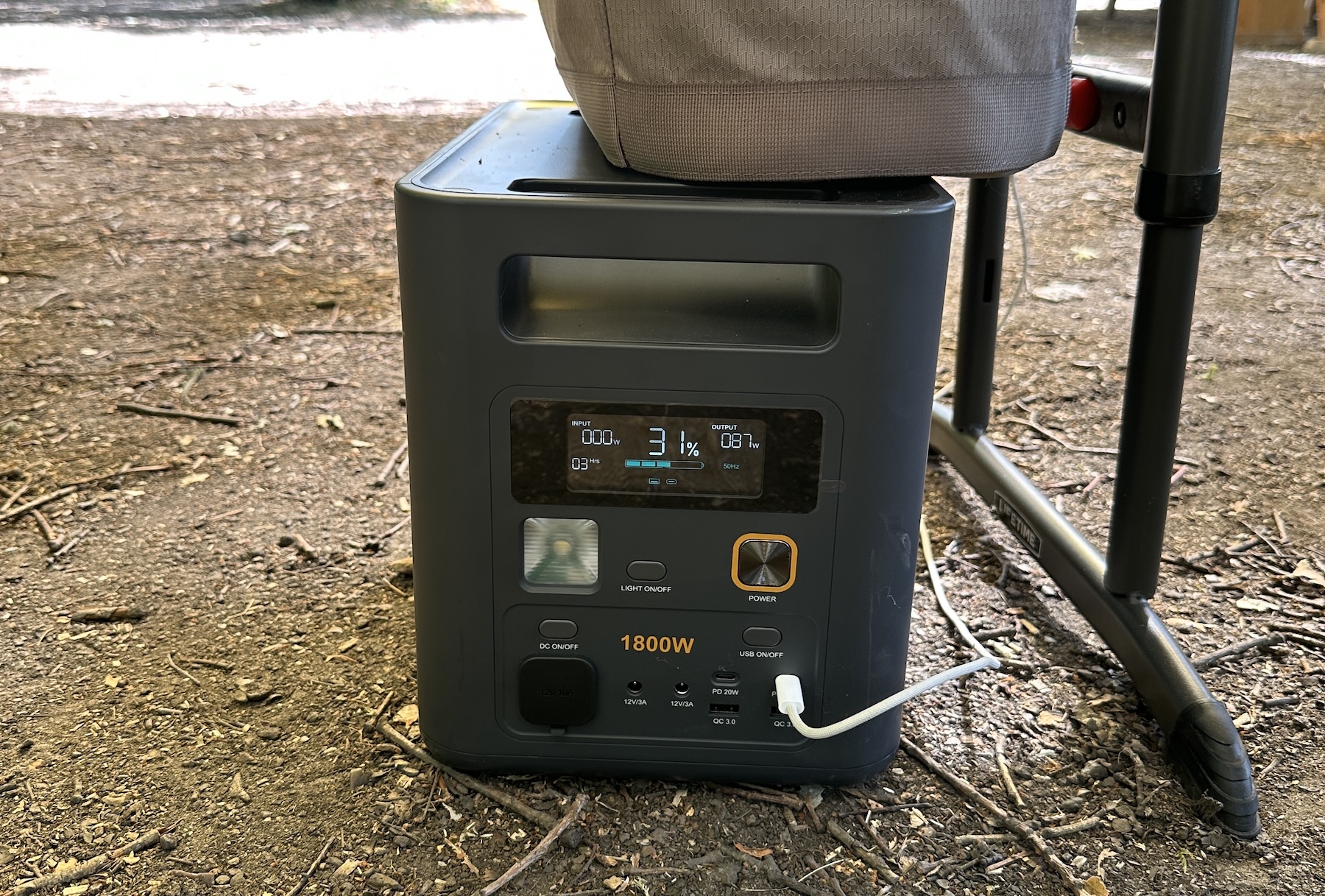
Portable power at the BushMoot
We are now four days into the BushMoot and the AFERIY Nomad1800 Pro has already become a useful part of the event infrastructure.
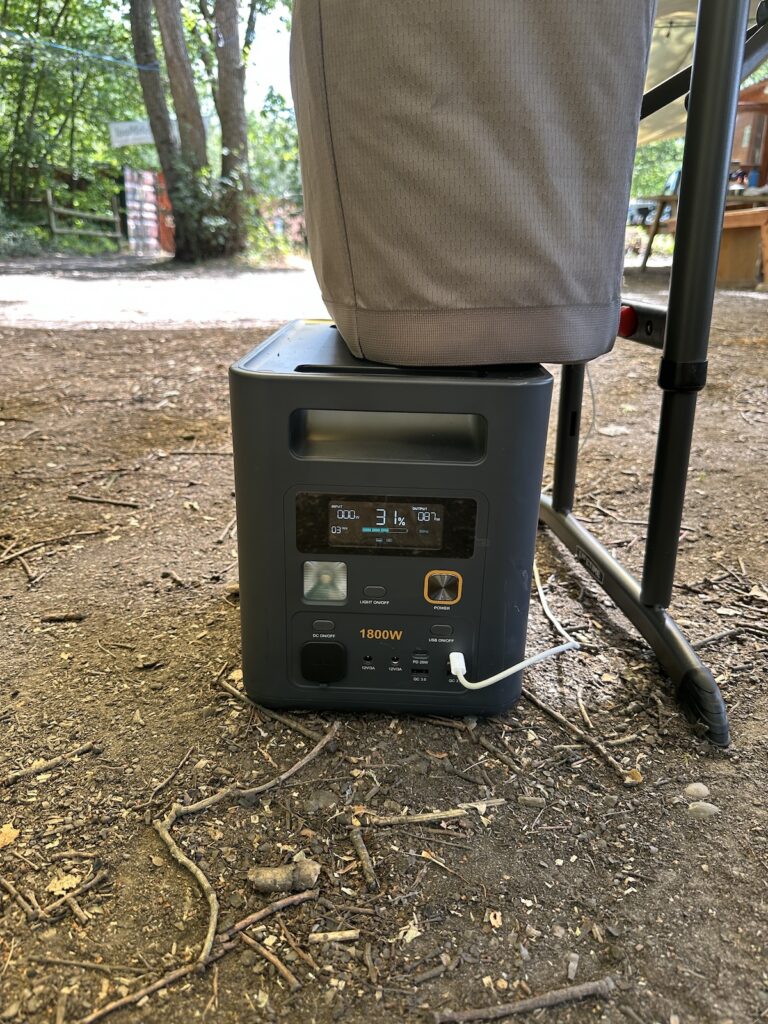
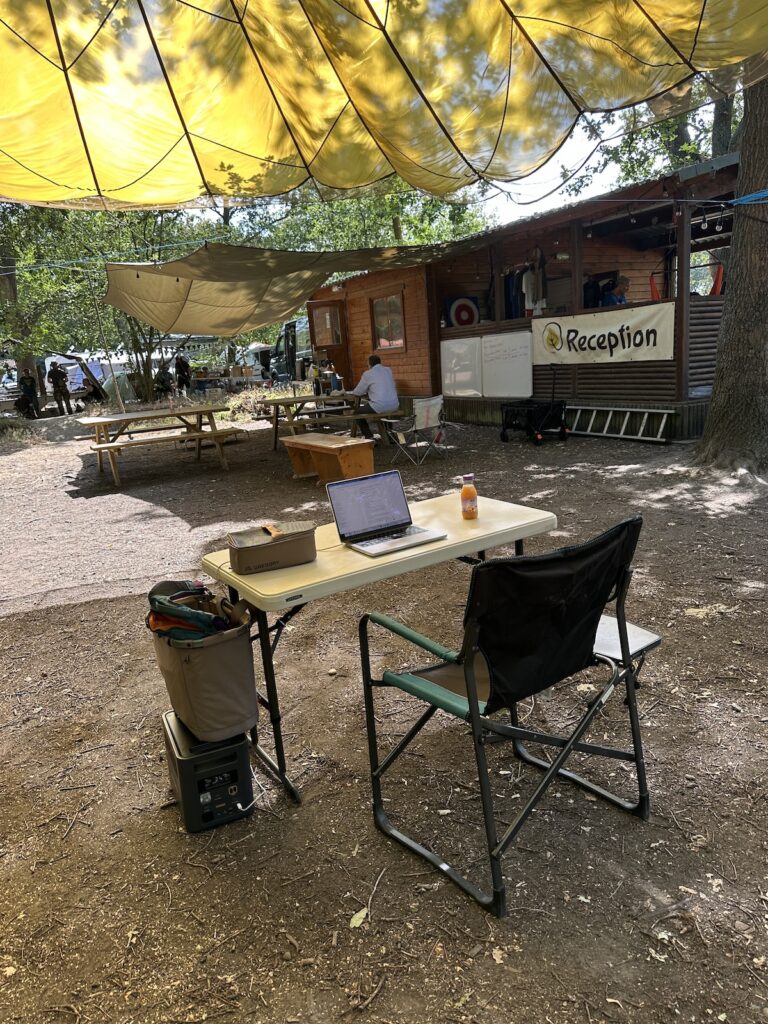
Portable power stations are often reviewed by plugging in a selection of appliances for a few minutes and reporting whether they work. Our testing has been rather more realistic. The Nomad1800 Pro is sitting in a woodland camp, being moved between tables, tree stumps and trolleys, and supplying power for actual work. I’m writing this now with the Nomad 1800 next to me while I sit under a parachute shelter, and it’s charging all the electrical paraphernalia I have with me so I can write this and get some pictures!
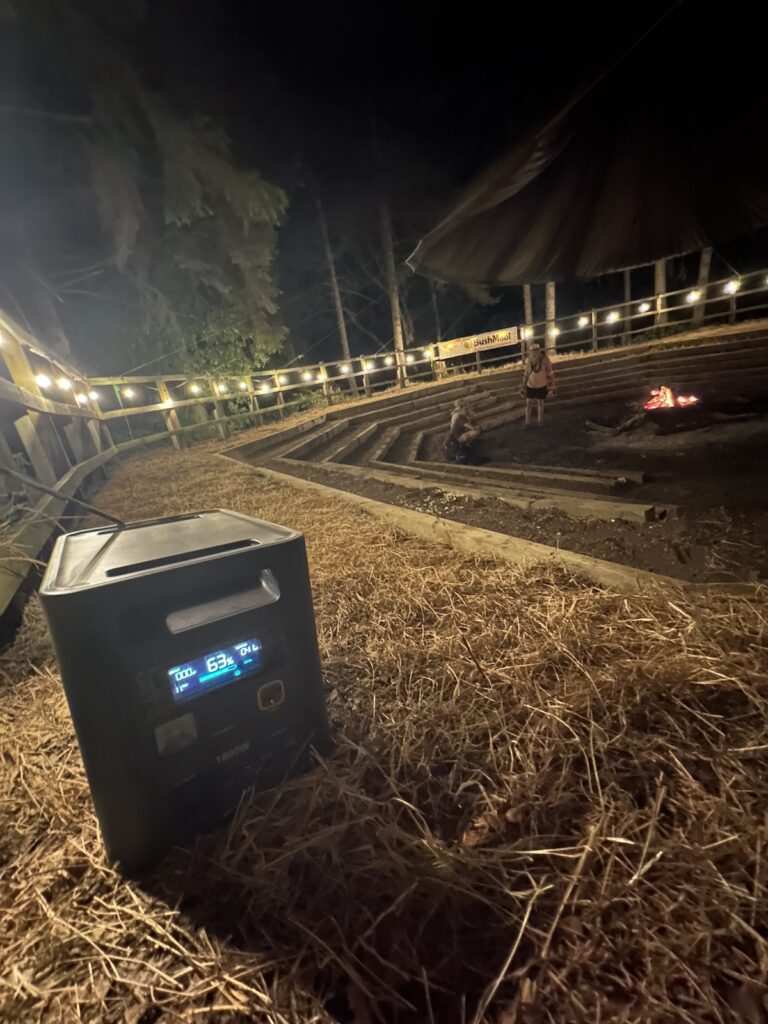
We have been using it to recharge Makita cordless tool batteries for projects around the Moot and for helping the Scouts rebuild a large fire circle. It has powered laptops, our 4G router, phones, cameras, refrigeration and various other bits of equipment. During the main part of the BushMoot, it will also provide the primary power supply for our festoon lighting and keep the tools charged.
So far, it has simply got on with the job. And to a large degree, what more can you ask?
It’s worth noting at this point that we have an awful mobile signal here at the Moot; we’ll upload more photos to this review as the Moot progresses.
The basic specification
The Nomad1800 Pro contains a 1,024Wh LiFePO₄ battery and provides up to 1,800W of continuous AC output, with a quoted 3,600W surge capacity. The inverter produces a pure sine wave output, making it suitable for sensitive electronics as well as tools and ordinary household appliances.
The important figures are:
| Battery capacity | 1,024Wh |
| Capacity with one expansion battery | 2,048Wh |
| Maximum expanded capacity | 5,120Wh |
| Continuous AC output | 1,800W |
| Surge output | 3,600W |
| Battery chemistry | LiFePO₄ |
| Battery life | 4,000+ cycles to 80% capacity |
| AC charging input | Up to 1,000W |
| Solar input | Up to 500W MPPT |
| Combined AC and solar input | Up to 1,500W |
| UPS changeover | Under 10 milliseconds |
| Main unit weight | Approximately 11.6kg |
| Expansion battery weight | Approximately 8.7kg |
| Warranty | Seven years |
AFERIY says the power station can reach 80% charge in around 36 minutes when AC and solar charging are used together. Using AC alone, charging time is closer to an hour to an hour and a half, depending on the selected charging rate and conditions.
It is worth correcting a common bit of terminology here. With four expansion batteries attached, the system has 5.12kWh of stored energy, not 5kW. The 1,800W figure right on the front of the unit is a bit misleading; it describes how much continuous power the inverter can deliver. The kilowatt-hour figure describes how much energy the batteries can store, but it’s not clearly marked on the front. It’s a common technique to catch the consumer’s eye with its big numbers.
Connections and outputs
The UK version provides two 230V AC sockets, two USB-A ports, two USB-C ports, a 12V vehicle socket and two DC5521 barrel outputs.
One USB-C port supports up to 140W Power Delivery, making it useful for compatible laptops, tablets and other higher powered equipment. The second USB-C port is rated at 20W, while the two USB-A ports support QC 3.0 charging at up to 18W each.
The full output selection is:
- Two 230V AC sockets, sharing the 1,800W inverter capacity
- One 140W USB-C Power Delivery port
- One 20W USB-C port
- Two 18W USB-A QC 3.0 ports
- One 12V, 10A vehicle socket
- Two 12V, 3A DC5521 outputs
With all that, it has enough connections for most camp and workshop situations, although I would like to have another high powered USB-C port, maybe even instead of the DC barrel socket, which is of limited use to many owners. USB-C is increasingly becoming the standard connection for laptops, cameras, lights and other equipment.
There is also a basic built in LED light with steady, flashing and SOS modes. It is useful for finding a cable or plugging something in after dark, but it is not a replacement for a proper camp or work light. It’s been a while since we’ve had 11.5kg torches!
Expansion without buying a completely new power station
One of the Nomad1800 Pro’s strongest features is its expandable design.
The main unit holds 1,024Wh. Each P180-B expansion battery adds 1,024Wh, and up to four expansion batteries can be connected. That gives the following options:
| Main unit only | 1,024Wh |
| One expansion battery | 2,048Wh |
| Two expansion batteries | 3,072Wh |
| Three expansion batteries | 4,096Wh |
| Four expansion batteries | 5,120Wh |
We have one expansion battery, giving us a total nominal capacity of 2,048Wh, or just over 2kWh.
That modularity is useful. You can buy the main unit first and add capacity later, or take only the amount of battery storage needed for a particular trip. Each expansion battery weighs about 8.7kg and measures approximately 346 × 220 × 183mm, making it noticeably easier to carry than a single large 2kWh battery.
I have another power station with roughly 2kWh built into one unit. That avoids external connection cables, but the complete unit is heavy. The AFERIY arrangement is more versatile because the weight is divided between separate, manageable units. For a shorter trip I can take only the Nomad1800 Pro; for a longer event I can add one or more batteries.
The expansion battery cannot be used independently. It has no AC, USB or 12V output sockets and must be connected to the Nomad1800 Pro. I understand why AFERIY has done this, but I would still have liked to see at least one USB output on the expansion battery. That would allow it to provide some basic power while separated from the main unit.
Adding independent outputs would, of course, require additional control electronics and alter the cost, complexity and purpose of the battery. It is therefore more of a wish than a serious criticism.
The expansion cable problem
The expansion batteries connect through a heavy-gauge proprietary battery parallel cable, using the dedicated battery parallel ports on the back of the units.
This is not a thin charging lead. It carries substantial current between batteries, so it needs to be thick, well insulated and fitted with appropriately large connectors. The cable is therefore necessarily bulky.
It is also one of the system’s few practical disadvantages.
The cable projects roughly 30cm behind the units, so the power station and battery cannot simply be placed tightly against a wall or under a narrow bench. Space must be left behind both units for the connectors and cable bend.
With one expansion battery, this is mildly inconvenient. With four, the complete arrangement would occupy a considerable area. The system might have 5.12kWh of portable storage in theory, but you would not want to carry all five units around as one assembled object. In practice, they would need to be disconnected, moved separately and reconnected at the destination. Outdoors, in the dry, this isn’t such a big problem, but in a tent, or a more confined space, it needs to be considered.
That is not really a design failure. It is an unavoidable consequence of having a modular high capacity battery system. Nevertheless, prospective buyers should account for the additional cable space rather than judging the footprint from the dimensions of the boxes alone.
Using it at the BushMoot
The Nomad1800 Pro feels particularly well suited to events such as the BushMoot.
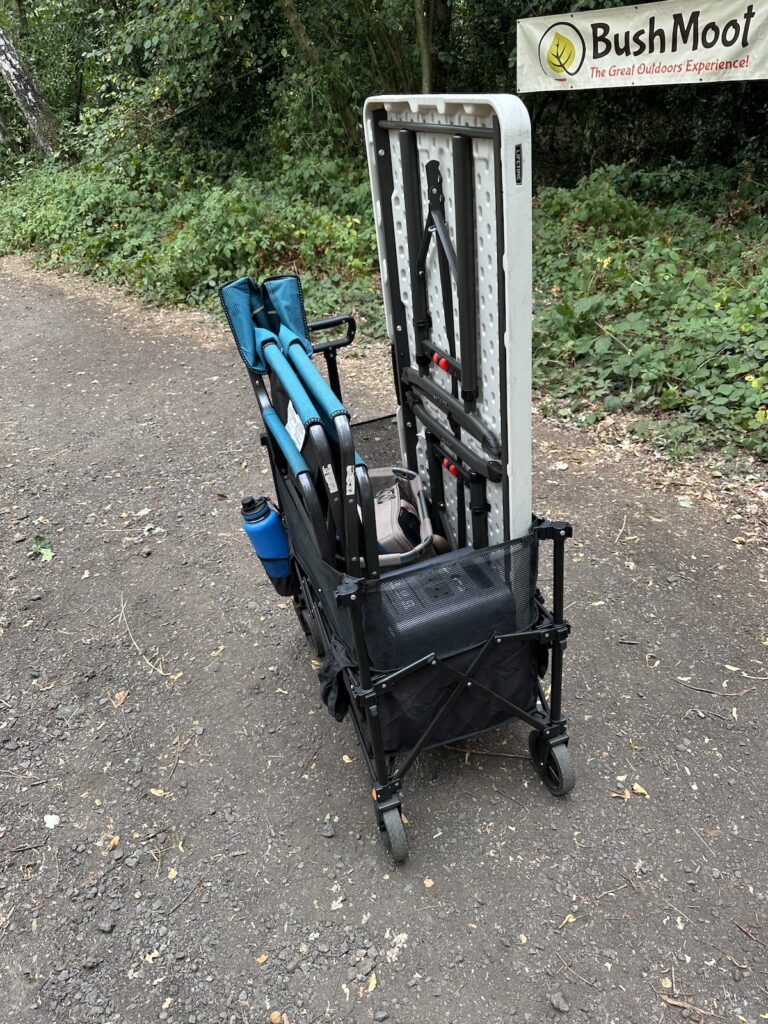
At around 11.6kg, the main unit is light for a power station with a 1,800W inverter and 1,024Wh battery. It is not something I would carry on a backpacking trip, but it is easy for one person to lift, carry between camp areas or put into a trolley.
The expansion battery is even lighter and simple to handle. Dividing the system into two units has made it considerably more convenient than moving one large 2kWh power station.
We have not given either unit special treatment. They have been sitting on the ground, lifted onto tables and tree stumps, placed in trolleys and moved around the site. Nothing about our use has been deliberately abusive, but neither have they been treated as delicate indoor electronics.
So far, both units appear robust. The casing has coped with ordinary camp life, the sockets are easy to reach, and the display provides clear information about battery percentage, input, output and estimated remaining time.
The lack of wireless MagSafe charging is noticeable because several of my other power stations have charging pads built into their top surfaces. Being able to put a phone down without finding another cable is convenient.
However, the Nomad1800 Pro sits at a different price point and, in some respects, serves a different purpose. It prioritises relatively low weight, strong inverter output and expandable storage rather than every premium convenience.
For me, MagSafe charging would improve it, but its absence does not undermine the main reason for buying it.
Powering tools and camp equipment
Charging cordless tool batteries is a good practical test because tool chargers can draw a meaningful amount of power and may have a relatively high initial demand.
The Nomad1800 Pro has been recharging Makita batteries without any trouble. Its 1,800W pure sine wave inverter provides ample capacity for ordinary single and dual battery chargers, although users should always check the wattage shown on their own charger.
The same applies to refrigerators. Starting a compressor can briefly require considerably more power than the appliance’s normal running wattage. The Nomad’s quoted 3,600W surge capacity gives useful headroom for these momentary loads, although it does not mean that the station can continuously supply 3,600W.
Our lower powered equipment has barely troubled it. Laptops, the 4G router, phones and cameras draw comparatively little power. The advantage of a system like this is not only that it can run demanding equipment, but that it can keep low powered essentials operating for a long time.
For example, a 20W router running continuously would theoretically consume about 480Wh in 24 hours. Allowing for inverter losses and the power station’s own consumption, our 2,048Wh setup could still support that sort of load for several days.
Actual running time will always be lower than a simple capacity divided by wattage calculation suggests. Inverter losses, DC conversion, temperature, standby consumption and battery protection limits all reduce the amount of energy available at the socket.
As a reasonable planning assumption, expect perhaps 80 to 90% of the nominal capacity to be available to typical AC equipment. DC and USB devices may be somewhat more efficient because they do not require the main AC inverter.
Running the BushMoot festoon lighting
The Nomad1800 Pro and expansion battery will provide the main supply for the festoon lighting during the BushMoot.
Lighting is a good use for expandable battery storage because it is usually a predictable, steady load. Once we know the actual wattage of the complete festoon run, calculating approximate operating time is straightforward.
For example:
| 50W | 41 hours |
| 100W | 20 hours |
| 150W | 13.5 hours |
| 200W | 10 hours |
Allowing for conversion losses, the real figures are likely to be around 10 to 20% lower.
That still gives plenty of potential for several evenings of low energy LED lighting, particularly if the battery is topped up during the day using mains or solar panels.
Charging options
The Nomad1800 Pro can be charged from:
- A normal AC wall socket
- Solar panels
- A vehicle 12V socket
- AC and solar simultaneously
- A compatible DC to DC vehicle charger
- A generator
The AC charging connection uses a standard IEC C13 mains lead, commonly known as a kettle lead. This is a small but worthwhile advantage. If the original cable is misplaced or damaged, a replacement is easy to find.
Solar panels connect via an XT60 input using the included MC4-to-XT60 cable. XT60 is a widely available connector, which makes it easier to use compatible third party panels and cables. The solar controller accepts up to 500W of input.
A physical switch allows the AC input to be limited to approximately 500W or increased to 1,000W. The lower setting is useful when charging from a limited supply, when trying to reduce fan noise, or when several devices share the same electrical circuit.
Fast charging is useful, but I would not necessarily use the fastest setting every time. When the power station is going to remain in camp overnight, slower charging is often quieter and places less demand on the available mains supply.
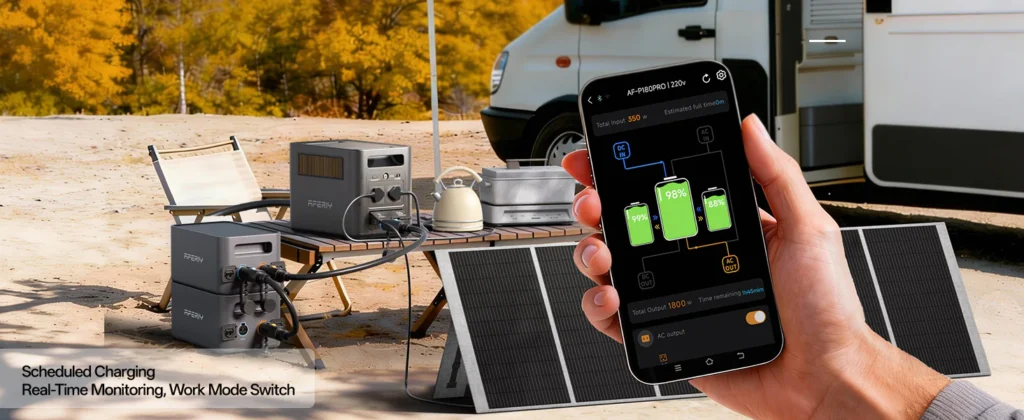
The app is much improved
I have criticised the AFERIY app in the past. Earlier versions felt unfinished and could make it more difficult to connect to a power station than it needed to be.
That has not been my experience with the Nomad1800 Pro.
It connected without any difficulty, and I have been able to monitor the battery level, input and output information and control the relevant functions from my phone. The app now works well enough that I am happy to use it rather than regarding it as something included only to fill out the specification list.
That differs from some earlier published testing, which found the software functional but awkward and insufficiently polished. My experience at the BushMoot suggests that AFERIY has made worthwhile improvements, although experiences may still vary between phones, operating systems and app versions.
The power station remains completely usable without the app, which is important. Essential controls are available through physical buttons on the unit, and the front display provides the information most people need.
Noise
AFERIY quotes an operating noise range of approximately 25 to 50dB. The actual noise depends on the load, charging speed and temperature, because the cooling fans run harder when the inverter or charging system is under greater strain.
Under the modest loads we have been using for communications and device charging, it has not been intrusive. The fans are audible when the unit is working harder, particularly while charging quickly, but it has not caused a problem in the open environment of the Moot where the birds are louder than the fans.
It would be more noticeable inside a quiet tent or campervan at night. In those circumstances, I would position it away from the sleeping area, reduce the AC charging rate or use direct USB and DC outputs where practical.
Battery life and safety
The Nomad1800 Pro uses lithium iron phosphate, usually shortened to LiFePO₄ or LFP.
AFERIY rates the cells for more than 4,000 complete cycles before capacity falls to 80% of the original figure. Even with frequent use, that suggests a potentially long working life.
The integrated battery management system monitors conditions including overcharging, overdischarging, excessive current, short circuits and high or low temperatures.
LiFePO₄ is also more thermally stable than some older lithium battery chemistries. That does not make any power station indestructible or suitable for careless treatment, but it is the chemistry I prefer for a large unit intended for repeated outdoor and backup use.
It is important to note that this is not a waterproof power station. Using it outdoors does not mean leaving it exposed to rain, standing water or excessive moisture. At the Moot we keep it appropriately sheltered and ventilated.
UPS capability
The Nomad1800 Pro can also operate as an uninterruptible power supply.
When connected between a wall socket and a device, mains power passes through the unit while the battery remains charged. If the mains supply fails, AFERIY quotes a changeover time of less than 10 milliseconds.
That could be useful for a router, desktop computer, network equipment or other devices that should remain running during a brief interruption.
For our use, keeping the 4G router and communications equipment operating is valuable. However, anyone relying on it to protect critical computer equipment should test their exact setup rather than assuming compatibility. Different power supplies have different tolerances, and a portable power station should not automatically be treated as equivalent to a specialist commercial UPS.
What we like
The strongest feature is the balance between capability and portability.
A 1,800W inverter is enough for most ordinary camp, workshop and emergency equipment, but the main unit remains manageable for one person. The expansion system then allows storage to increase without forcing the owner to carry a large 2kWh or 5kWh unit on every trip.
The standard IEC mains cable and XT60 solar input are sensible choices. The 140W USB-C port is genuinely useful, charging is quick, and the LiFePO₄ battery should provide a long service life.
Most importantly, the Nomad1800 Pro has delivered power reliably during genuine use. It has charged tools, supported our internet connection, run refrigeration and kept the various electronic necessities of the BushMoot working.
What could be improved
The expansion system increases the physical footprint. The thick parallel battery cable needs a significant amount of clearance behind the units, and a full five battery system would be transportable only in the sense that each part could be moved separately.
The expansion batteries have no independent outputs. A single USB port would make them more versatile, even though I accept that this would complicate their design.
Wireless MagSafe charging would also be welcome. It is a convenience rather than a necessity, but it is one I miss when moving between power stations that have it and the Nomad1800 Pro, which does not.
Finally, the sockets and electronics are not weather sealed. For an outdoor product, buyers need to arrange appropriate protection from rain and damp conditions.
Pros
- Strong 1,800W pure sine wave inverter
- 3,600W surge capacity
- Compact and relatively light for its output
- 1,024Wh LiFePO₄ battery
- Expandable to 5,120Wh
- Expansion batteries are easy to carry individually
- Very fast AC and combined AC and solar charging
- 500W solar input
- Useful 140W USB-C output
- Standard IEC charging lead
- Standard XT60 solar input
- Clear display and straightforward physical controls
- Much improved app experience
- Quiet under modest loads
- Up to Seven year warranty
- Excellent capability for the price
Cons
- No wireless or MagSafe charging
- Only one high powered USB-C port
- Expansion batteries cannot be used independently
- A fully expanded system becomes cumbersome to move
- DC barrel sockets may be less useful than additional USB ports
- Not waterproof or weather sealed
Verdict
The AFERIY Nomad1800 Pro is proving to be a very capable and practical power station.
It occupies a useful middle ground. It is significantly more powerful than a small device charging battery, but is lighter and more manageable than many 2kWh power stations. With an expansion battery attached, we have the storage of a larger system while retaining the option to divide the load between two relatively easy to carry units.
There are compromises. The expansion cables are bulky, the additional batteries cannot supply power independently and I miss the convenience of MagSafe charging. With four expansion batteries connected, it would also cease to feel genuinely portable as a complete assembled system.
However, those limitations need to be considered alongside the price, weight and flexibility of the system.
At the BushMoot it has been moved around, placed on the ground and on rough woodland furniture, used for tools, communications, refrigeration and everyday charging, and generally treated as working equipment rather than a showroom product. It has responded by delivering reliable power without fuss.
The Nomad1800 Pro is particularly well suited to extended camps, group events, mobile workshops, vans, remote working and emergency backup. The main unit is useful on its own, while the expansion system gives owners a sensible route to greater capacity without replacing the whole power station.
After four days of practical use at the BushMoot, my impression is very positive. It is lightweight for its capability, simple to use, flexible and competitively priced. Most importantly, it has already become something we rely on rather than merely something we are testing.
If you want to get hold of a Nomad 1800, these links will help.
Product: Aferiy Nomad1800 Pro Portable Power Station – 1800W Output, 1024Wh Capacity
Link: https://uk.aferiy.com/bushcraftuk_P180-Pro
Code: BU18P
Discounted Price: £409
Product: Aferiy Nomad1800 Pro Portable Power Station with Expansion Battery – 1800W Output, 2048Wh Capacity
Link: https://uk.aferiy.com/bushcraftuk_P180-Pro_P180-B
Code: BU18B1
Discounted Price: £718
More Affordable Option:
The Nomad1800 offers the same 1800W output and 1024Wh capacity as the Pro, but without support for an expansion battery.
Product: Aferiy Nomad1800 Portable Power Station – 1800W Output, 1024Wh Capacity
Link: https://uk.aferiy.com/bushcraftuk_P180
Code: BU18
Discounted Price: £369