
Review: Gregory Alpaca Gear Wagon

The Overland Hauler You Didn’t Know You Needed
There comes a point in every bushcrafter’s life where you realise that sometimes two arms and a pair of boots only get you so far. After years of dragging kit through mud, uphill snowdrifts, and wet grass that hugs your legs like an overly affectionate Labrador, I finally put a modern wagon to the test, and not just any wagon: the Gregory Alpaca Gear Wagon.
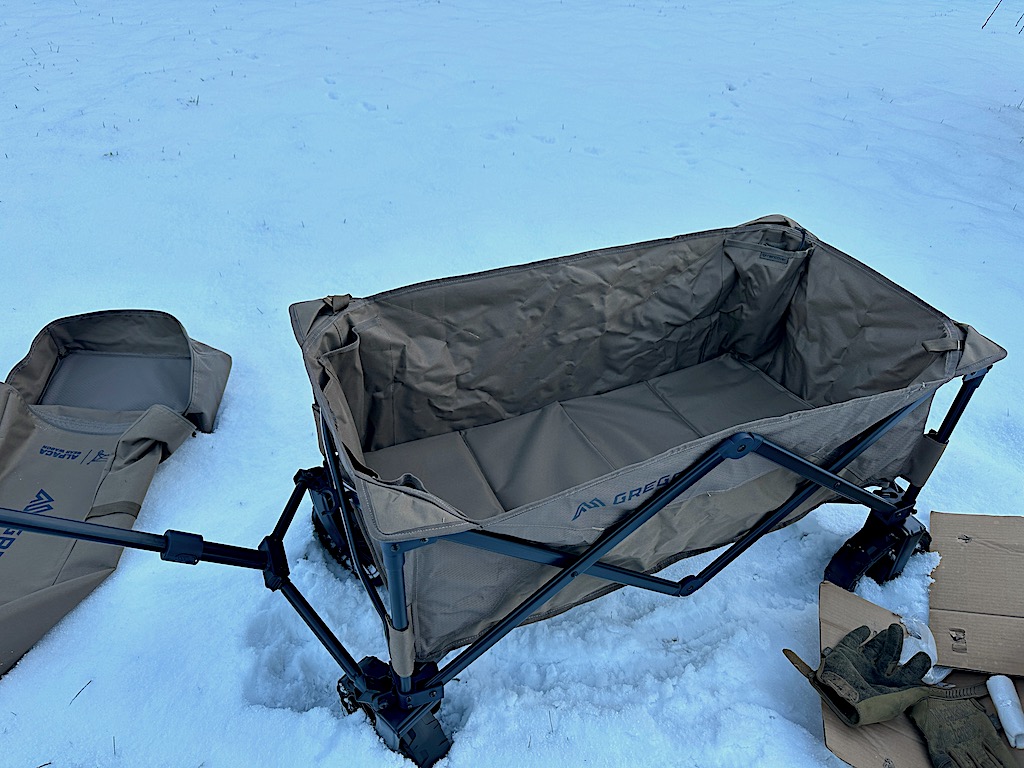
I’m going to be upfront here, I like Gregory gear, I have a few of their packs, and they’re serving me well, so when we were offered the opportunity of doing an unbiased review of their Alpaca range of storage boxes, totes and wagon, I was unsure if I’d like what we were getting sent, but it was quite an easy YES please.
Gear Wagon
If you’ve ever grumbled about carrying too much kit between the car park and the campsite, or to your camp in the woods, or when you’ve been sent to scavenge firewood, this review is for you. It’s rugged, capable of lugging proper loads, and, crucially, it’s a capable bushcraft tool, not just a trendy festival toy.
Specs That Matter
Let’s get the serious numbers on the table before the real fun starts:
- Storage Capacity: ~140 litres — enough for a week’s worth of gear and still room for snacks.
- Load Limit: up to 110 kg (≈ 250 lb) with the floor installed.
- Weight: ~13 kg (That’s not light, but it has got wheels!)
- Dimensions: ~98 × 59 × 53 cm — big enough to swallow camp chairs without fuss.
- Wheels: Oversized 8″ all-terrain.
- Extras: Rain/sun cover, mesh removable floor, reflective loops, multiple pockets, lifetime warranty from Gregory.
- Designed to last, and backed by Gregory’s lifetime warranty (This is basically Materials and workmanship)
And yes, before someone asks, it’s not a child taxi. It’s explicitly built for gear, not human passengers, but it is very crib like!
But enough dry spec’s, how does this thing actually behave when you’re in snow and hauling 60lb of power station and solar panel uphill in -6°C with stormy wind?
What I Like (And Why You Might Too)
Built Like It’s Actually For Going Outside
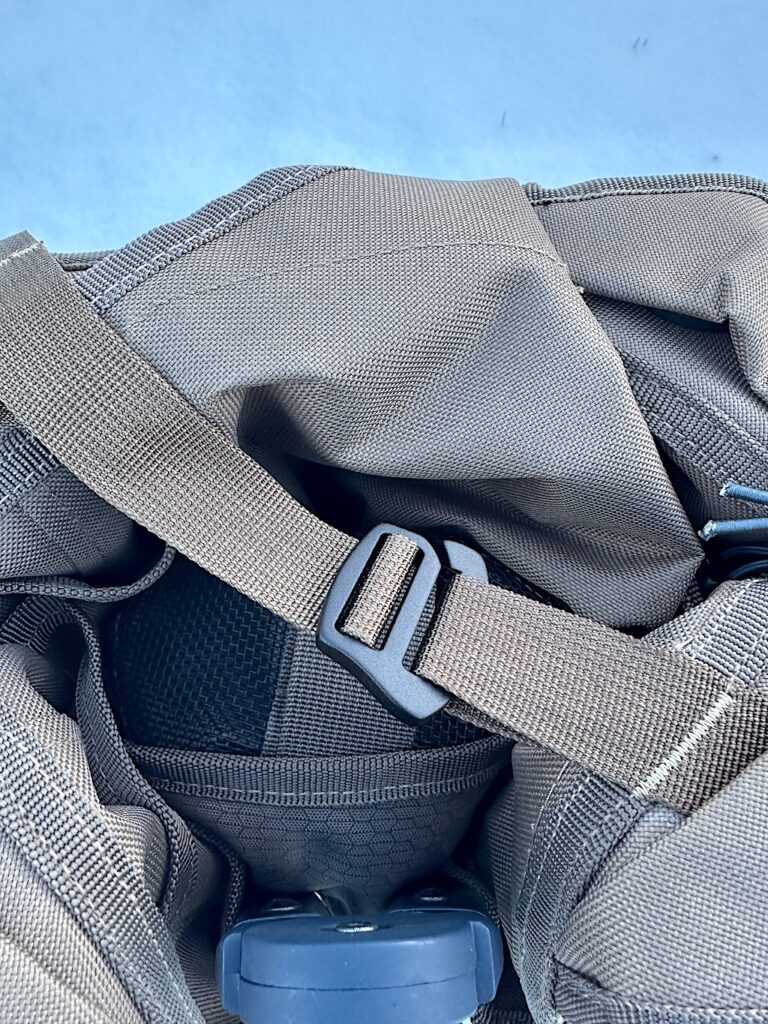
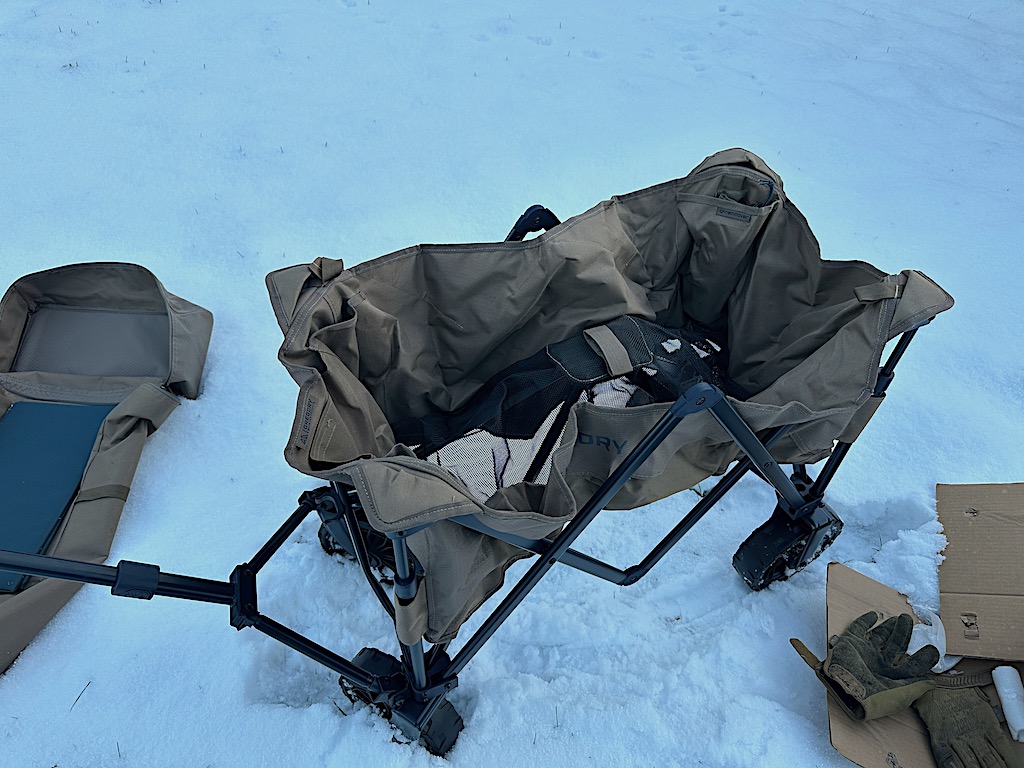
Right out of the bag (literally), the wagon radiates quality. The fabric feels tough without being stiff, and that’s important because it’s going to see dirt, water, and general abuse. In our tests, it shrugged off rain, snow, and dirt. Pop open the frame, and it’s intuitive: pull the ends away from each other and it opens up, drop the removable floor into place and you’re done. The whole thing feels confident rather than flimsy.
- Storm Tested: I left it out through the end of December into January, two weeks of snow, Storm Goretti, heavy rain, and freezing days and nights down to around -6°C.
The plastic bits didn’t become brittle. When they were frozen, I hit them with a piece of 2×2” wood, just to see if the freezing temperatures would cause issues. Tough stuff, it just keeps rolling.
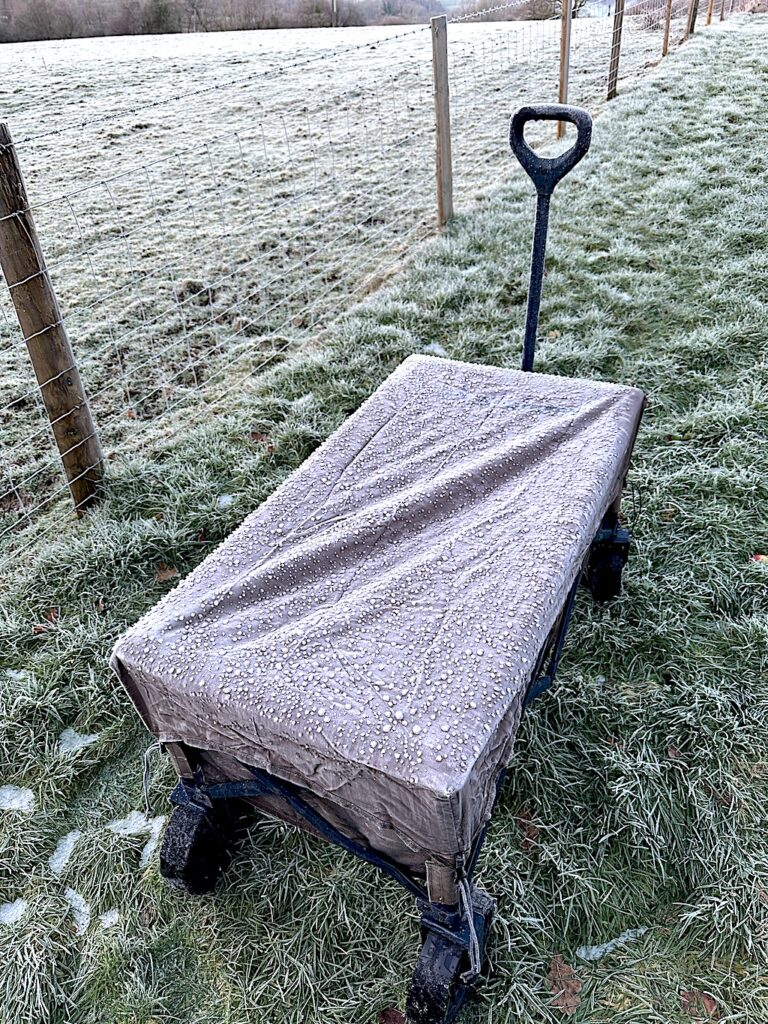
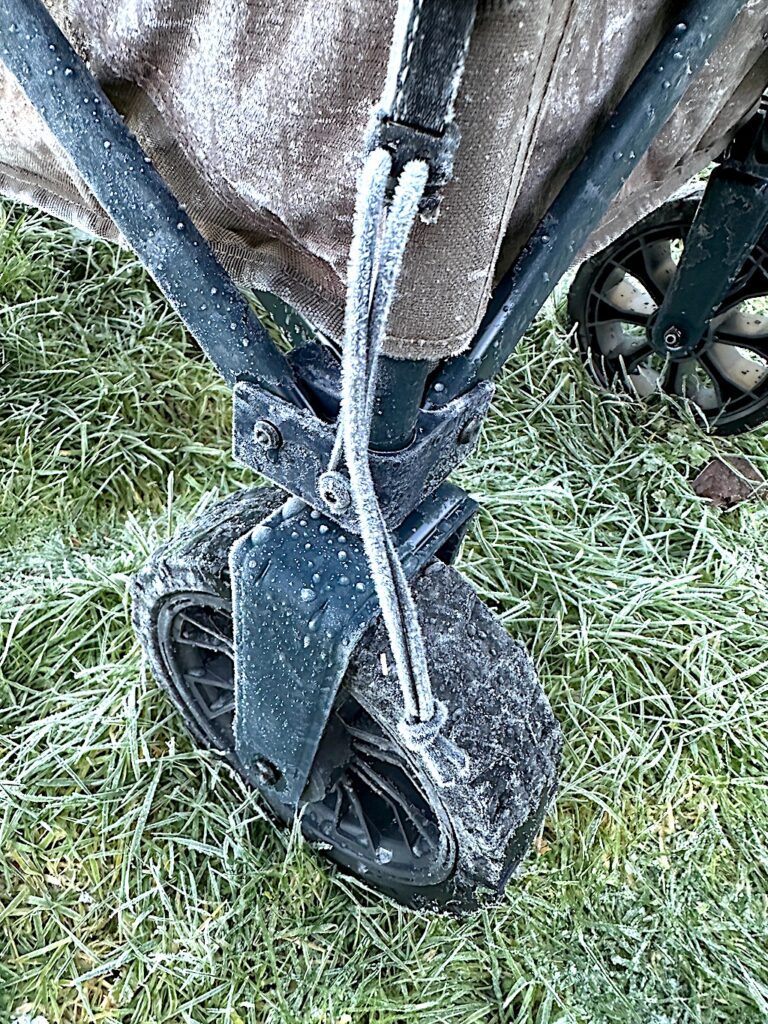
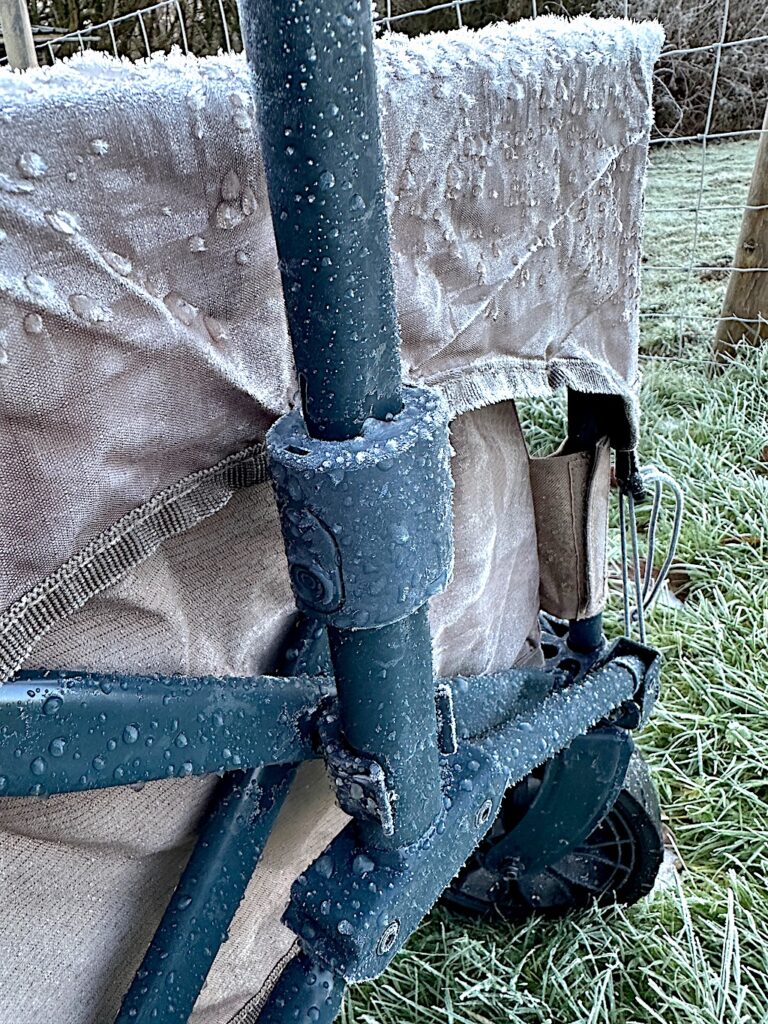
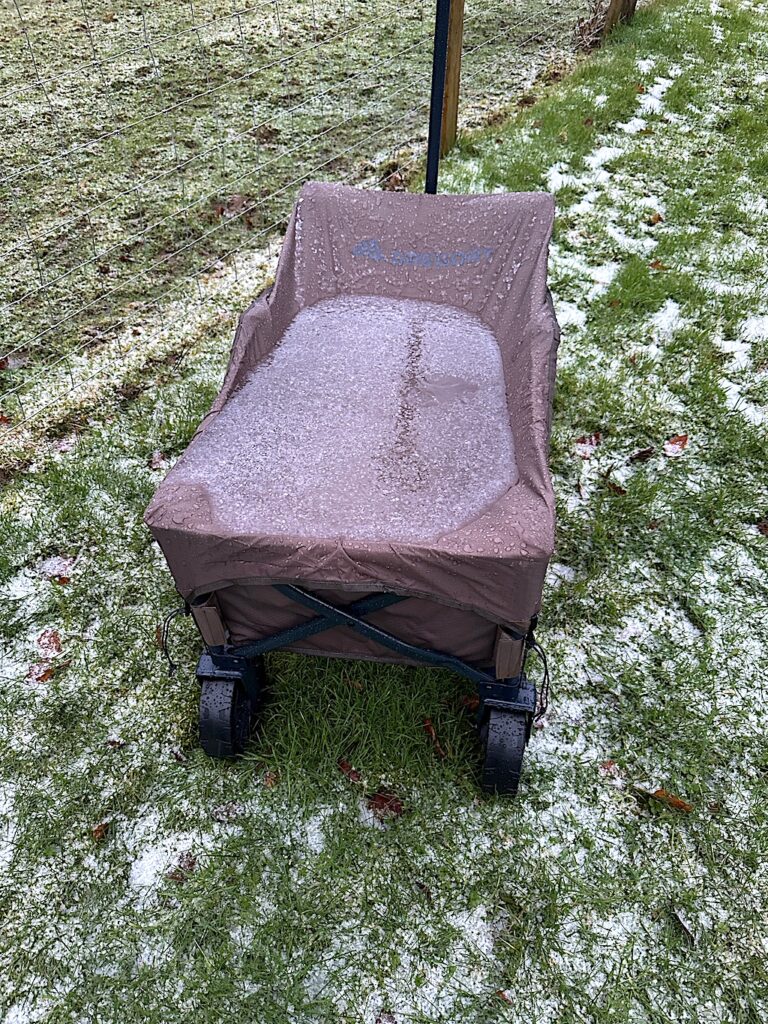
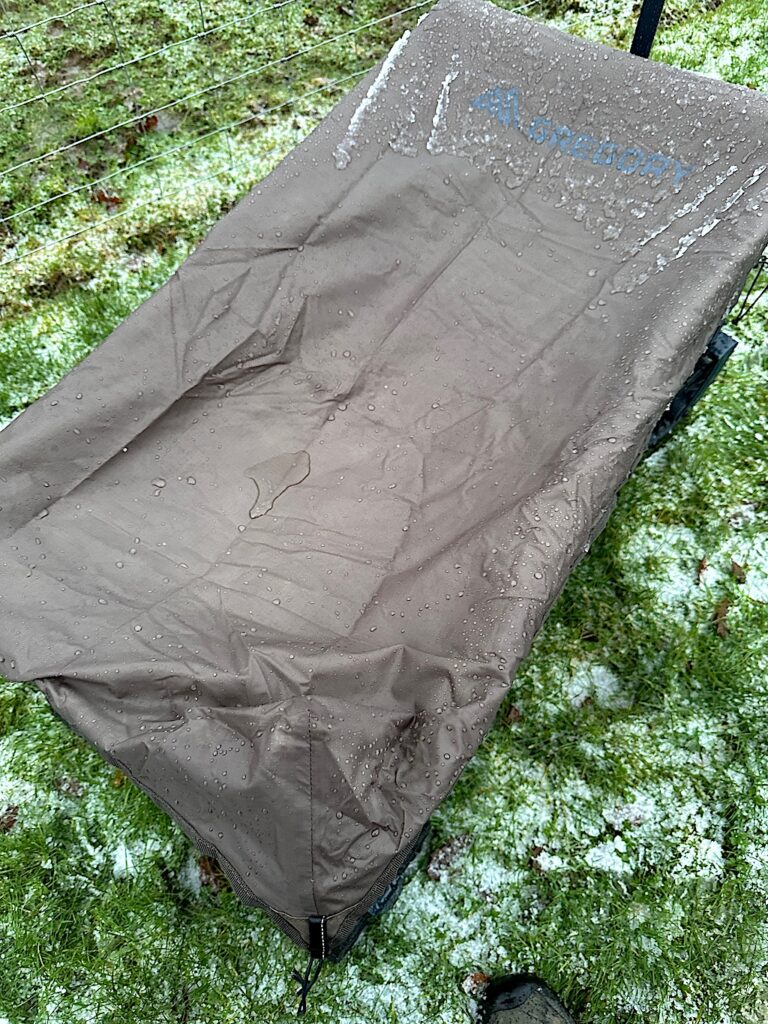
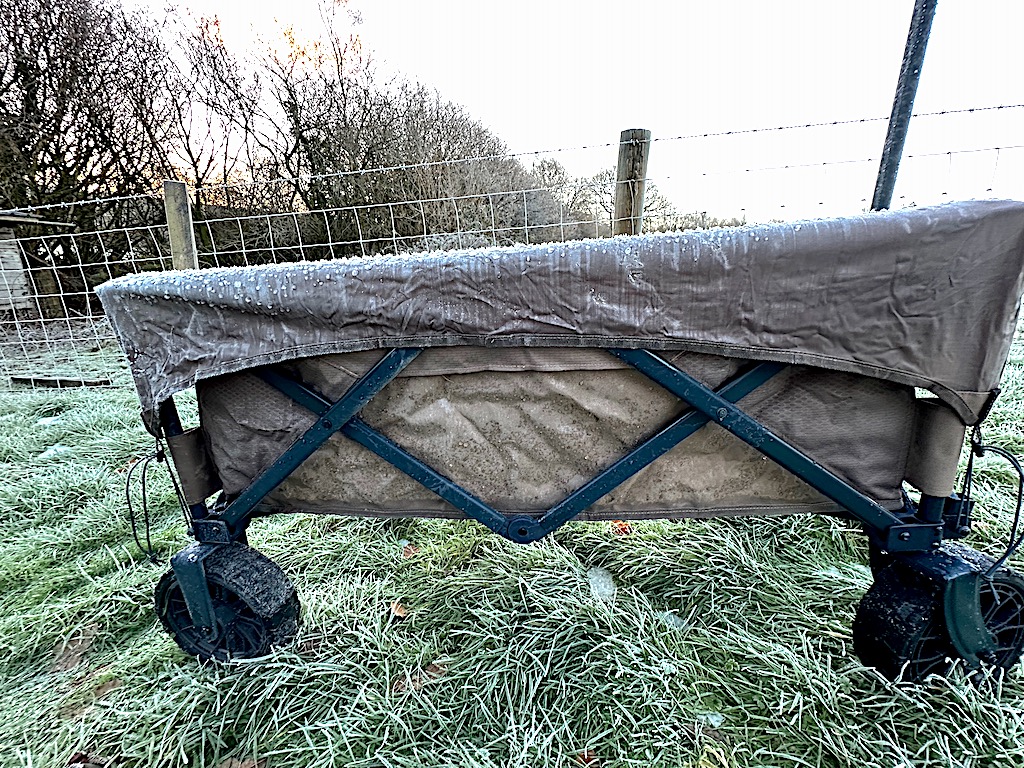
- Cover: The included cover goes on easily, fitting the wagon snugly and partially protecting the sides. It attaches with adjustable mini bungees that hook over studs near the wheels, and it stays put even when gusts threaten to put the rest of our gear in the next field.
When the wagon was level, water did pool in the cover, but water never got into the wagon, although it did stretch a bit. This was rectified by angling it or adding items that raised the cover a bit.
If you do leave this outside for storage, be careful what you store in it, unlike rain and mud, it won’t keep those pesky squirrels out if you’ve got tasty stuff in there!
Loads of Storage
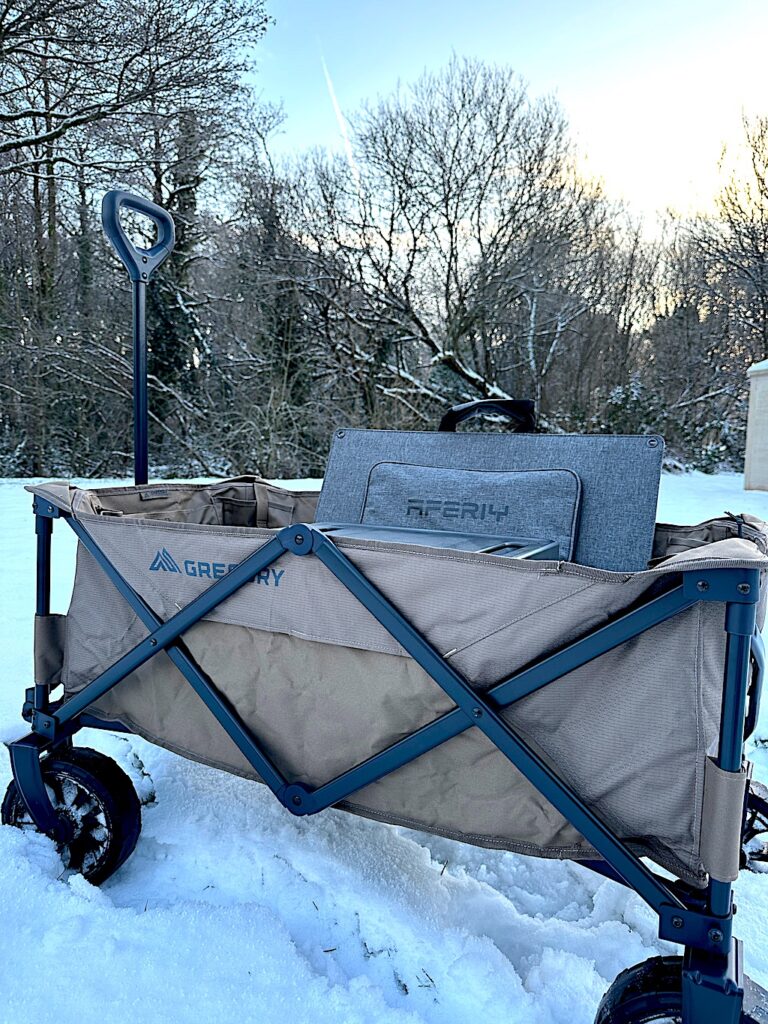
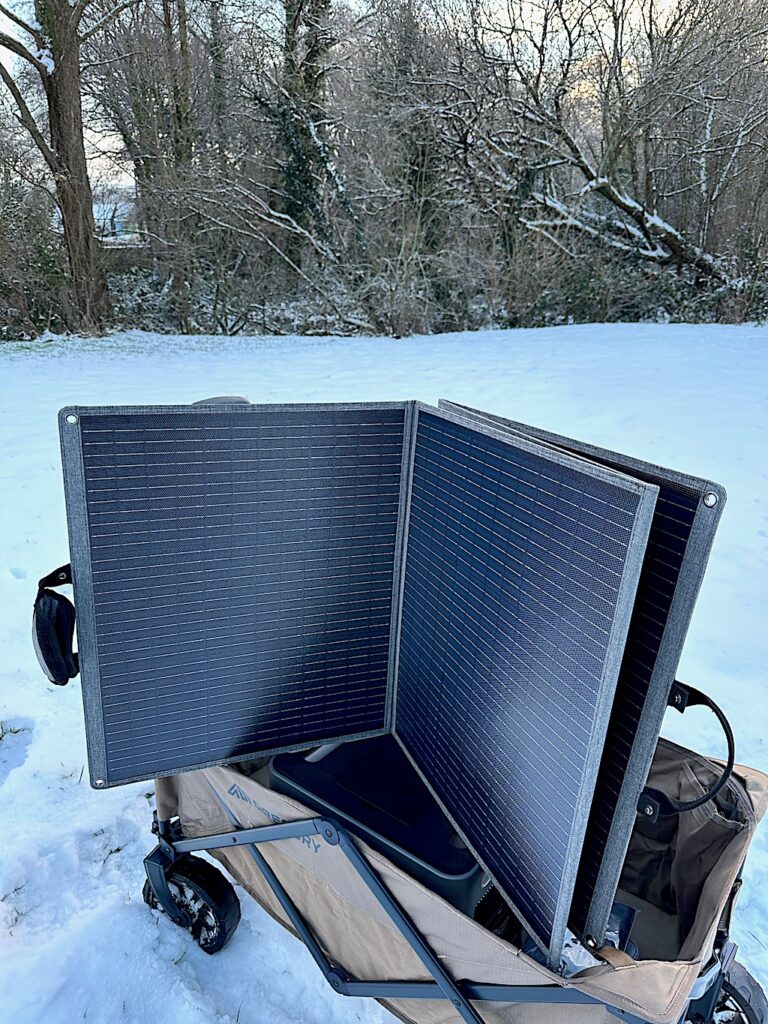
At 140 L, this wagon swallows gear. Chairs, power stations, saws, pots, boots, spare clothes, it all fits. We hauled an Aferiy P210 power station (50 lb) plus another 60 lb of random kit up a snowy incline, and it didn’t break a sweat (Although I was close!). It felt downright effortless compared to hoisting everything by hand.
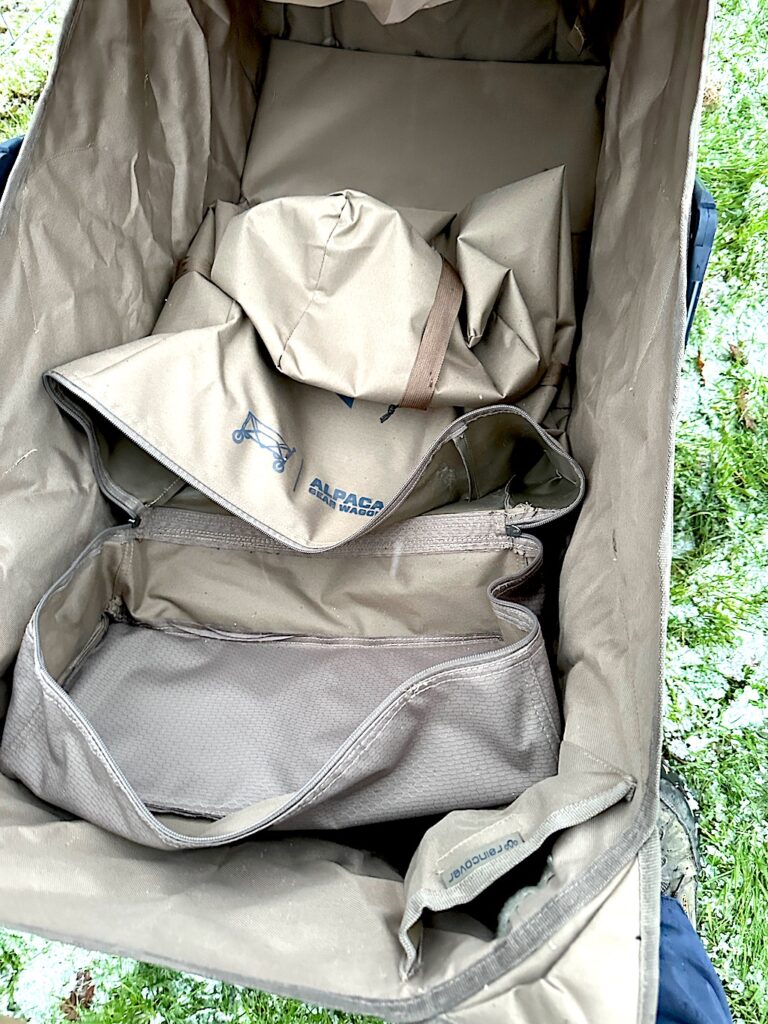
It’s also got convenient pockets around the inside for bits and bottles, and for storing the cover.
I particularly like the fact that it holds a lot of gear and is rain- and windproof, which means I can have secure (weatherproof) storage space that’s convenient and easy to manage. When you’re under a tarp or in a small tent, that extra storage is very useful.
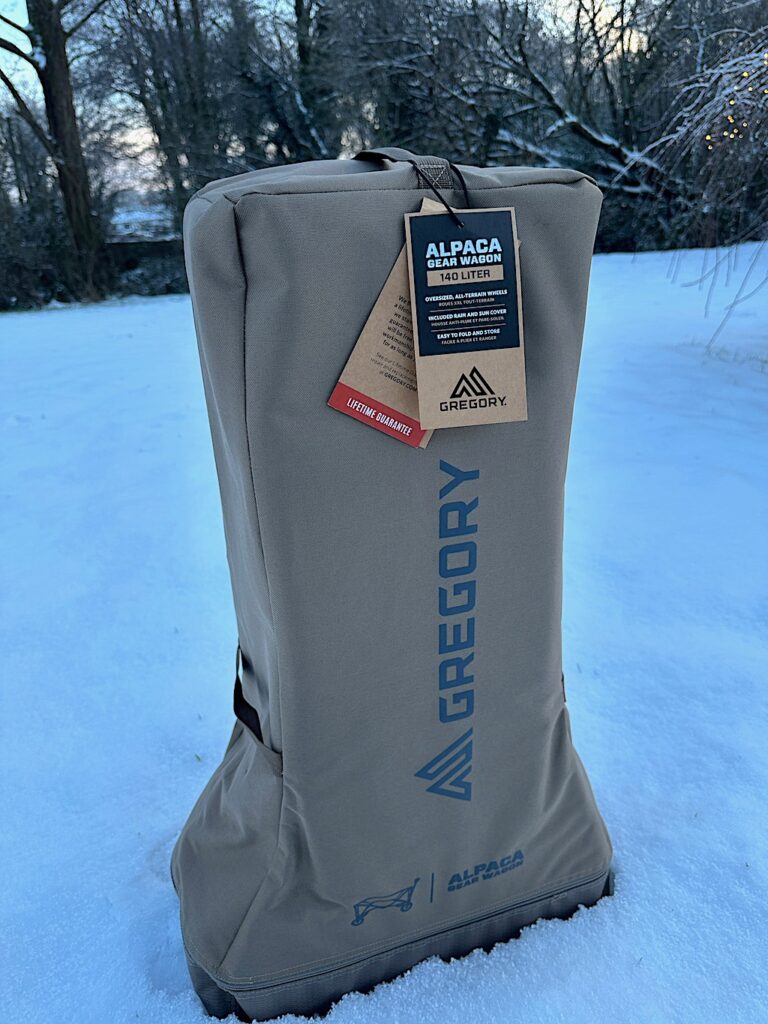
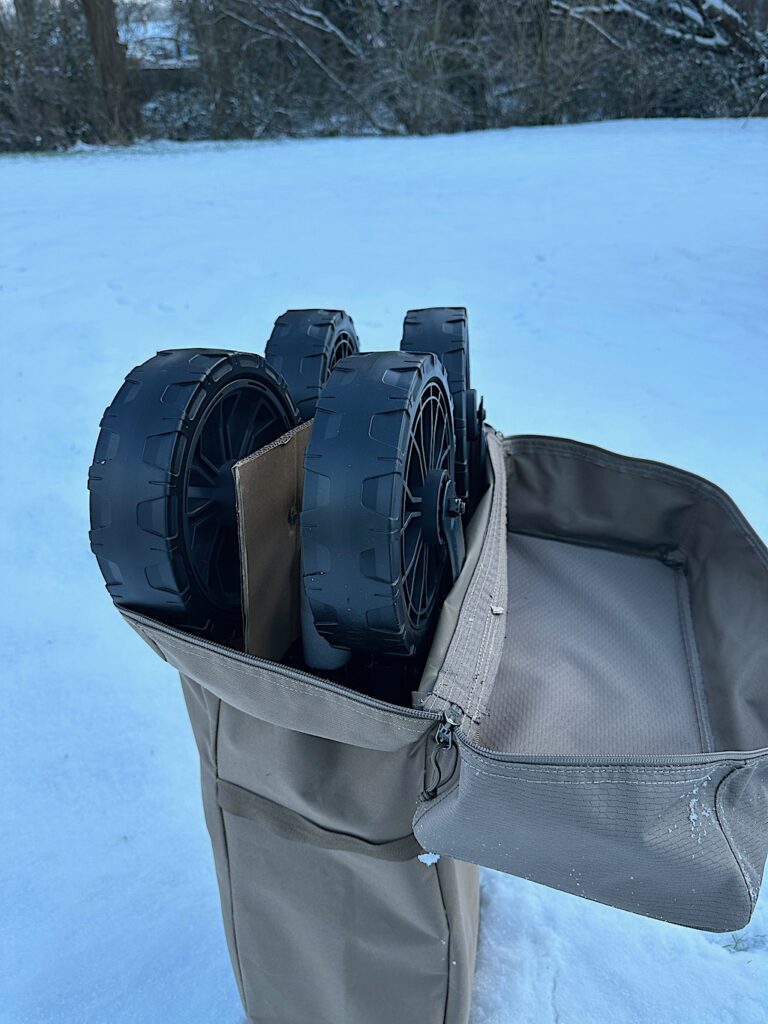
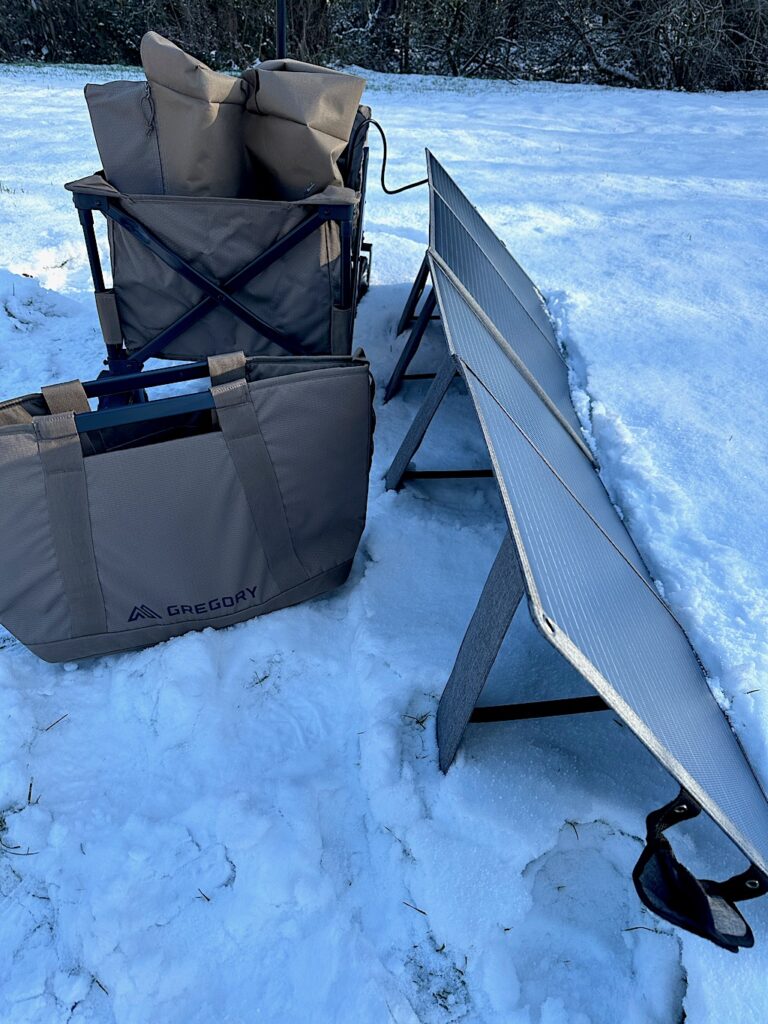
The wagon comes with its own bag, and it’s an excellent bag for storing and carrying/moving the wagon. It has multiple, well placed handles that make storage and loading into a vehicle easy.
Terrain Confidence
The Alpaca Gar Wagon rolls well, be that in snow, mud, stones or woodland paths. Loads of wagons bog down in even a few inches, but this one kept rolling easily in 4+ in (100 mm) of snow. The wheels didn’t spin or slide, they bit enough to keep going, and the all terrain tread makes light work of soft grass, gravel, and uneven ground.
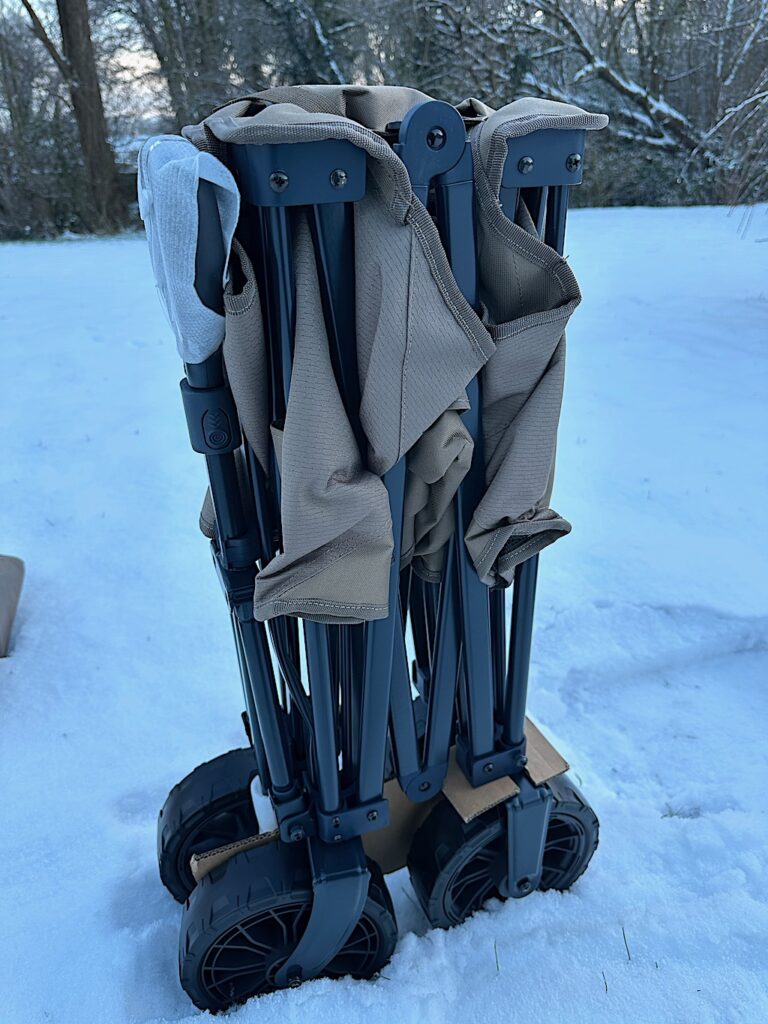
And setup/teardown? Absolutely painless. It folds down quickly, and the included storage bag keeps mud out of the car — a small but massive convenience after a muddy weekend in the woods.
It’s Tough
In some ways, it seems over the top in its construction, but it’s built to last, and I believe it will last. I think it will take abuse and neglect and still be there, happy to haul your gear whenever you want. I’m not saying it’s indestructible, but I am saying that it will take a lot of punishment.
Where It Isn’t Perfect (And What That Feels Like in the Field)
It’s hard to find kit that’s perfect, especially when you’re pushing it when you’re out adventuring.
Steering Takes Getting Used To
Unlike a linked-axle trolley that turns like it’s on rails, this wagon has independent wheels. That’s great for rolling straight and gentle turns, but sharp turns in mud and snow aren’t as intuitive; you need to have some forward motion or the wheels dig in.
It’s not a big deal, I got used to it, but I did have a few times where I was worried I was putting too much torque on the handle, pulling sideways. It didn’t seem to do any damage, but I started to be more cautious when turning the wagon in mud and snow.
The handle clips into place against the wagon body, sticking vertically. When you’re pulling it, it won’t go lower than about 30 degrees, so it can’t fall on the floor, and it’s always easy to grab. I did find myself having to not push the handle down when I was swinging my arm through a turn, again to stop putting too much torque on the handle.
A little condensation
The cover itself is excellent at keeping water out of the wagon, but with the changing weather we did get a little condensation on the underside of the cover. If this drips, it could give the false impression that it’s leaking, but it’s not. If you remove the cover carefully, there are minimal drips. Other than that, bone dry storage.
How It Compares (Especially Against My Old Trusty Cart)
Over the last 15 years, I’ve been hauling kit with a trusty Gorilla Cart from Costco, that thing has been stalwart, simple, and just plain unstoppable. But it’s purely functional and lacks in organised space, protection, and features.
Here’s where the Alpaca wins:
- Protected storage: The cover and pockets keep gear clean and dry, no tipping tarps over a wheelbarrow of kit.
- Organisation: Pockets and structured cargo space beat random sacks thrown on a flat trolley every time.
- Packability: The wagon is easy to pack; it folds up, goes in a bag and takes up a quarter of the space.
- Weight: Way lighter materials.
And where the Gorilla still holds its own:
- Steering simplicity: The Gorilla is less fuss to manoeuvre in tight spaces without thinking.
- Simplicity: No clever bits to break — just metal and wheels.
- Tough: I’ll put firewood and tools in the Alpaca wagon, in the gorrila I chuck them in.
But honestly, the Gregory feels like a properly designed tool for outdoor life, rather than something cobbled together to look rugged. It will get used a lot more than my other cart/wagon, because it’s a lot more usable.
Final Verdict — Worth It for the Bushcrafter?
Hell yes — with nuance. The Gregory Alpaca Gear Wagon is a seriously capable kit mover that feels at home in mud, snow, and camp life. It’s rugged, thoughtful, and genuinely useful for outdoor folk who regularly haul gear beyond a few bags. But you’ve got to weight that against the £200 price tag, it ain’t cheap, but it is quality.
It’s not effortless in every situation; sharp turns in slush still require technique, but that’s a fair trade for its load capacity, weather resistance, and durability. Compared to cheaper wagons and older trolleys like my Gorilla, it’s a big step up in rugged usability.
If you frequently lug gear to off-grid camps, festival fields, riversides, woodland bivvies or family picnics, adding this wagon to your kit list will change the way you pack, and that’s a rare compliment coming from someone who’s lived with mud-caked camping gear longer than many.

Tony Bristow is the founder of Bushcraft UK, which has been bringing people together around outdoor skills, community, and a love of nature for over 23 years. He also runs the BushMoots — now in their 22nd year — and more recently launched MindMoot, blending mindfulness and bushcraft to help people slow down, reconnect, and build resilience.
With a background in teaching, mentoring, and a lifelong love of the outdoors, Tony’s all about sharing practical skills in a relaxed, down to earth way. Whether it’s through articles, hands on workshops, or online conversations, his aim is simple: help people feel more at home in the wild, and in themselves.