
Mini Masters: Outdoor and Experiential Learning

This September I started an MA in Outdoor and Experiential Learning. The course is one-year in length, and although I’m told the format will change from 2026 onwards, there are currently three pathways to choose from:
- Outdoor and Experiential Learning Pathway
- Bushcraft Pathway
- Health and Wellbeing Pathway
We have two modules in our specialism and select a third from one of the others; I’ve enquired about taking an additional module on top for interest, if possible this will mean I get to enjoy both specialist modules in Outdoor and Experiential Learning and the Bushcraft pathways. TBC.
My reflections and anecdotes whilst studying may be of interest to friends within the BCUK community and further afield, especially for anyone who may be considering a similar course, and I’ve enjoyed the challenge of trying to summarise my thoughts on such a huge undertaking so far…we meet in person for only a week per module – it’s an intense Monday-Friday of new information, followed up by reading and assessments. I quite like the format as I can really focus in on the new and sticky bits, and let it settle in over the time away from campus.
Before starting the course I had a few questions on my mind: how would we study this kind of subject, and what exactly would we study? I definitely felt some hesitation at the idea of intellectualising areas I’ve experienced predominantly as practical. For me, involvement in these spaces has been largely informal – skills passed down within the family, and community spaces such as the BushMoot. I’ve often found a sense of relief and a freedom both here and with my career in creative arts that formal schooling never offered. I guess this combination led me to the course – what skills, insight, accreditation could I gain that would feed meaningful work in experiential learning as something I have always championed.
What is Outdoor and Experiential Learning?
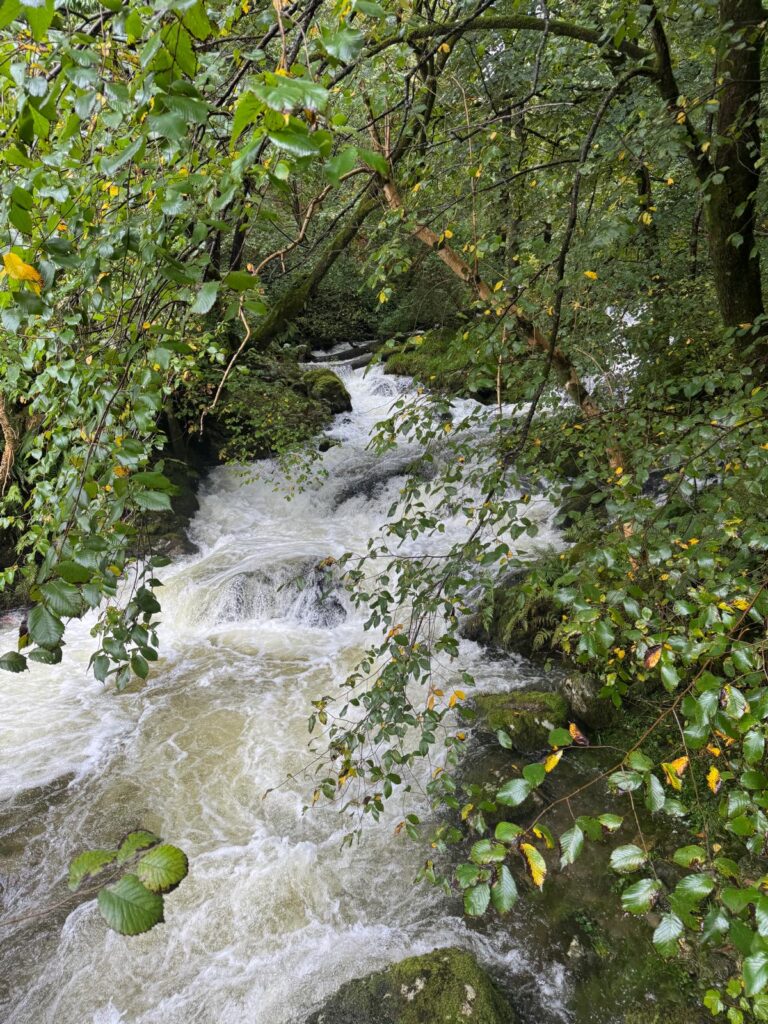
Simply put, there’s no straightforward catch-all definition. Our course at The University of Cumbria is very philosophical and encourages us to ask questions, critique definitions and existing literature, and expand the possibilities with the ways we research.
Our cohort this year come from a wide range of different work experience and Bachelor’s courses, and we all have our own interpretation of what outdoor and experiential learning means for us. As we’ve lightly discussed with tutors, everything is experienced, even a lecture or ‘normal’ class. So I guess for me, my current thinking is that outdoor and experiential learning is about acknowledging and validating the learning spaces that are outdoor and/or personalised to the individual. Discussion, action, research, etc. is all experiential.
Aptly, our first module, Introduction to Outdoor and Experiential Learning, investigates this question further. We get an early definition of experiential learning from John Dewey: ‘learning by doing’. Jay Roberts takes this further in his book, Beyond Learning By Doing. He gives a clear analogy of a river – with many currents – to describe experiential learning. There are more in his book, but we focussed on three currents in particular: the romantic, pragmatic, and critical currents.
I’ll try to digest these, for myself as much as anything, and elucidate a little of what these currents describe.
The Romantic Current
This current focuses heavily on the individual, and suggests that solo time spent in connection with the ‘sublime’, or ‘natural’ and ‘wilderness’ spaces are inherently educational. The concept of the sublime is quite religious, where the ‘wilderness’ can be awe-inspiring even in its danger and chaos – ultimately it is still a transcendent force; one that might bring an individual closer to God or an alternative spiritual or higher level of consciousness.
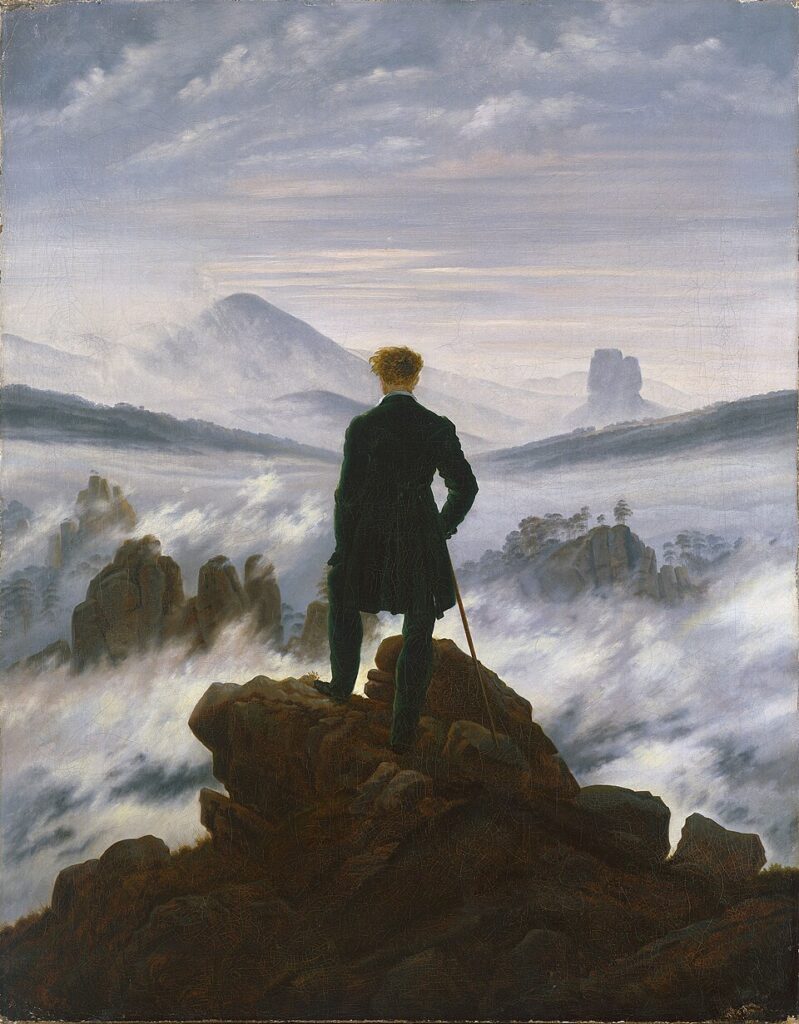
We talked a lot about this painting you may be familiar with, Wanderer above the Sea of Fog (Friedrich, c. 1818), which sort of typifies the romantic current – a lone wanderer standing above a sublime ‘natural’ landscape. One of the problems with this is that, like the man standing above the mountains, romanticism has an effect of othering the experiences ‘out in nature’ and frustrates what we feel we can take back to our day-to-day lives. It expects an almost sacred and ultimate experience.
Romanticism in Bushcraft and Outdoor Learning
Romanticism heavily influences adventure education, in which we send young people off for an adventure (high ropes, kayaking, bouldering etc.) with the expectation that simply doing the activity will be educational and exceptional for the individual.
In a similar vein, bushcraft could be positioned as an opportunity for personal growth or self-discovery and spiritual connection to nature. Romanticism would consider wilderness experiences to be transformative in and of themselves, more than just practical skills-building. The benefits observed are more likely to be anything from resilience, awe, and humility, to wonder, overcoming, or connection to the sublime through skill-practicing.
Pragmatic Current
This looks at experiential learning as a transactional process between learner and environment, with an emphasis on practical knowledge, problem solving, and social contribution. It sounds pretty comprehensive to have a model aimed at achieving concrete experience, reflection, knowledge formation, and experimentation, though it has its own drawbacks, of course. Pragmatism can narrow learning outcomes, with activity designed to be one-size-fits-all which we know doesn’t cater for individuals or a particularly wide range of access preferences and requirements.
With this current we see bushcraft as a way to acquire practical problem-solving skills, and functional knowledge for survival or sustainable living. Experimenting becomes an important pragmatic process here, e.g.:
- practicing carving
- seeing what works and what doesn’t
- designing or practicing improvements
Skills become somewhat measured by their measurable output: did the fire light? Does the spoon function for eating/cooking with etc. It fosters a transactional relationship with the environment, and measures bushcraft skills by tangible output.
Possibly a case of personal preference here on which approach sings to you more so far…!
Critical Current
Also described as the political current, this aims to deconstruct and critically engage with what already exists. I’ve found this current the most engaging approach to think with as it’s switched on to issues of social justice and inclusion, and considers historic legacies (colonialism, sexism, etc.) and commercial influences. In terms of experiential learning, Roberts notes that this is a bit of a counter-current to the existing traditions of romantic or pragmatic adventure and outdoor learning, leaving a lot of potential observations in the field yet-to-be-seen.
Naturally, critical engagement is challenging to do robustly. Ideally it would prompt us to better understand the cultural roots and social implications of current bushcraft practice (or whatever other work we’re doing). What skills are being taught? Where did they originate? Whose are they? Who has access to the resource and instruction now? In our individual practice do we consider factors such as land rights, sustainability, ethical harvesting, and the influence of consumerism on outdoor gear and practices? What are the impacts of, as one of our tutors refers to it – ‘Patagucci’ – gear being in fashion for those spending time in outdoor spaces? These questions have amused me and challenged me, and I think I land on the idea that discomfort is signalling something that needs to be explored further.
Beyond the Classroom
During my further research and assignment writing from the module I was particularly drawn to Jack Mezirow’s Transformative Learning Theory which discusses what occurs when an individual has a transformative experience. Transformative experiences could be placed within any of the currents mentioned above, and importantly, result in a change in worldview. I have critiqued Mezirow’s work as not including enough discourse on the shaping role of starting-context on the trajectory of an individual’s transformation. Considering the context an individual starts from is influential also on accommodating reintegration post-transformation.
For example, where practical bushcraft skills are often not commonplace in day-to-day life – particularly for young people who may encounter it only within scout or camp settings hosted by adult instructors, it becomes important to understand the ways it may challenge the worldview of the individual, if only about how they see themselves, and therefore we should also consider the reintegration post-workshop or trip.
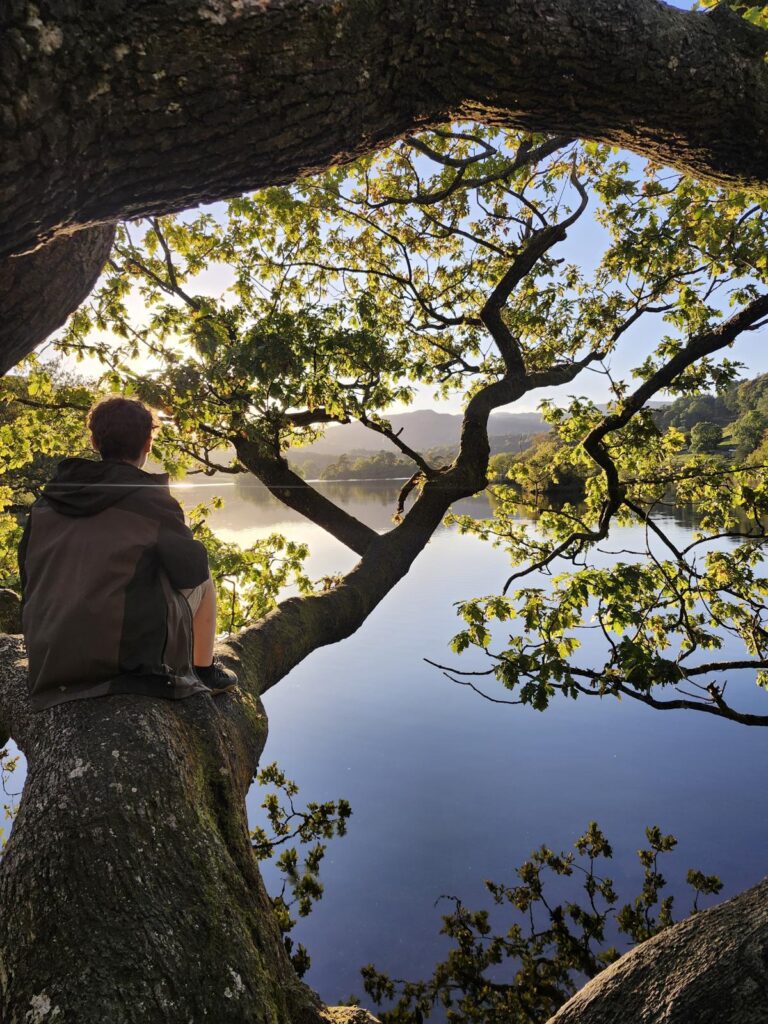
Our view of and approach to outdoor experiences shapes what we expect to achieve or engage with when approaching bushcraft (and other) situations. Especially when skill-sharing it’s important to be aware of the starting point of participants, and intentional about how the practice is framed as this will inform the anticipated output. A consideration for the application of new skills or worldviews in the future would enhance the instruction in many scenarios, particularly when working with young people.
I think there’s no right or wrong current within this river of outdoor and experiential learning, instead, it’s more about understanding how they function and what could be gained or lost from the various framing. As a student on the module I would say we swam in all of the currents; I have no complaints about having classes on a hill in the autumn sun, and I’ve certainly been socialised to rely on having learning objectives set out for me in advance… I think the steepest learning curve has been applying a critical approach, though, naturally we want to hold on to what we know.
The assignment I turned in for this module was deeply personal as I found this the easiest way to engage with application of theory and critique, and it’s refreshing to be on a course in which that is celebrated. I received feedback that even more of a first-person voice could be beneficial, there’s a lot of unlearning to do about this lofty all-knowing third person narrative I was taught to employ in my undergrad!
My brain felt like it would explode about three days in, but the tutors are fantastic, the class is diverse, friendly, and knowledgeable, and I’m feeling genuinely invigorated. Not so sure if you can glimpse all that through this summary, but I hope there is something of interest offered.
Coming Up on Mini Masters…
The Reflexive Practitioner
Independent Inquiry (Research Methods)
Know Your Place
Histories & Principles of Bushcraft
Learning from Adventurous Journeys
Cultures & Practices of Bushcraft
…Masters Dissertation?!
About the Author
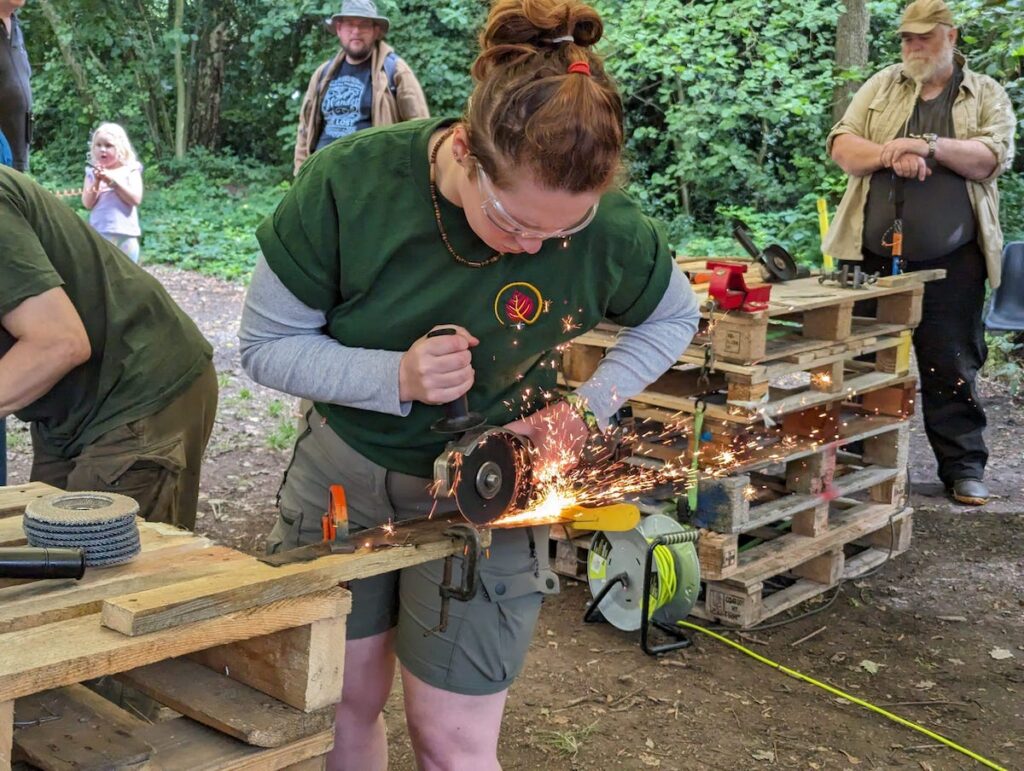
Emily Meldrum has been part of the BushMoot community since childhood, growing up with the event and continuing to attend into adulthood. A theatre director and playwright, she is currently completing an MA in Outdoor and Experiential Learning. Passionate about the outdoors, Emily loves diving into creative projects, making things with her hands, and finding peace in nature.